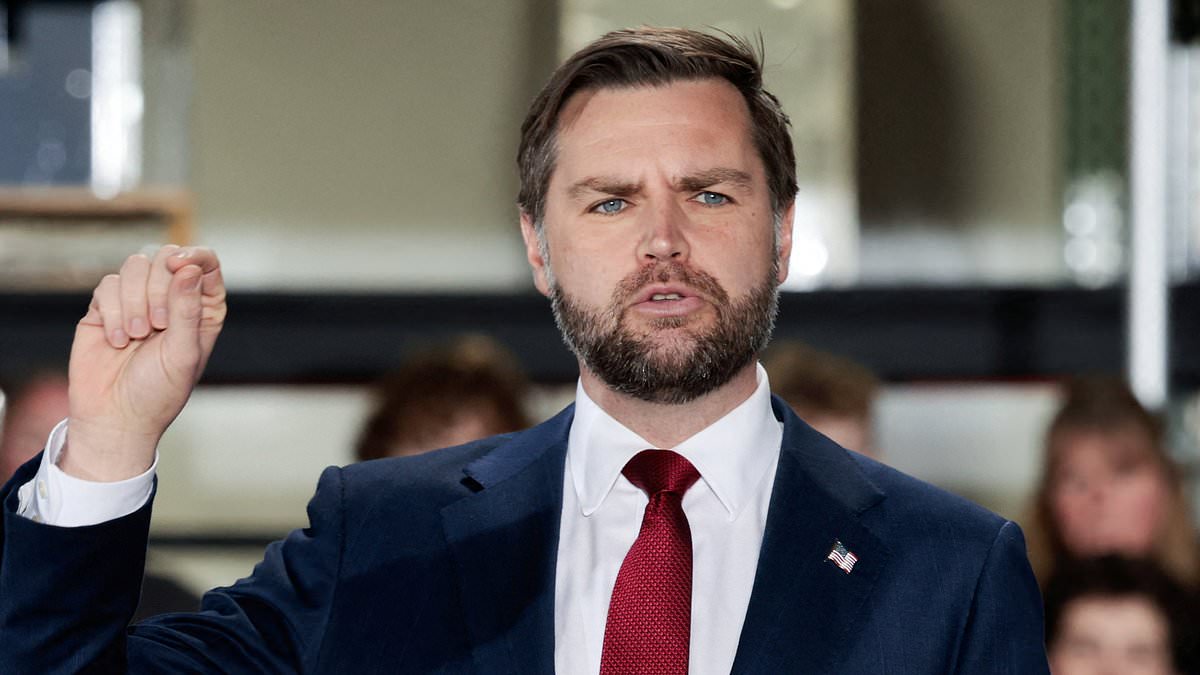

Iran has expressed a preference for engaging with U.S. Vice President JD Vance in peace negotiations aimed at resolving the ongoing Middle East conflict. This comes after former President Donald Trump proposed a 15-point ceasefire plan to the nation. According to reports, Iranian officials are disinclined to negotiate with current top Middle East envoys Steve Witkoff and Jared Kushner, whom they accuse of betrayal. Sources informed CNN that Iran perceives Vance as being more committed to concluding the conflict compared to Kushner, Witkoff, or Secretary of State Marco Rubio. Another insider told The Telegraph that Iran labels Kushner and Witkoff as “backstabbers,” expressing a clear preference for Vance in future talks.
The Witkoff Rejection
The sentiment in Tehran suggests a belief that past negotiations led by Witkoff and Kushner were ineffective, especially before U.S. and Israeli military actions commenced. CNN sources indicate that Iranian envoys are outright rejecting the idea of renewed talks with Kushner and Witkoff. Instead, they view Vance as potentially more open to ending hostilities, despite him denying any division with Trump over the conflict’s handling. Nevertheless, Iran may ultimately have to engage with Witkoff due to his entrenched role in U.S. Middle East policy. As one source noted, while the Iranians may have preferences, they may not have the luxury of choice. The White House has emphasized that President Trump alone decides the U.S. negotiator.
The 24-Hour Clock
President Trump has hinted that Vance might lead future discussions. Meanwhile, Kushner and Witkoff are reportedly developing a plan that includes a proposed month-long ceasefire to facilitate negotiations. As reported by Israel’s Channel 12 and confirmed by the New York Times, the 15-point plan is inspired by Trump’s previous Gaza deal. It demands Iran dismantle its nuclear and missile programs, open the Strait of Hormuz, and sever ties with proxy terror groups in the region. In return, Iran would receive support for its civilian nuclear ambitions and relief from international sanctions. According to Haaretz, Pakistan has delivered this proposal to Iran with a 24-hour deadline for reply. Subsequently, Trump announced that Iran had stepped back from its nuclear ambitions, with Vice President JD Vance and Secretary of State Marco Rubio at the helm of ongoing peace talks. “They’re talking to us, and they’re making sense,” Trump remarked to reporters in the Oval Office.
The Islamabad Standoff
Multiple sources said Iran and the United States could stage talks in Islamabad, Pakistan this week but are doubtful they materialize. Saudi Crown Prince Mohammed bin Salman has urged Trump to press on with the war , privately describing the conflict as a ‘historic opportunity’ to remake the region and pushing for US troops to seize Iranian energy sites and topple the regime. Tehran may send Foreign Minister Abbas Araghchi to any talks, though he and other Iranian officials have signaled deep reluctance to engage, the WSJ reported. Witkoff and Kushner would likely lead formal negotiations, but Vance could step in to seal any agreement, a US official told the Wall Street Journal. US officials have suggested that Iran’s parliamentary speaker, Mohammad-Bagher Ghalibaf, a hardline regime figure, could meet with the Trump delegation in Pakistan. However, Ghalibaf is unlikely to leave Iran unless Vance also attends those talks, suggesting he may refuse to engage with Witkoff or Kushner. Trump announced on Monday a five-day ceasefire on all strikes on Iranian energy infrastructure after what he described as ‘very good conversations’ aimed at ending the war. Top Iranian officials flatly rejected his claim that peace talks are underway. The ceasefire did not last the night. Iranian state media reported US-Israeli strikes hit two gas facilities and a pipeline on Monday, prompting Tehran to launch ballistic missiles at central Tel Aviv and Kuwait.
Vance has also held private calls with Israeli Prime Minister Benjamin Netanyahu on the question of negotiations with Tehran, according to multiple reports. The vice president built his political career by advocating against foreign wars abroad in the Middle East and is viewed within Trump’s inner circle as a non-interventionist voice. The Daily Mail has reached out to the White House and a spokesperson for Vance for further comment. Markets reacted positively to Trump’s ceasefire on Monday, with the Dow surging 1,000 points in pre-market trading, the S&P and Nasdaq each jumping more than 2 percent, while oil dropped 10 percent. Oil prices fell another five percent and Asian shares gained on Wednesday over possibilities of a de-escalation of the Iran war and negotiations between the United States and Iran. The Trump administration is said to have offered a 15-point ceasefire plan to Iran. Trump’s claims of progress being made from talks with Iran this week and his postponement on Monday of a deadline to ‘obliterate’ Iran’s power plants over the reopening of the Strait of Hormuz have also fueled optimism that an end to the Iran war could come soon. With the Strait of Hormuz being a key waterway for crude oil and liquefied natural gas transport, oil and gas prices have spiked and fluctuated in recent days.
Trump’s faltering ceasefire came after he threatened over the weekend to bomb Iran’s electricity grid unless the regime reopened the Strait of Hormuz within 48 hours. Iran’s closure of the Strait of Hormuz since the start of the war has caused a global oil and energy crisis. Gas prices have surged to an average of $4.00 a gallon nationwide up from $2.90 before the conflict began three weeks ago. The narrow strait – through which a fifth of the world’s oil flows – remains blocked by the threat of Iranian mines and missiles. Tehran has so far refused to promise any reopening. Iran’s stranglehold over Hormuz is seen as its greatest point of leverage over the US in the conflict. Closing the Strait of Hormuz has proven relatively inexpensive for the regime, relying on drones and explosive suicide boats to disrupt global shipping. Trump has also threatened to deploy US troops to seize Kharg Island in the Persian Gulf, through which 90 percent of Iran’s crude oil exports pass . While Iran has denied negotiations were taking place, and attacks in the Middle East continued, Pakistan has offered to host talks between Washington and Tehran. And as Trump raised optimism of a de-escalation of the war, at least 1,000 more American troops from the 82nd Airborne Division are said to be deployed to the Middle East in the coming days.


