
A Supreme Court decision on Tuesday has significantly boosted Donald Trump’s prospects for the upcoming midterm elections, as he intensifies efforts to influence redistricting strategies.
The conservative-dominated court ruled in favor of Alabama, allowing the state to implement a congressional map for its House elections that had previously been blocked by a district court for alleged racial bias.
Several states, including Florida, Louisiana, Missouri, North Carolina, Ohio, Tennessee, and Texas, have already adopted new electoral maps, which could potentially secure the Republican Party up to fifteen additional House seats. The recent Alabama ruling could add a sixteenth seat to that tally.
The map in question was drafted in 2023, but a lower court had mandated a revised version based on anti-discrimination clauses within the Voting Rights Act (VRA).
The Supreme Court’s April ruling in the case Louisiana v. Callais altered the interpretation of the VRA, ultimately paving the way for Alabama to gain approval for its 2023 map.
Historically, majority-black districts in the South have leaned Democratic, remaining largely unaltered by Republican redistricting due to VRA mandates that protected these majority-minority districts. However, this recent decision marks a shift in that dynamic.
Callais changed that, allowing Southern states to carve up some majority-black districts to gain GOP seats. Several, including Alabama, took advantage.
Alabama brought its blocked 2023 map to the Supreme Court, which in May asked the lower court to revisit its decision. The lower court continued to block the map.
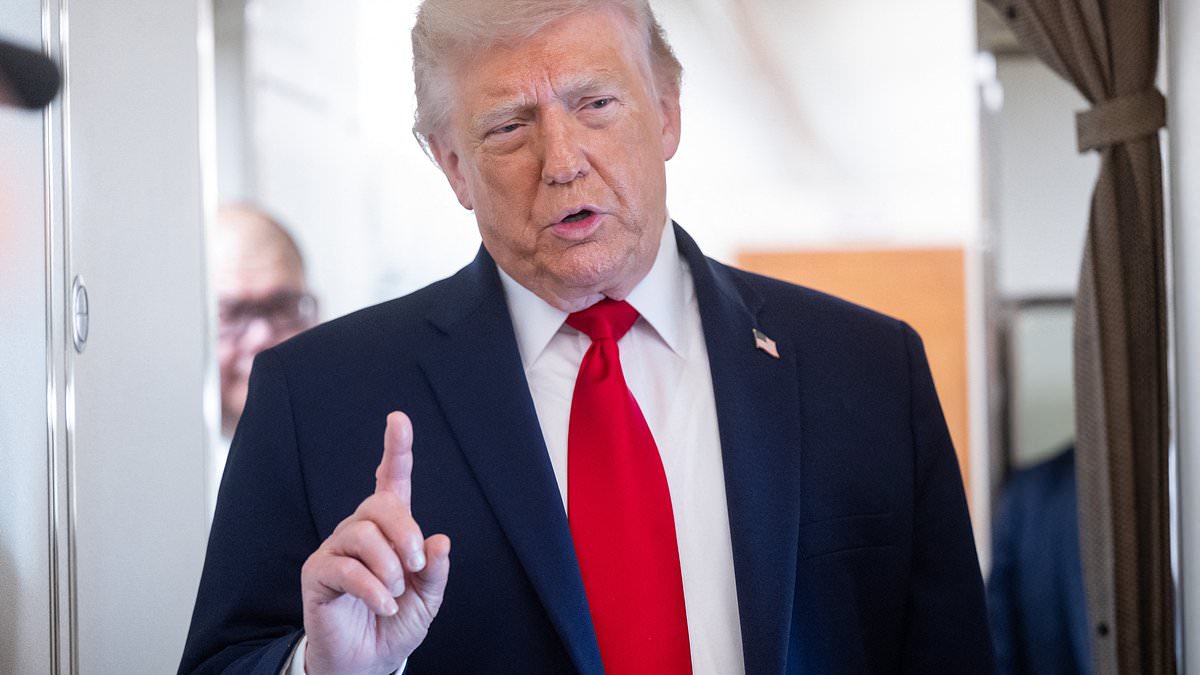
Donald Trump looks on as he speaks to members of the media on board Air Force One while flying from Joint Base Andrews to Chippewa Valley Regional Airport in Eau Claire, Wisconsin, June 5
A protester stands during a press conference outside the Alabama state house on May 5
The Yellowhammer State went back to SCOTUS and on Tuesday was allowed to proceed with the 2023 map.
Primaries for four of the Southern state’s seven congressional districts have been pushed back from May 19 to August 11 in order to accommodate the changing map.
Critics fiercely maintain that Callais and the subsequent Southern redistricting discriminate against black voters and reduce their representation.
Typically, states only adjust congressional maps after the regular once-a-decade US Census.
But as Trump seeks to stave off a blue wave in the midterm elections, he kicked off a redistricting war in July when he pressured the Texas state legislature to redraw congressional districts. Several other states followed suit.
Before the Callais ruling, it looked as though Democrats might largely match GOP gerrymandering gains. California and Virginia began redistricting efforts in response, promising up to nine seats for Democrats.
After Callais, the South was able to get in on the redistricting action, tilting the scales back towards the GOP.
Then on May 8, Virginia’s new Democrat-friendly map was struck down by its state Supreme Court, and a subsequent appeal to SCOTUS was denied.

The Supreme Court in Washington, DC, May 18
California could still net the Democrats as many as five seats, but the only other newly created Democrat-friendly district popped up in Utah after a court decision.
If the redistricting wars were a game, Republicans outscored the Democrats 16-6.
The GOP may well need the extra seats, as the party faces substantial headwinds in the upcoming midterms.
With the exception of George W. Bush after the 9/11 attacks, sitting presidents since 2000 have lost at least nine (and up to 63) House seats in every midterm election.
Trump’s war on Iran has proved unpopular with voters as energy prices skyrocket.
The Silver Bulletin’s average of polls shows that 58 percent of voters disapprove of Trump’s Iran war.
In February, according to AAA, the national average price for a gallon of regular unleaded gasoline was under $3.00. After peaking at over $4.50 in May, the price is $4.22 per gallon as of Friday – still a price increase of over 40 percent.
Republicans seeking election in the fall will have to defend themselves against accusations that it is their party sparking the rise in gas prices.
The GOP could have collected even more seats if Trump’s redistricting plan hadn’t suffered two tough defeats in Indiana and South Carolina’s GOP-led legislatures.
Trump made his feelings clear by endorsing primary challengers that defeated five of the six Indiana senators that opposed it.


