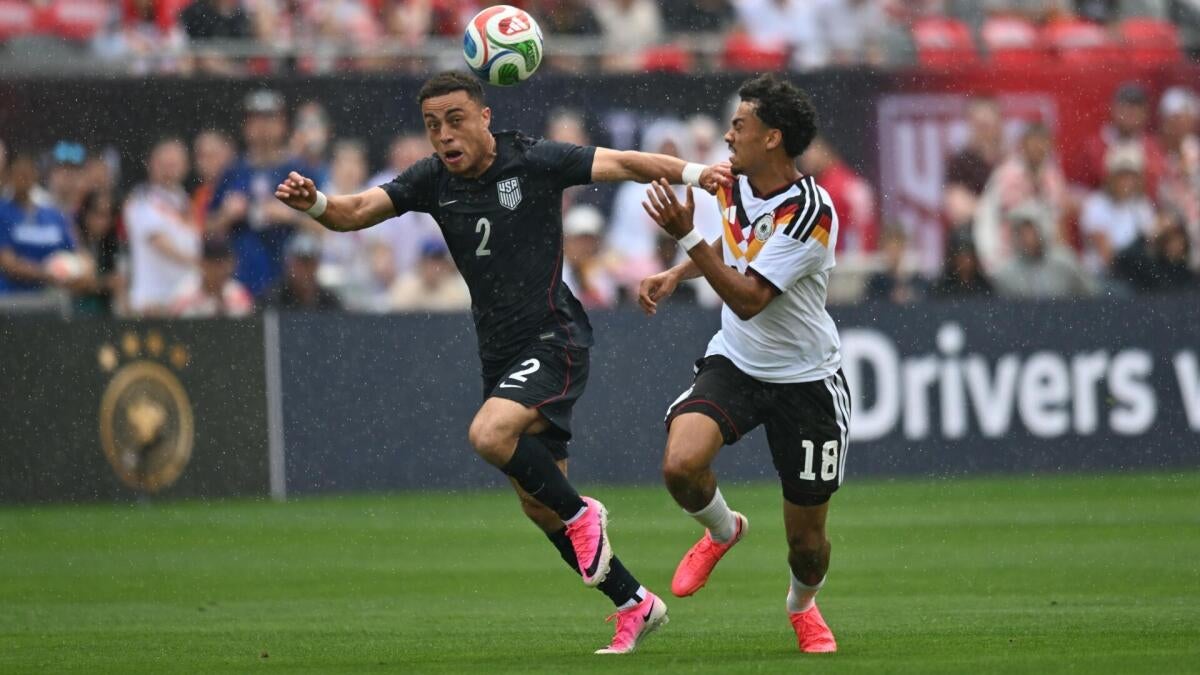

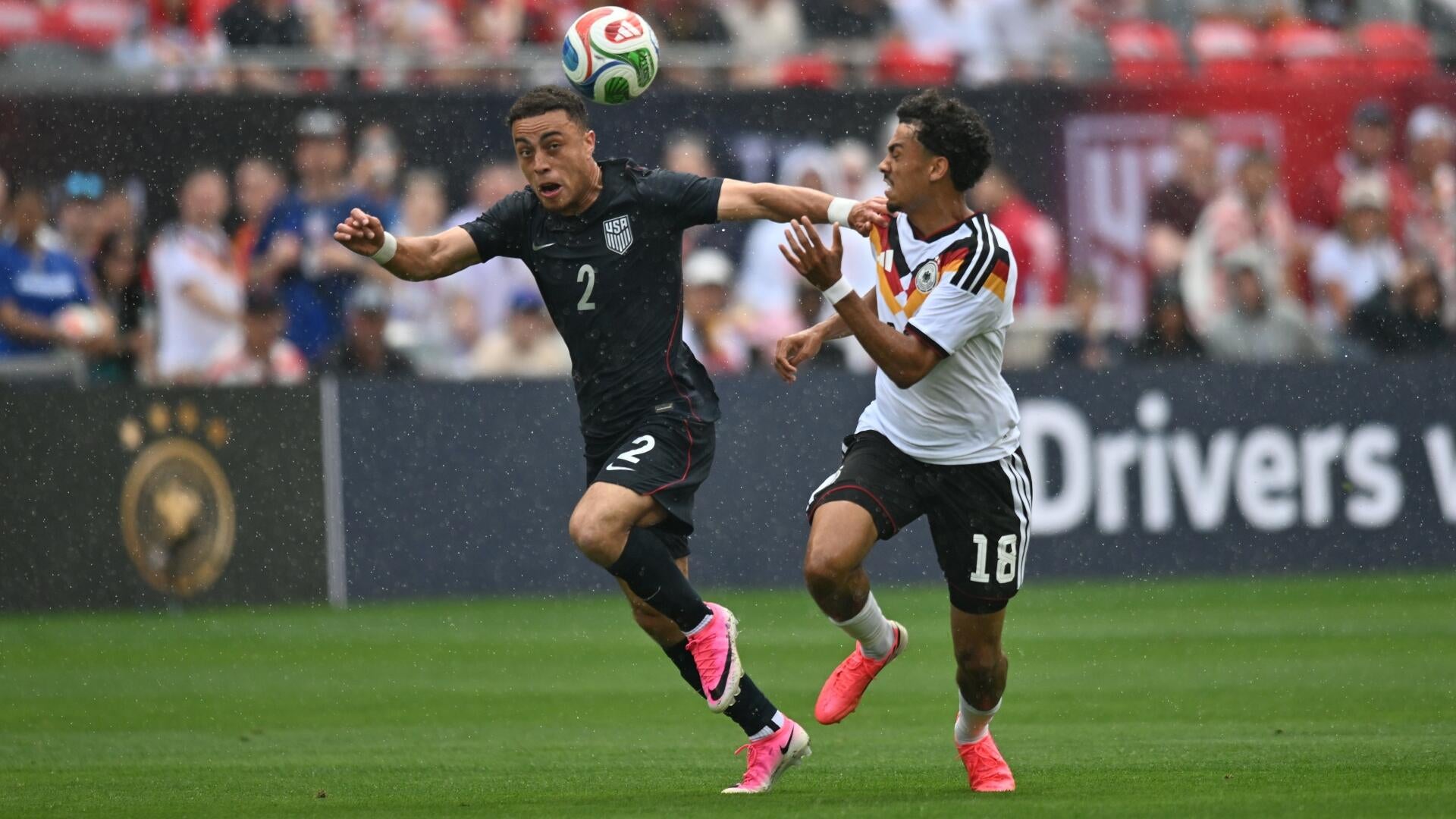
CHICAGO – In the interval between the previous World Cup and the imminent one, the U.S. men’s national team has leaned heavily on the influence of optimism, and after 11 days into an uplifting pre-tournament training camp, they appeared ready to face new challenges. Merely two minutes after a sold-out audience at Soldier Field showered them with support, Germany‘s Kai Havertz capitalized on a free header, putting the visitors ahead before the teams could fully settle into the match.
Reflecting on the rocky start to Saturday’s 2-1 defeat by Germany, head coach Mauricio Pochettino expressed his initial frustration but found a silver lining. “I was upset, of course,” he recalled. “But in hindsight, it’s fortunate because it allowed us to assess the team’s response. The reaction was incredible, very positive, and it’s beneficial that not everything went our way. It helped create an environment where we can handle similar situations in the future, especially during the World Cup.”
The final score accurately mirrored the match dynamics, with Germany outperforming the U.S. Their 12 shots generated 1.47 expected goals, compared to the USMNT’s 16 shots, which amounted to 0.99 expected goals. This loss adds to a less-than-encouraging record against European teams, casting a shadow over their upcoming group stage match against Turkiye on June 26. Nonetheless, the encounter with Germany signifies progress as they prepare for their World Cup debut against Paraguay in just six days at SoFi Stadium, near Los Angeles.
Saturday’s performance, along with the 3-2 victory over Senegal the previous week and Pochettino’s coaching history, suggests that the USMNT is prioritizing a robust offensive strategy as their best defense. Although this approach didn’t yield success against Germany—demonstrated by the early concession making it too easy for the opposition—there’s merit to the strategy, particularly with defender Chris Richards still recovering from an ankle injury. The U.S. team did not hesitate to create opportunities, managing to equalize before the 23rd-minute hydration break and maintaining their determination even after Germany’s second goal in the 57th minute by Leroy Sane.
“When you get knocked down, you have to get up and fight back,” captain Tim Ream emphasized. “The coaching staff has consistently communicated that mistakes will happen and things won’t always go as planned. It’s about the next move: how you react and what you do next. That’s a core message from Mauricio and his staff over nearly two years. We had no choice but to respond; otherwise, the game could spiral out of control.”
The memory of a game slipping away was fresh in their minds—March’s 5-2 loss to Belgium began positively, with the U.S. leading and entering halftime tied, only for things to fall apart in the second half. The commitment to an aggressive attack was evident, much like against Senegal. Antonee Robinson, who scored for the USMNT on Saturday, fully embraced the offensive role often seen in fullbacks, celebrating exuberantly. Pochettino humorously noted post-match that Robinson’s cramps midway through the second half might have been due to his intense exertion.
“I think all the energy was in his shot and that goal because after, cramps,” Pochettino said in jest. “Maybe we spend too much energy. We were so excited in the presentation of the players before the game. They were sometimes overexcited and we know very well that you drain the energy in these moments but I think it’s a great opportunity and to live that experience for sure helps in the first game of the World Cup.”
Robinson downplayed the issue despite the fact that he limped off the field, though the team is not certain about the specifics just yet.
“Not 100% sure but it feels fine now,” Robinson said. “More just really didn’t feel like I could continue so I just needed to get off the pitch and try to get it right.”
The real embrace of the all-out attack, though, came in Pochettino’s selection of Malik Tillman in the midfield. Tyler Adams remains the go-to pick at the base of midfield, the only true defensive midfielder in the squad, while the multitalented Weston McKennie was more advanced. Tillman, another player with plenty of range, was their go-between and much like Robinson, though, his standout quality is his attack-focused tendencies. Pochettino cited October’s UEFA Champions League game between Tillman’s Bayer Leverkusen and his former club PSV as an example of why he selected the player for a best-of-both-worlds role.
“It was him in front [of] the back four,” he recalled. “He’s a player that can because his physical condition, his technical condition, his capacity to go in different spaces, go higher, I think he’s a player that can play in every space on the pitch. Today, I am happy with him. He finished a little bit tired because it’s normal. He suffered a little bit in the last few months, didn’t play too much, didn’t compete but now I think he’s doing well and I am happy with his performance and in the evolution after not to play too much in the last few months in his club, in Leverkusen.”
Tillman, deeply introverted in off-pitch settings but fully in his element on the field, made a noticeable difference and remains as well-positioned as any to be a secret key as the USMNT target an impressive World Cup run.
“It’s good because we get another attack-minded player on the field.” Adams said. “I think that he helps us break lines, find solutions. Him and Weston had a good balance there as well. There’s probably some things that we need to tune up a little bit defensively to not get as exposed but when you play against Germany, where they overload the midfield, it’s always difficult against teams like that. They have so many guys that can play in those pockets so I think he did really well.”
The game marked one final experiment of the Pochettino era, a batch of 26 games building up to the World Cup that have been defined by tinkering – sometimes simply for the sake of it. Saturday’s team, though, looked as close to a World Cup starting lineup as he might have been able to envision considering Richards’ injury specifically. After 18 months of wondering what exactly Pochettino’s version of the U.S. team might look like, we seem to finally have our answer. The team has trended much like a group project that was assigned well in advance but was only completed right before the deadline, which is perfectly fine for an assignment in which the destination matters much, much more than the journey.
As Pochettino put it shortly before the team began their trip to their World Cup base of Irvine, Calif., “We are going to go [into] a decisive week.”


