
It seems that Americans have finally hit their limit with the tipping culture that has permeated daily life.
Over the years, tipping has extended beyond traditional settings to include places like coffee shops, takeout counters, ride-share services, and even self-service kiosks. This expansion has led many consumers to feel overwhelmed, prompting them to reduce their tipping habits compared to last year.
A recent survey conducted across the nation reveals that a significant 78 percent of Americans feel that the practice of tipping has become excessive. Furthermore, nearly half of the respondents have consciously decided to tip less in 2026, a response to the mounting financial pressures on household budgets.
This survey, carried out by restaurant technology firm Popmenu, highlights a growing resistance against what is perceived as incessant demands for additional payment amid already climbing costs.
From the 1,000 adults surveyed, 44 percent admitted to tipping less in 2026 than they did in 2025. This reflects a broader sentiment of dissatisfaction with the current tipping landscape.
Retail analyst Neil Saunders shared with the Daily Mail that consumers are not only frustrated with the increased amounts expected for tips but also with the expanding list of scenarios where tipping is deemed necessary.
‘There is growing resentment over tipping, which is partly driven by the fact everyone is feeling squeezed financially,’ Saunders said.
According to the survey, restaurants have been hit hardest by the backlash, with 35 percent of respondents saying they have reduced tips when dining out.
A new nationwide survey found that 78 percent of Americans believe tipping culture has become ‘ridiculous’
Grocery delivery services followed at 24 percent, while hotels, ride-share services, auto repair businesses and hair salons also saw notable declines.
The research points to growing ‘tipping fatigue’ among consumers who are grappling with higher costs for food, housing, utilities and other everyday expenses.
Many Americans say digital payment systems have only made the problem worse.
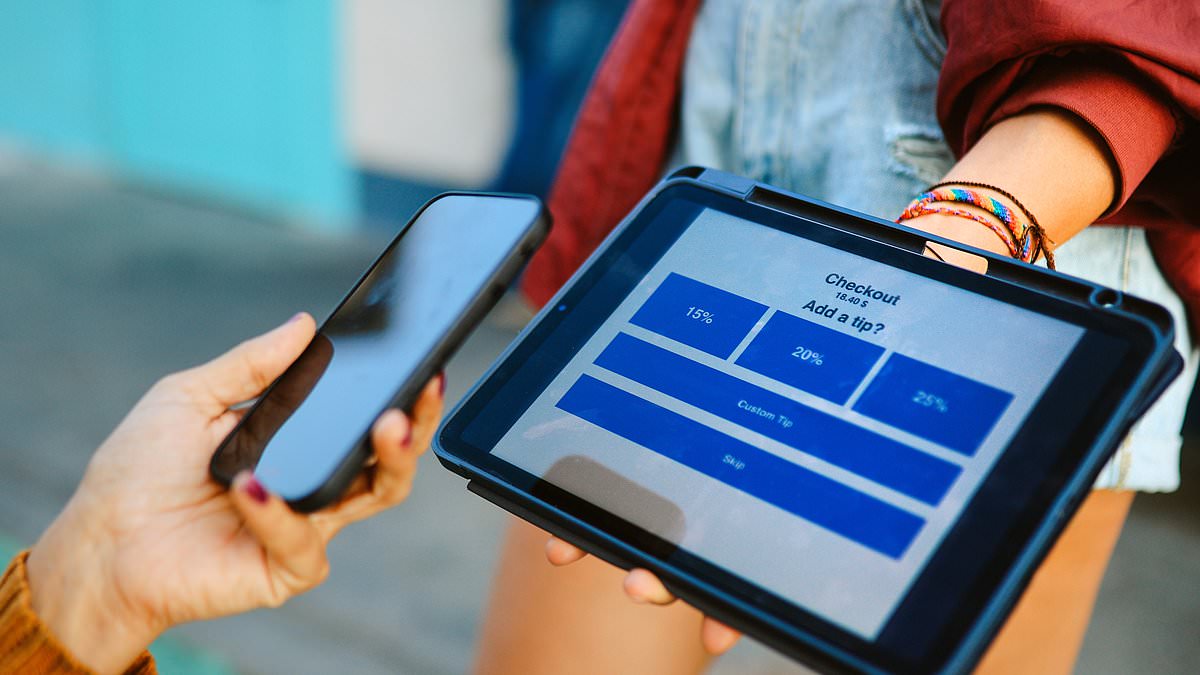
Nearly three-quarters of respondents said they have noticed restaurants increasing suggested tip amounts on checkout screens, with many establishments now prompting customers to leave 15 percent, 20 percent or even 25 percent gratuities.
While 59 percent of consumers still say they feel pressured to tip when presented with a digital prompt, that figure has fallen from 66 percent just six months ago, suggesting people are becoming more comfortable clicking ‘no tip.’
In fact, 42 percent of respondents said they now feel increasingly comfortable skipping gratuities altogether for services where tipping was not traditionally expected.
Consumers also reported spending less on what they considered unnecessary tips.
Over the past year, respondents estimated spending around $130 on gratuities they felt were unwarranted, down from $150 in a similar survey conducted in late 2025.
Just a decade ago, 15 percent was considered the standard tip for average service. Now, that number has spiked to 20 percent or often more
Only 41 percent of diners now tip restaurant servers 20 percent or more, down from 45 percent last year

Retail analyst Neil Saunders told Daily Mail that consumers are increasingly frustrated by both the size of expected tips and the growing number of situations in which they are asked to leave them
The trend is also showing up in restaurants.
Only 41 percent of diners now tip restaurant servers 20 percent or more, down from 45 percent last year.
The decline was even sharper for food delivery drivers, with the share of customers tipping 20 percent or higher dropping from 23 percent to 15 percent.
Even traditionally tip-friendly venues are seeing pullbacks. The percentage of consumers who tip at coffee shops fell from 46 percent to 39 percent over the past six months, while tipping at food trucks and fast-food restaurants also declined.
Popmenu CEO Brendan Sweeney said workers who rely on gratuities are increasingly feeling the impact.
‘Tip-reliant professions are feeling the financial impact of tipping fatigue more than anyone,’ Sweeney said. ‘This is compounded by customers having less disposable income due to inflated costs for food, energy and other necessities.’
‘One is the level of tips, which seem to be getting higher and higher,’ said Saunders. ‘Adding 25 percent on top of the cost of a meal seems excessive to many, and it adds a huge amount to the price.’
He added that consumers are also objecting to being asked to tip for services that traditionally did not warrant one.
‘The other dimension is being asked to tip for things where only basic service has been provided. Customers collecting their own food from restaurants, for being served in a retail store, and so forth all feel unnatural and unreasonable.’
Despite the backlash, many consumers remain open to alternative compensation models.
More than half of respondents said they would be willing to pay higher menu prices if it meant restaurant workers received better wages and tipping could be eliminated altogether.