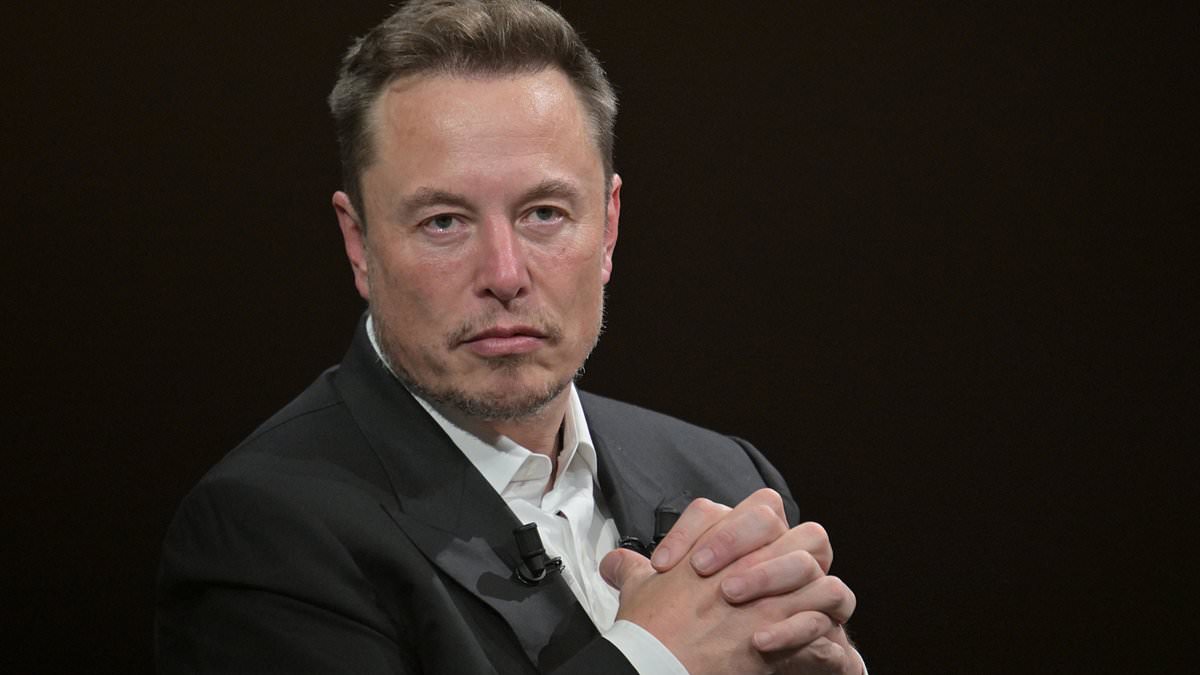

SpaceX has made a dramatic entrance onto the public markets, giving investors their first chance to trade shares in Elon Musk’s rocket and AI business after what has been described as the largest stock market listing on record.
The company began trading on the tech-heavy Nasdaq exchange at 2.30pm UK time under the ticker symbol SPCX.
Before trading started, SpaceX sold 555.6 million shares at $135 each, raising $75 billion and giving the company a valuation of roughly $1.77 trillion.
Investor appetite was clear from the opening bell. The stock debuted at $150, 11 per cent above its initial public offering price, then surged past $170 during the session before pulling back slightly to end the day at $161. That left the shares up 19 per cent from the IPO price by the close.
The strong debut underscored heavy demand for the offering, with interest from buyers exceeding the number of shares available. Investors are betting on SpaceX’s ambitions in areas including space tourism, asteroid mining and lunar data centres, hoping those plans could translate into outsized returns.
The listing also stood out for the level of access given to ordinary investors. Retail buyers were allocated 30 per cent of the offering, far above the more typical range of 5 to 10 per cent, helping the IPO capture wider public attention.
And a small army of British investors were among them, figures this morning revealed they scooped up 2.7million SpaceX shares in the IPO, costing a total of £270million.
British investors who applied for around £2,000 of shares or less got their full allocation, while those asking for more got scaled back.
With investors asking when they will know what has happened to the SpaceX share price, when they can sell IPO shares, and when they can buy in the open market, we answer your SpaceX IPO questions.
SpaceX made its stock market debut this afternoon offering ordinary investors the chance to buy and sell shares
What’s happened with the SpaceX IPO?
Elon Musk had long trailed a stock market listing for SpaceX, as he sought wider support for his space-focused vision for the future.
Last month, SpaceX published its highly anticipated prospectus, which laid out Mr Musk’s plans for SpaceX and indeed the world.
The billionaire wants to ensure humans don’t suffer ‘the same fate as dinosaurs’, and sees a future no longer ‘locked in the pages and screens of science fiction’.
It may sound like something straight out of a sci-fi film, with interplanetary travel, data centres in space and asteroid mining, but investors have bought into Musk’s story.
The successful IPO means SpaceX raised $75billion with shares priced at $135 a share. Retail investors applied for more than $100billion of stock, according to Bloomberg. That was above the $15billion to $22.5billion believed to be earmarked for private investors rather than institutions.
Did UK investors get SpaceX IPO shares?
SpaceX was generous in offering shares to small investors, although it appears the UK has ended up with a smaller allocation than forecast.
There was believed to be as much as $2billion set aside for British retail investors, but an update from operator Marex this morning said that 2.7million shares were allocated to the UK. At $135 per share, or £100, this equates to $364million or £270million.
Even getting to take part was unusual for UK investors though, as US IPOs are normally off the table for UK investors due to regulations from America’s Securities and Exchange Commission.
Prospective investors had the opportunity to apply for SpaceX shares between last Friday 5 June and 11.59pm on Wednesday 10 June, through authorised platforms such as AJ Bell, Barclays Private Bank, CMC Markets, eToro, Freetrade, Hargreaves Lansdown, IG, Interactive Brokers, Interactive Investor and Revolut.
Those who missed the deadline had to wait until this afternoon’s listing to buy in the open market. Once shares are available to buy, they can do so through their investing platform.
Did UK investors get all the shares they asked for?
As one of the most hyped stock market listings in history, investment platforms have been working all week to ensure that as many British private investors as possible will be able to buy in.
The popularity of the shares meant some investors will only get a fraction of what they bid for.
Marex says those who applied for up to $2,700, equating to £2,013, in the retail offer were allocated in full to the nearest whole share. Those who applied for more were scaled back, with individuals capped at 1,000 shares – so $135,000 or £100,000 worth.
The majority of the $75billion offer was reserved for institutional investors such as investment banks, pension funds and wealth managers, but 61 per cent of ordinary investors got all they applied for.
Investment platforms say that allocations will be communicated to successful applicants before the US market opens.
How soon can investors sell SpaceX shares?
As with many IPOs, there will be plenty of investors looking to make a quick buck: buying in with the expectation that shares will rise and then selling quickly.
When companies float on the stock market, a so-called lock-up period prevents large shareholders, such as pension funds, from selling their shares. This typically lasts between 90 and 180 days to stabilise the stock.
This does not typically apply to small private investors, who are free to sell their shares on the open market as soon as trading begins.
Some have already been selling their IPO stock for a quick profit this afternoon but there have been more buyers than sellers, driving up the price of SpaceX shares.
Investors have been warned that early trading may be volatile.
What if I want to hold onto SpaceX shares?
Many IPO investors will not want to sell out of SpaceX immediately because they consider it a long-term investment.
If you bought in the IPO and plan to hold on to the shares, then you don’t need to do anything, except fasten your seatbelt.
Buying in any IPO has its risks, not least for SpaceX, which has come under scrutiny for potentially being overvalued, as it is loss-making and has vast capital expenditure.
Other analysts are more bullish and think that there is a long-term investment case for SpaceX, which has a commanding position in its Starlink satellite business and also its rocket launch arm.
Whichever camp is right, investors are likely to be in for a rollercoaster ride with substantial share price movements.
Analysts at New Street Research expect SpaceX shares to rise from the listing price of $135 to $165 within 12 months – pushing its value above $2trillion – with a ‘high-end estimate’ suggesting the stock could hit $330 further down the line.
Those urging caution point to Facebook’s market debut in 2012 when, after an initial spike, the shares halved as questions were raised about its business model. Facebook shares are now almost 1,400 per cent higher than the IPO price. Shares in Musk’s other firm Tesla have soared over 31,000 per cent since its IPO.
To find out more, read our analysis where we asked experts for their predictions and whether SpaceX investors should buy, hold or sell.
If you didn’t get IPO shares, when can you buy?
If you’re one of the investors who didn’t meet the deadline to sign up for SpaceX shares, then it does not mean you will miss out on stock entirely.
Now markets are open, you will be able to buy shares. However, there has been a first-day ‘pop’, meaning that investors would pay more than the IPO price.
Most investment platforms offer the opportunity to buy and hold US shares but some will charge more in dealing fees and commission-based exchange rates than others. Check this carefully before you buy and consider using another platform if it will be substantially cheaper.
For example, Trading212 has no dealing fees for US shares and charges a 0.15 per cent exchange rate commission. Hargreaves Lansdown charges £6.95 on US share dealing and has a 0.99 per cent exchange rate commission fee.
> What you need to know before you invest in SpaceX
Can I hold SpaceX shares in an Isa or Sipp?
British investors can hold US shares in a stocks and shares Isa or self-invested personal pension and take advantage of the tax-friendly wrappers. There is no capital gains tax to pay or dividend tax incurred within both. Albeit, SpaceX is unlikely to pay dividends any time soon.
How else can I get a stake in SpaceX?
There are other ways to gain exposure to SpaceX indirectly, while also spreading your risk across other companies. The most accessible route for investors in Britain to secure a stake in SpaceX would be via investment trusts.
Unlike open-ended funds, investment trusts can hold stakes in private companies and capture high levels of growth during their earliest stages.
Scottish Mortgage, Britain’s largest investment trust managed by Baillie Gifford, holds just under £3billion worth of SpaceX. It also offers exposure to other AI firms that are expected to float later this year, including Anthropic.
Baillie Gifford US Growth Trust and the Schiehallion Fund also hold SpaceX.
If you already invest in a total stock index fund, then you will gain exposure to SpaceX once it is incorporated into benchmark indices.
DIY INVESTING PLATFORMS
AJ Bell
AJ Bell
Easy investing and ready-made portfolios
Hargreaves Lansdown
Hargreaves Lansdown
Free fund dealing and investment ideas
interactive investor
interactive investor
Flat-fee investing from £4.99 per month
Freetrade
Freetrade
Investing Isa now free on basic plan
Trading 212

Trading 212
Free share dealing and no account fee
Affiliate links: If you take out a product This is Money may earn a commission. These deals are chosen by our editorial team, as we think they are worth highlighting. This does not affect our editorial independence.
Compare the best investing account for you


