

GENEVA — A memorable “Saturday Night Live” sketch from December 2019 imagined President Trump, played by Alec Baldwin, being shut out by the world’s “cool” leaders and relegated to a lunch table with Latvia.
What played as comedy six and a half years ago could feel uncomfortably close to reality at this week’s G7 summit on the shores of Lake Geneva.
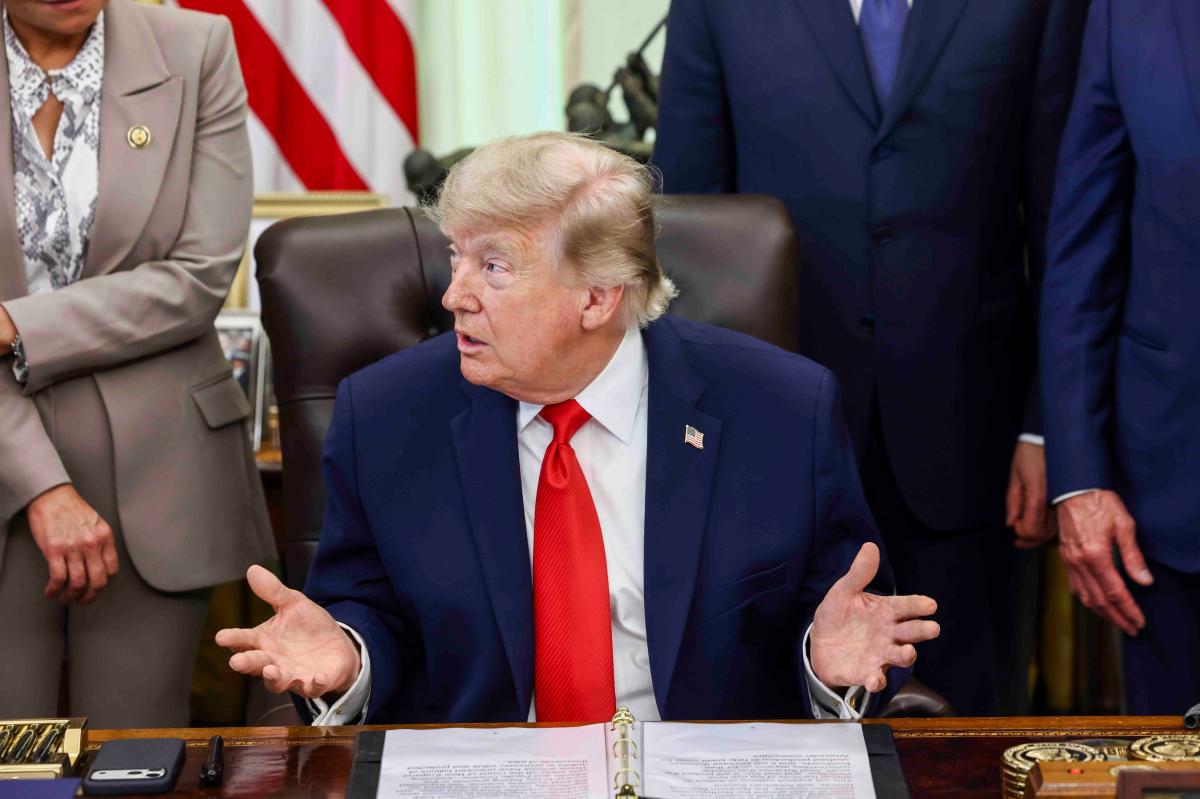
Trump arrives at the gathering after months of public clashes with five of the six leaders who make up the forum’s core membership. French President Emmanuel Macron, serving as summit host, is the only one scheduled for a one-on-one meeting with the U.S. president during the event.
European officials are expected to keep tensions from boiling over, but few are under any illusion that the atmosphere will be warm. “No one wants to have a confrontation, even if things get quite passive aggressive at times,” Max Bergmann, a Europe expert at the Center for Strategic and International Studies, told The Post last week.
Bergmann said the risk of a more dramatic rupture still hangs over the summit. “There’s always the possibility that things might snap, and it might get rather dramatic,” he said, invoking the old “SNL” sketch as a fitting image of Trump’s potential isolation. “I kind of think leaders will keep their distance.”
The strain is rooted in several disputes. Trump has sharply criticized Macron, British Prime Minister Keir Starmer and German Chancellor Friedrich Merz, accusing them of failing to back what he described as his war with Iran. Those same European leaders, meanwhile, have grown increasingly frustrated with Trump’s tariff agenda and his approach to the war in Ukraine.
Italian Prime Minister Giorgia Meloni has also been distancing herself from Trump, who is unpopular in her country, as she faces a challenging general election no later than the end of next year. The president also publicly attacked Meloni, with whom he bonded at the start of his term, after she defended Pope Leo XIV’s own critique of US actions in the Middle East.
And Canadian Prime Minister Mark Carney, like his predecessor Justin Trudeau, has borne the brunt of many Trump attacks — including a disruptive trade war and threats to make America’s neighbor the 51st state.
The only G7 leader currently believed to be on good terms with Trump is Japanese Prime Minister Sanae Takaichi, and even he had to diplomatically sidestep a presidential dig in March over Tokyo’s 1941 attack on Pearl Harbor that brought the US into World War II.
Despite the potential for awkwardness, the president is not expected to play nice in the French resort town of Evian-les-Baines.
“The president is always candid with his colleagues,” a senior administration official said ahead of Trump’s departure to Europe early Monday. “We’re not afraid to have these hard conversations.”
“The reality is when we go to these meetings behind closed doors, we have very straight, straightforward conversations.”
Even with Trump announcing progress on a peace deal to end the Iran war Sunday, Europeans are still smarting from high fuel prices caused by the disruption to shipping in the Strait of Hormuz, repeated threats to annex Greenland from Denmark and the president’s public second-guessing of the US role in NATO.
“Transatlantic relations are, obviously, incredibly strained,” said Bergmann, adding that Trump’s open coveting of Greenland “was quite shocking to Europe. That has led to a real breach of trust and a sense that the United States is not really a reliable partner.”
“We are increasingly seeing Europeans beginning to think about a life with less America.”
After Trump bolted last year’s G7 summit in Canada early amid another war in the Middle East, Macron has come up with a strategy to prevent a repeat performance.
The French president has invited Trump to a lavish dinner at Versailles on Wednesday evening after the summit ends, ostensibly to mark the 250th anniversary of American independence.
Macron also pushed back the start of the summit by one day so Trump could spend Sunday — his 80th birthday — presiding over the special UFC Freedom 250 card on the White House South Lawn.
The seven leaders will still be at close quarters throughout the three-day gathering, including at a welcome dinner Monday evening, a working session on Ukraine Tuesday, and meetings focused on the global economy and AI Wednesday.
Ukrainian President Volodymyr Zelensky will be at Tuesday’s session but he doesn’t have a sitdown with Trump planned, though the White House said the two men could speak on the sidelines.
Zelensky tweeted that he called Trump on Sunday to wish him a happy birthday and talk about the status of the war with Russia. But the Ukrainian’s focus has been on wooing European allies, as he traveled to London last week for a meeting with Starmer, Macron and Mertz.
In a sign of where Trump’s mind is at this week, his non-Macron one-on-one meetings will feature the leaders of Qatar, the United Arab Emirates and Egypt, as well as Indian Prime Minister Narendra Modi.
The White House also tried to set up a meeting with Saudi Crown Prince Mohammed bin Salman, but he had a scheduling conflict.
Trump and his fellow G7 leaders will also have a joint meeting with Middle East leaders, at which they will discuss de-mining the critical Strait of Hormuz, which is scheduled to reopen on Friday.
Macron and Starmer have said they could put together an operation to clear the strait — a move they hope will quell Trump’s criticism that they haven’t done enough to help with Iran.
The White House has acknowledged such a move by London and Paris would be helpful.
“As the straits open, we’re going to be very involved in demining, and to the extent that G7 countries can participate in that,” a senior administration official said, “that’s also going to be a helpful thing to get things back to normal as quickly as possible.”