
The Federal Reserve held its benchmark interest rate steady on Wednesday as inflation showed renewed strength, though nearly half of the central bank’s policymakers indicated they could back a rate increase before the end of the year.
The Federal Open Market Committee kept the federal funds rate — a key benchmark that influences borrowing costs for households and businesses — in a range of 3.5% to 3.75%. The decision was widely expected by economists.
In its June guidance, the Fed also dropped the so-called easing bias, language used in recent policy statements to suggest the central bank was inclined to cut rates. The latest statement was noticeably shorter and more streamlined than usual.
“You might have already noticed something, a difference in today’s policy statement,” Warsh said during a press conference following the decision. “It’s a bit shorter, a bit simpler and it dispenses with some older language. That statement just gives you the facts as best we can judge it.”
Alongside the rate announcement, the Fed published its Summary of Economic Projections, which showed that nearly half of FOMC participants believe a rate hike later this year could be warranted. The decision to leave rates unchanged was unanimous, with all voting members supporting the current target range.
“Inflation remains elevated relative to the Committee’s 2% goal, in part reflecting supply shocks that have driven price increases in certain sectors, including energy,” the FOMC said in its statement on Wednesday.
“Today’s meeting confirms that the Fed’s recent hawkish shift was not just about higher energy prices,” Kay Haigh, global head of Fixed Income and Liquidity Solutions in Goldman Sachs Asset Management, said in an email. “Despite the recent pullback in oil, half of the members of the FOMC expect rate hikes as soon as this year, reflecting strong labor market and inflation data.
Haigh added, “Our base case remains that the Fed can just about avoid hikes, but the path is narrow, and there will be a high premium on the incoming inflation data.”
This week’s meeting is the first presided over by new Federal Reserve Chairman Kevin Warsh, who was picked by President Trump to succeed former chair Jerome Powell.
Investors and economists will be closely watching Warsh during his 2:30 p.m. ET press conference for indications of how he plans to keep the U.S. economy on track, as well as his outlook on inflation and the labor market.
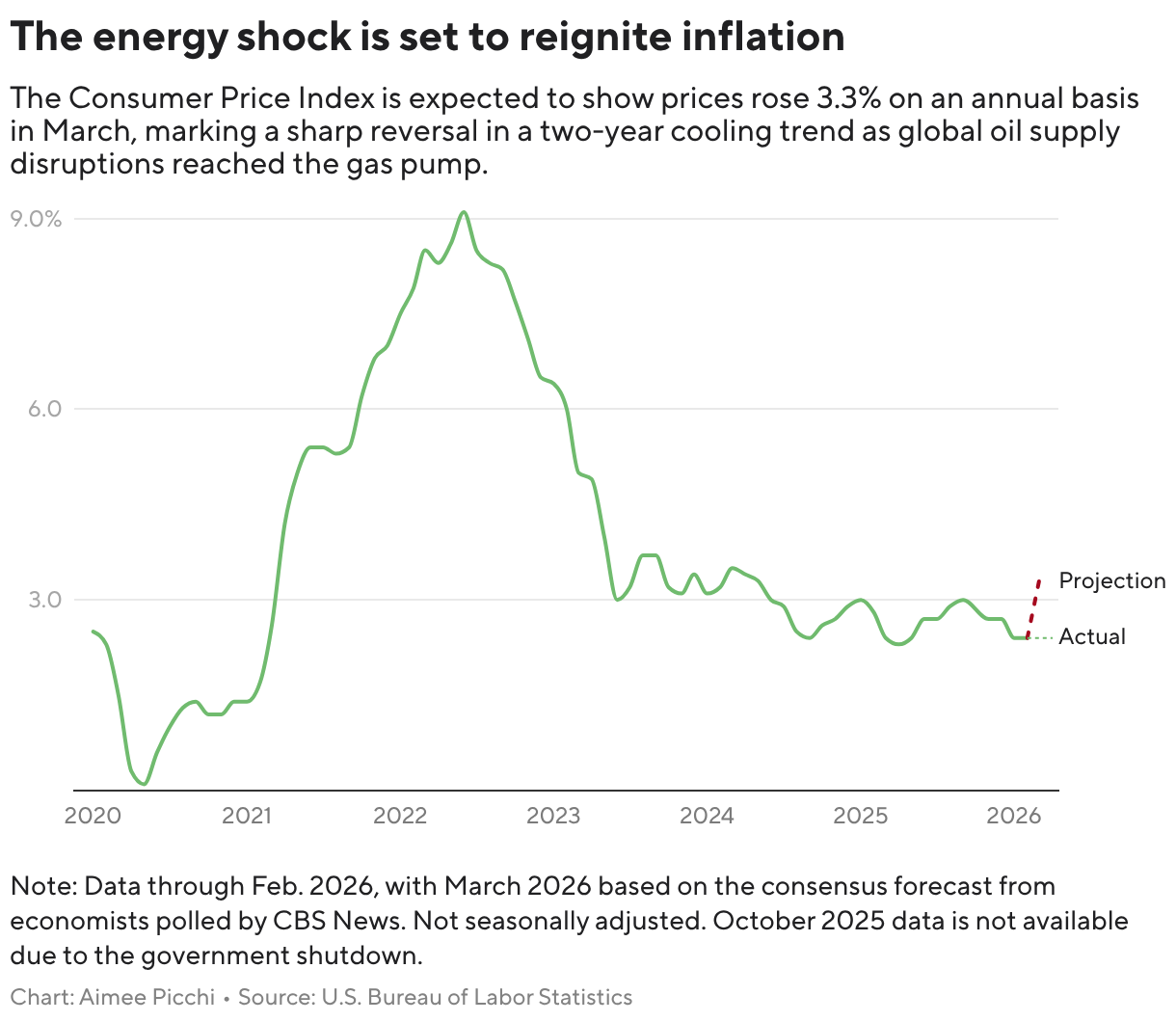
Mr. Trump had repeatedly pressed Powell, whose term as Fed chief ended in May, to lower interest rates. But with U.S. inflation at its highest level in more than three years and well above the Fed’s 2% annual target, many economists expect the FOMC to remain on the sidelines through year-end.
“Warsh has two immediate jobs at this first meeting: getting the FOMC and the broader Fed leadership aligned with his vision going forward, and making sure the markets have confidence in what he’s doing,” said Hank Smith, head of investment strategy at investment firm Haverford Trust, in an email before the meeting.
Smith added, “This is not the environment for a rate cut or a rate hike — it’s an environment for ‘steady as she goes’ — and I’ll be listening for whether he projects that kind of discipline and team-building in his first press conference.”
The Fed’s new inflation forecast
Another major change in the Fed’s Summary of Economic Conditions, or SEP, is a sharp increase in inflation expectations for 2026.
The previous SEP, issued in March, forecast that the personal consumption expenditures index, or PCE, would end the year at 2.7%. But in today’s forecast, the FOMC members are penciling in inflation rising to 3.6% by year end. Excluding volatile energy and gas prices, the inflation number could hit 3.3%, up from the FOMC’s March projection of 2.7%.
“The median official now expects headline and core inflation well above 3% by the end of this year, and core inflation to reach 2.5% by end-2027,” Oxford Economics said in a Wednesday report.