
The Detroit City Council voted Tuesday to extend the city’s agreement with SoundThinking, keeping the company’s ShotSpotter gunshot detection system in place after a close decision.
The renewed contract allows the California-based firm to continue supplying Detroit with the public safety technology through the end of March 2027.
ShotSpotter relies on acoustic sensors placed above city streets to identify sounds that resemble gunfire and send automatic alerts to law enforcement when a potential shooting is detected.
According to Michigan Advance, the contract renewal cleared the council by a narrow 5–4 vote, following debate over the system’s cost and concerns raised by critics about privacy.
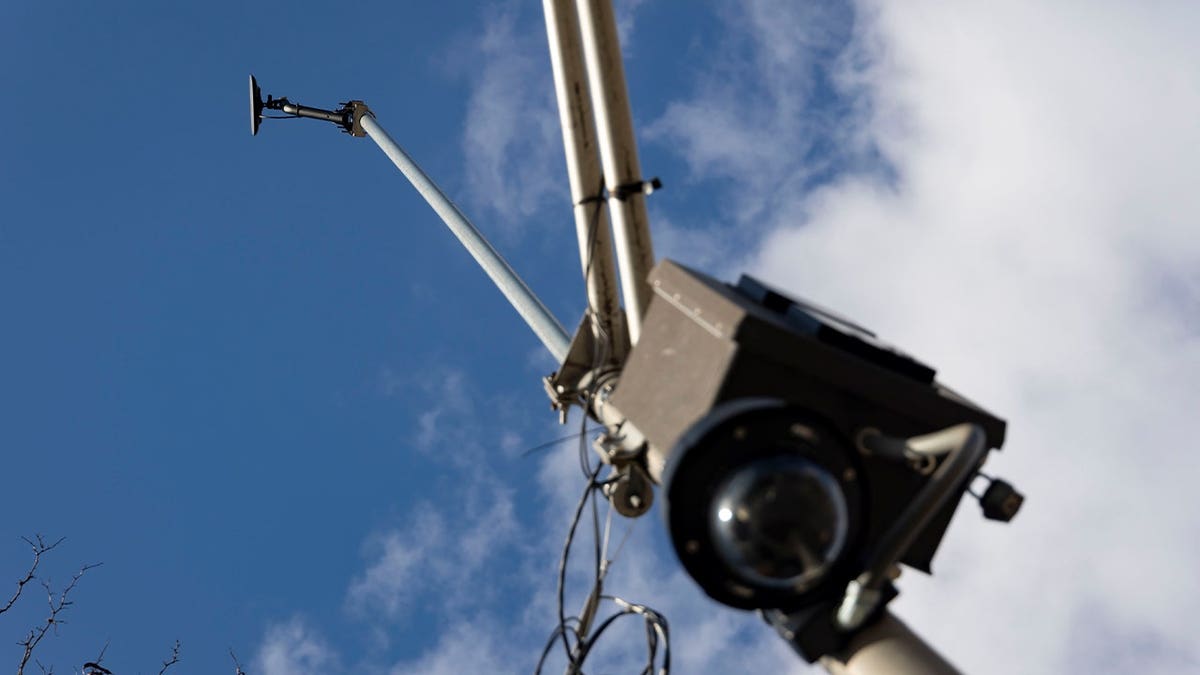
ShotSpotter gunshot detection technology is seen in use on a light pole in Chicago’s Humboldt Park neighborhood in February. (Brian Cassella/Chicago Tribune/Tribune News Service via Getty Images)
Council President James Tate, who has previously backed ShotSpotter’s use in Detroit, reportedly voted against the latest renewal, saying the $2.1 million cost was hard to defend.
“I have a challenge with that dollar amount. It’s not about the technology,” Tate said.
“When asked, would they renegotiate the contract, the answer was no, because we’ve been giving you a deal in the first place, so that leads me now to a situation where I cannot support this particular amendment.”

The Detroit skyline is seen from the water in Detroit, Mich. (Roberto Machado Noa/LightRocket)
READ MORE: Tragic Mass Killing Claims Entire Family in Florida Community
Councilmember Gabriela Santiago-Romero, who voted against the measure, said her opposition stemmed from a lack of data showing the technology’s effectiveness, Michigan Advance reported.
“Frankly, I still have not heard enough support from the public, have not seen data that shows that this is working for the cost and that it’s actually protecting our information,” Santiago-Romero said.
Gabrielle Dresner, a policy strategist for the ACLU of Michigan who testified against the extension, said false alerts can lead to unnecessary police responses and reinforce perceptions that minority communities are inherently dangerous, according to the outlet.

A Detroit police car sits on a downtown street in Detroit, Mich., on July 18, 2014. (Raymond Boyd/Getty Images)
Critics also questioned whether acoustic microphones monitoring public spaces could amount to a form of surveillance, as well as who would have access to any audio data collected.
However, the ShotSpotter technology has reported successful cases.
According to Assistant Chief Franklin Hayes, a ShotSpotter alert on Detroit’s west side led officers to a gunshot victim who was found alive in a case where no one had made a 911 call, Michigan Advance said.
The technology has drawn public controversy since Detroit first signed a contract covering certain police precincts in 2020, and again in late 2022.