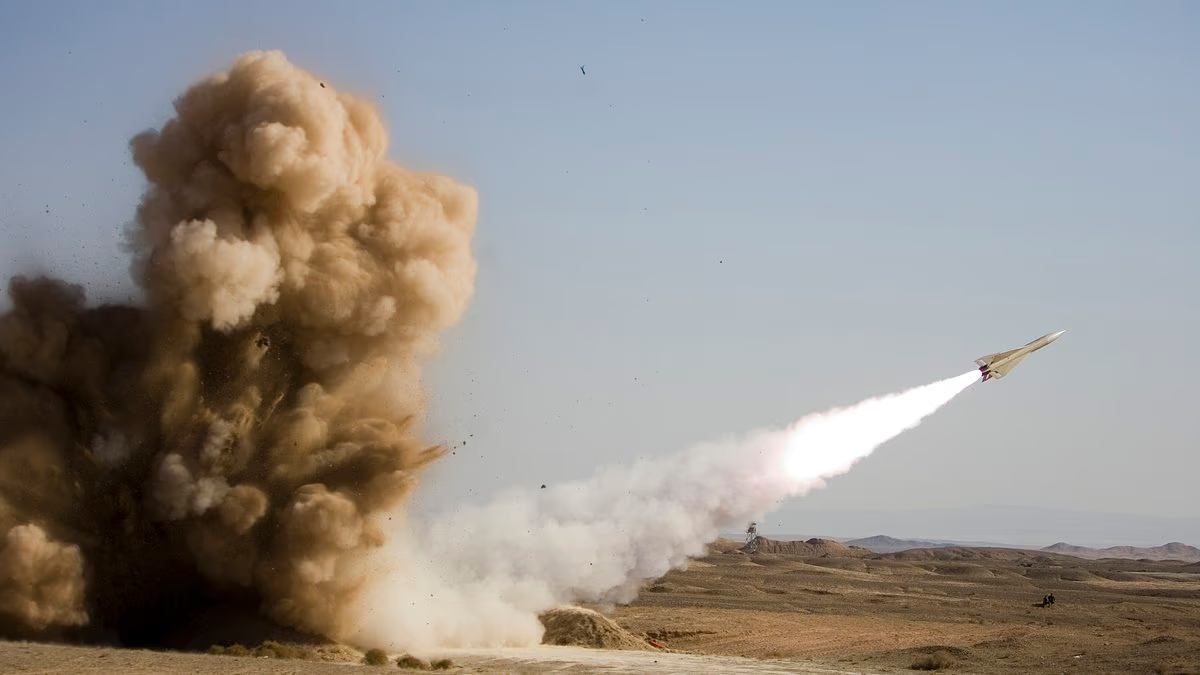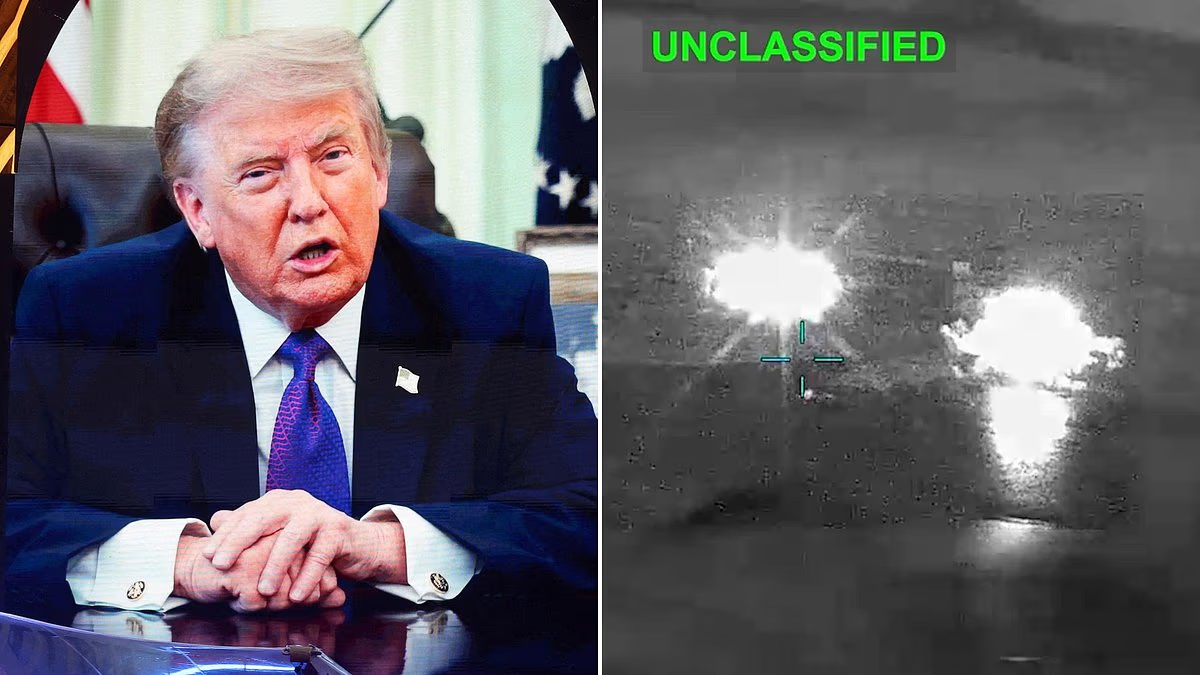


The United States and Iran have agreed to “stand down for now” after a volatile weekend of missile launches, drone attacks and military retaliation brought an already fragile ceasefire close to breaking point. Following several days of intensifying exchanges near the strategically crucial Strait of Hormuz, officials said Washington and Tehran are expected to pause further military action for the time being, offering a tentative opening for diplomacy to contain the latest Middle East crisis. A Trump administration official told CNN on Sunday that the two sides had agreed to halt hostilities, saying, “Both sides will stand down for now and vessels can move freely.” Iran, however, has not publicly confirmed its acceptance of the arrangement, leaving questions about whether the uneasy calm can endure. A second US official said American and Iranian representatives are expected to meet Tuesday in Doha, Qatar, as they try to preserve negotiations after one of the most serious flare-ups since the countries reached a memorandum of understanding earlier this month. The recent violence has placed that agreement under severe strain. It was designed to suspend hostilities while negotiators pursued a broader settlement over a 60-day period.
Diplomatic talks continue despite tensions

Earlier Sunday, a senior US administration official said diplomatic efforts had not been derailed by the military exchanges. “Nothing has been canceled. Technical talks regarding the implementation of MoU are on track for the coming days as planned, and deconfliction channels are up and running after the Lake Lucerne Summit,” the official told CNN, referring to recent talks in Switzerland led on the US side by Vice President JD Vance. The memorandum set out a framework to reopen the Strait of Hormuz, ease some financial restrictions on Iran and begin technical negotiations related to Tehran’s nuclear program.
US projects strength as tensions rise

Those talks are now moving forward against the backdrop of renewed military confrontation. President Donald Trump cautioned that the United States was ready to take additional military action if Iranian attacks continued. Iran, in turn, warned that any further violations of the ceasefire would “result in the complete halt of all diplomatic processes.” Despite the sharp rhetoric, US officials have emphasized what they describe as a strong American military posture. One US official told CNN that Iran’s latest barrage of drones and missiles caused no damage to American personnel, bases or facilities in the region.
Iran’s strikes intercepted, no US injuries

“All drones and missiles launched by Iran were shot down, intercepted, or failed to reach their intended targets,” the official said, adding that there were no US injuries and no strikes on American locations. “To be clear, Iran failed,” the official said. Iran’s Islamic Revolutionary Guard Corps said it had targeted US military sites in neighboring countries, including Kuwait and Bahrain, after American strikes hit Iranian locations over the weekend.
Shipping lane reopens amid uncertain truce

The attacks are the latest in a series of military exchanges in recent days that have repeatedly threatened to collapse the diplomatic process before it could gain traction. Although the Trump administration says both sides will “stand down for now,” it is still unclear how long the pause will last or whether Tehran agrees with Washington’s characterization of the situation. For the moment, officials say commercial ships should be able to move freely through the Strait of Hormuz, one of the world’s most important maritime routes, though conditions at sea have not yet fully reflected the reported diplomatic breakthrough.
Regional tensions threaten fragile ceasefire

The wider negotiations are also being complicated by developments elsewhere in the region. Iran has said any lasting agreement with the United States must include a full withdrawal of Israeli forces from Lebanon, where continued fighting involving Hezbollah has added another layer of difficulty to already sensitive peace efforts. As negotiators prepare to meet again in Qatar this week, the coming days may prove decisive in determining whether the latest ceasefire holds — or whether the weekend’s exchange of fire was merely a pause before another escalation.