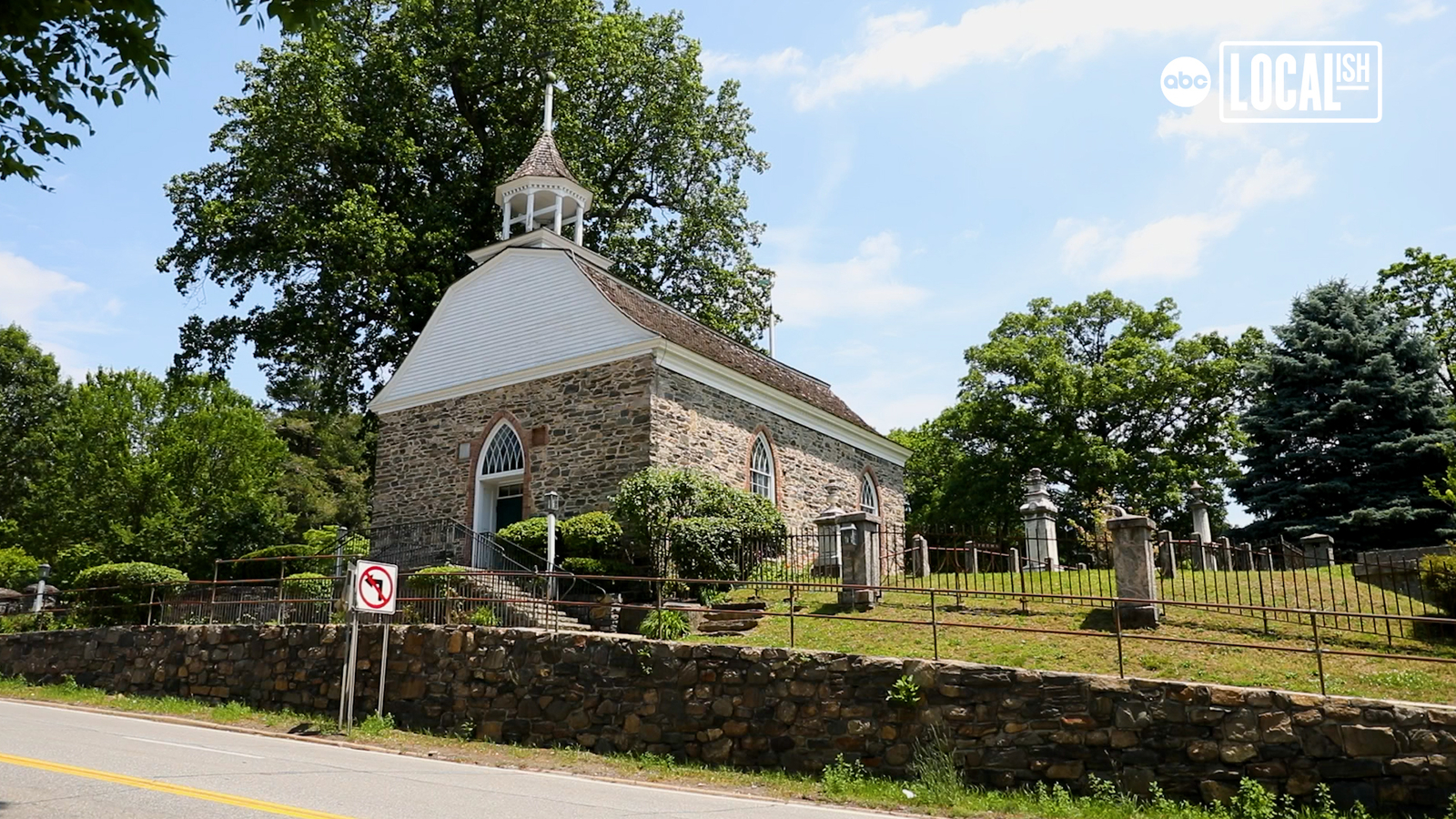
SLEEPY HOLLOW, New York — The Old Dutch Church of Sleepy Hollow stands among America’s most storied landmarks. For more than 300 years, the stone church — the oldest surviving church building in New York State — has endured through colonial settlement, the American Revolution and the unfolding of the nation’s history.
Its fame, however, is most closely tied to Washington Irving’s enduring tale, “The Legend of Sleepy Hollow,” and the terrifying figure of the Headless Horseman who rides through the Hudson Valley in the author’s imagination. The church was founded in the late 17th century by merchant Frederick Philipse and his wife, Margaret Hardenbroeck Philipse, as part of an effort to attract Dutch settlers to the family’s vast 55,000-acre estate, land that had previously been home to the Lenape people.
“The church here was built as a way to attract settlers,” said Deborah McCue, a docent at the church. “We have a bell in our belfry that was brought over from Holland by Margaret Hardenbroeck. We date the beginning of our church from that bell,” placing its origins in 1685.
During the Revolutionary War, the church — located in what is now fittingly known as Sleepy Hollow, New York — stood within the so-called “Neutral Ground,” a perilous zone between British and American forces. Local farmers were trapped between the two sides, as soldiers from both armies sought food, livestock and supplies.
That turbulent chapter of local history would eventually help shape one of the most famous ghost stories in American literature.
Irving did not create the concept of a headless rider from scratch. Historians say he blended European folk traditions with Revolutionary War lore from the region to craft the ghostly Hessian trooper who stalks Sleepy Hollow and menaces the unlucky schoolteacher Ichabod Crane.
“Having a Hessian soldier show up at your door was a frightening thing,” McCue said. “They were usually there to loot and burn.”
One newspaper report from 1798 recounted the story of a Hessian soldier being decapitated by an American cannonball during the Revolution — a tale that circulated years before Irving included “The Legend of Sleepy Hollow” in his 1819-20 collection, “The Sketch Book of Geoffrey Crayon, Gent.”
READ MORE: Where Is Amy Bosley Now? Husband Bobby Murder Motive And Parole Update – Is She Still In Prison?
Historians believe that existing lore, combined with Irving’s literary mastery, helped shape the tale that would forever define the region.
“It sits at the crossroads of so many layers of American culture – from the Lenape community and the Dutch period to the British colonial era. In some ways, Washington Irving ushers in an American age,” McCue said.
The church survived the war, but nearly disappeared in 1837 when a fire damaged much of the building. Parishioners saved the structure and carefully rebuilt it, preserving much of what visitors see today.
Now, more than 325 years after its congregation was established, the church, which sits next to the separate Sleepy Hollow Cemetery, remains an active place of worship while welcoming visitors eager to explore the intersection of history and folklore.
It is one of those special places where the line between the secular and sacred is thin, said John Paine, the church’s sexton.
“I feel very deeply that this is one of those places,” he said.
Today, the Old Dutch Church – surrounded by the historic gravestones of the Old Dutch Burying Ground with their haunting soul effigies – continues to connect visitors with the people, events, and stories that shaped both the Hudson Valley and the American imagination.
“This is a touchpoint in all the things that make America a great place, and all the things that make New York a great place and all the things that make the Hudson River a great place,” Paine said.
The church, a popular place to visit all year but especially in October during Halloween season, could use the public’s help. They are raising funds to build a new roof for the gambrel-style stone building. Here is how you can help.