
President Rodrigo Paz’s conservative, pro-U.S. administration is facing mounting pressure from street protests driven by hard-line factions aligned with a former socialist leader, unrest that recently pushed Bolivia’s new government to declare a state of emergency.
The mineral-rich, landlocked country is now grappling with one of its most serious political upheavals in decades, as economic distress, nationwide demonstrations and a fierce struggle over Bolivia’s direction threaten to alter South America’s regional power dynamics.
The turmoil follows years of deep polarization rooted in the era of socialist former President Evo Morales, whose Movement Toward Socialism (MAS) held sway over Bolivian politics for almost 20 years. But internal rifts, a weakening economy and growing public anger have eroded the movement’s influence, ushering in a volatile period of uncertainty.
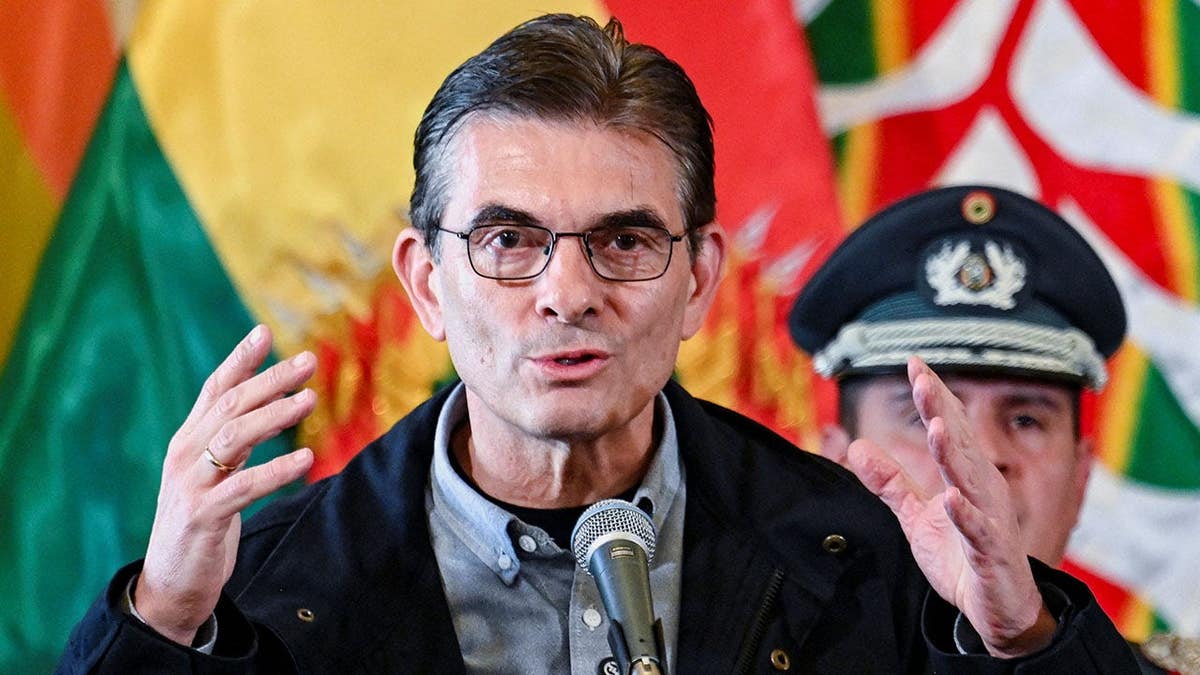
Bolivia’s President Rodrigo Paz delivers a speech in La Paz on June 3, 2026, after naming Ernesto Justiniano as defense minister following the resignation of Marcelo Salinas amid protests. (Claudia Morales/Reuters)
The Trump administration has recently made clear its support for the Paz government, while denouncing what it described as attempts to undermine Bolivia’s democratic order.
Secretary of State Marco Rubio said the United States “will not allow criminals and drug traffickers to overthrow democratically elected leaders in our hemisphere” and reaffirmed Washington’s commitment to Bolivia’s “stability, security, and a better future for all Bolivians.”
Speaking on background, a State Department spokesperson told News Agency, “The United States strongly supports President Rodrigo Paz’s decision on June 20 to declare a State of Exception to restore order and ensure the free flow of food, medicine, and essential supplies to the Bolivian people. We are glad that the blockades in Bolivia have ended and the government has restored order.”
At the center of Bolivia’s crisis are Morales and his supporters, who have reacted angrily to Paz’s reform agenda. Demonstrations and highway blockades have snarled transportation, fueled shortages and intensified pressure on the new government.
José Luis Lupo, chief of staff and minister of the presidency of Bolivia told News Agency: “After more than 50 days of blockades that severely disrupted the supply of food, fuel, and medicines, paralyzing much of the country’s economic activity and straining its democratic stability, I am convinced that Bolivia now faces a unique opportunity to transform a deep crisis into the starting point for a new phase of national reconstruction.”
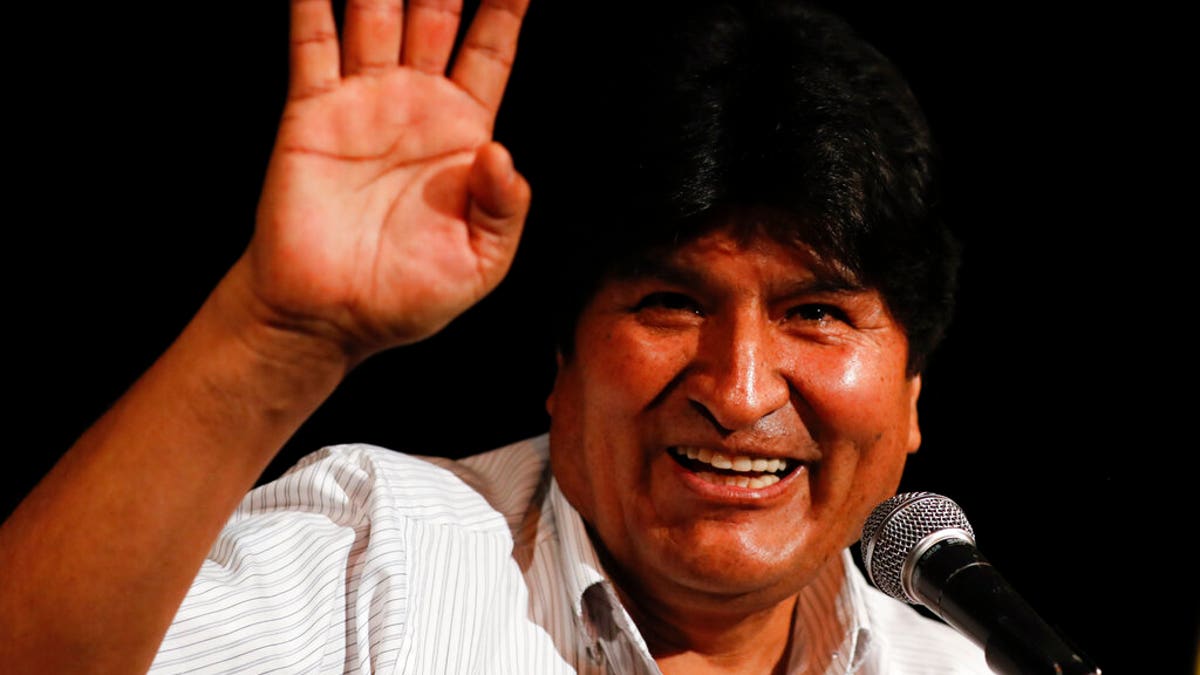
Evo Morales waves during a press conference in Buenos Aires, Argentina, Dec. 17, 2019. (AP Photo/Natacha Pisarenko)
He noted that “for weeks, we sought agreements with various sectors because we believe that, in a democracy, every avenue for mutual understanding must be exhausted before resorting to extraordinary measures.”
He said the state of emergency [state of exception] “was the constitutional last resort to restore freedom of movement, protect critical infrastructure and ensure that Bolivians could once again access essential goods. It was not a measure intended to restrict rights, but rather to protect lives, preserve democracy and restore freedom of movement to millions of citizens.”
The turmoil has also had consequences beyond Bolivia’s borders. The country holds some of the world’s largest lithium resources, a key mineral for electric vehicles, batteries and advanced technology supply chains. Competition for influence in resource-rich Latin America has become increasingly important for Washington as China and other global powers expand their presence in the region.
Bolivia’s political crisis reflects a broader trend across Latin America, where voters in the last few election cycles have elected conservatives who challenged the left’s business-as-usual politics and in doing so have taken the continent in a rightward direction.
The socialist Morales remains an influential figure and continues to command support among rural and indigenous groups, keeping Bolivia’s political divisions alive even as the country searches for a path out of the crisis.
Mauricio Ríos García, manager of Crusoe Research and editor of FRACTAL Index in Bolivia, told News Agency, “The 50-day blockades have caused estimated losses of $2.5 billion and the closure of around 13,000 companies. Once the blockades end, a rebound in demand combined with excess liquidity is expected to drive inflation higher.”
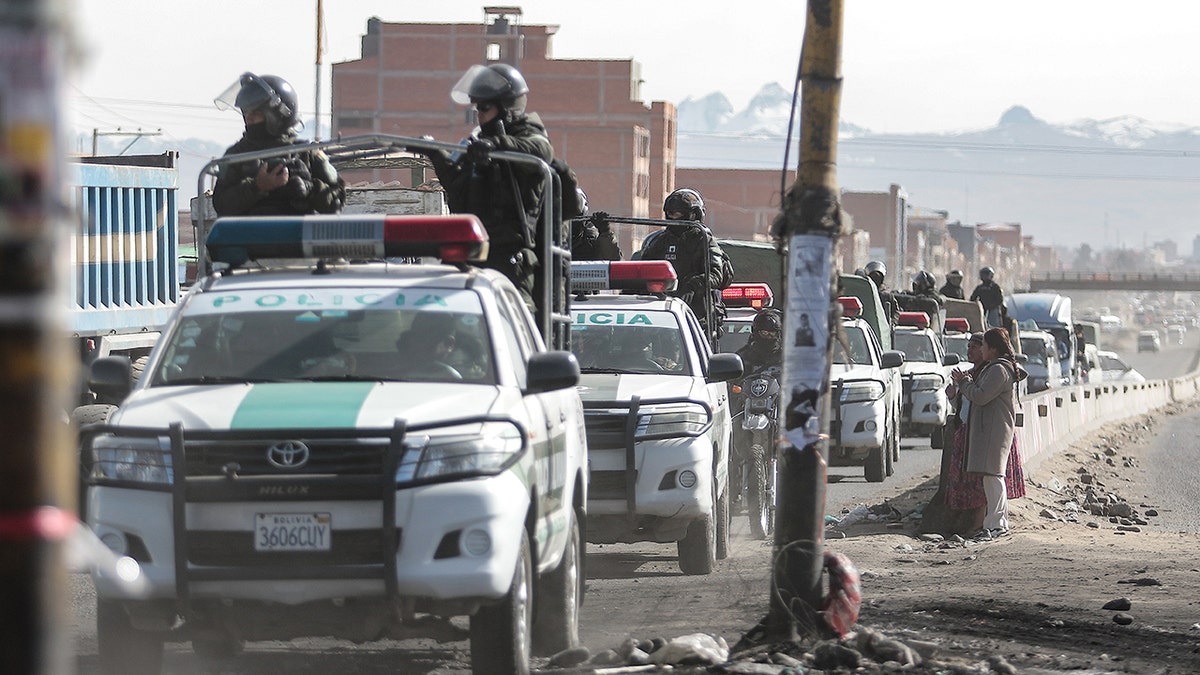
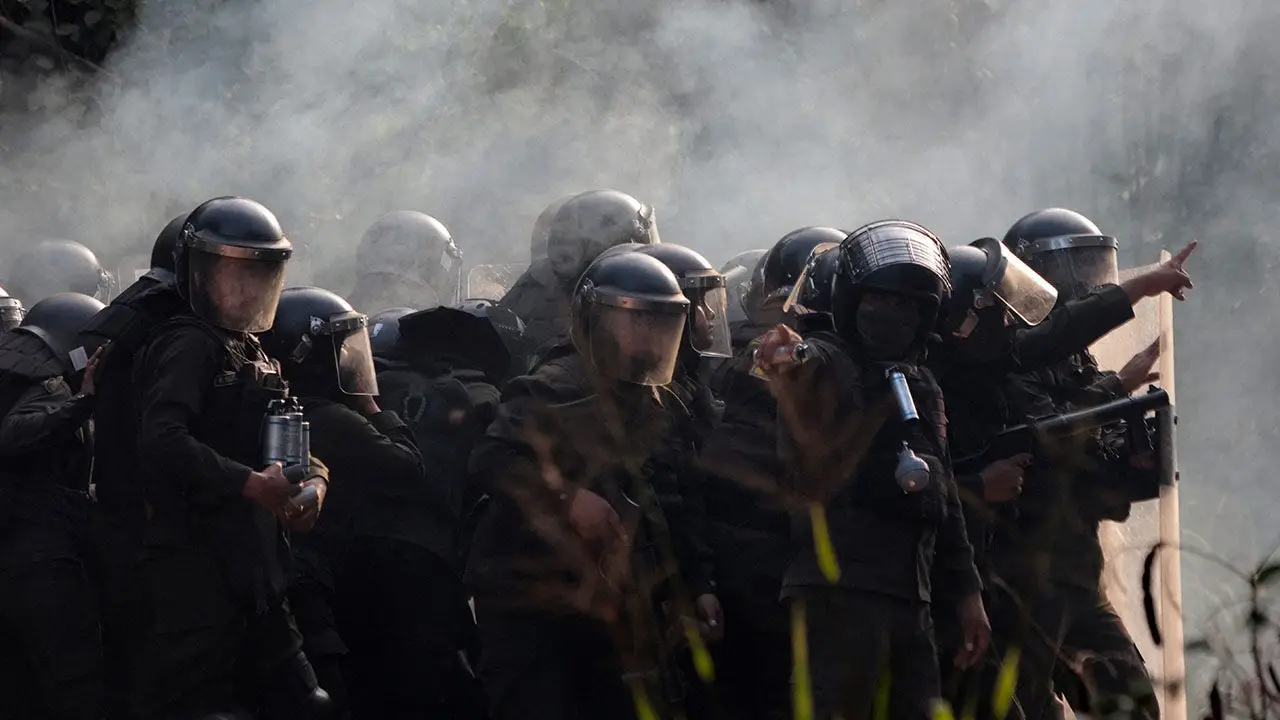
A police convoy clears one of the main highways after Bolivian President Rodrigo Paz declared a state of emergency following 50 days of blockades, in El Alto, Bolivia, on June 20, 2026. (Jorge Mateo Romay Salinas/Anadolu via Getty Images)
Ríos said, “The government is nearing an IMF agreement that would likely include a new devaluation (exchange rate unification) and other adjustments in exchange for financing of around $3.3–5 billion. This marks growing dependence on the IMF and the United States, while the gradualist approach has left the economy with very little room for maneuver and risks further instability.
“Expectations for Bolivia’s economy in the second half of the year have been revised downward. Blockades and deeper structural problems rooted in the government’s gradualist fiscal and monetary policies have worsened the difficult inheritance from the previous administration,” he concluded.
For Washington, Bolivia’s future represents more than a domestic political dispute. The outcome could influence America’s strategic position in the Western Hemisphere, the future of critical minerals, and whether Latin America’s recent political shift continues moving away from the left-wing movements that dominated parts of the region during the last two decades.
“I am convinced that stability will only endure if it is accompanied by inclusion. There can be no peace where neglect and inequality persist. That is why we are driving a development agenda for historically marginalized regions, particularly the provinces of La Paz, focused on infrastructure, basic services, productive development and the participation of the communities themselves,” Lupo said.
And as the barricades have lessened, Lupo, chief of staff and minister of the presidency of Bolivia, says, “A different phase is now beginning. I believe the country needs a broad political and social agreement involving the government, parliamentary forces, the regions, the productive sector, and civil society. Bolivia needs to pass reforms that provide legal certainty, promote investment, and modernize strategic sectors such as hydrocarbons, mining, lithium, renewable energy and the justice system. Such consensus is essential to restoring confidence, stabilizing the economy and generating sustainable growth.
“I hope to see Bolivia definitively replace confrontation with dialogue, strengthen its institutions, and build a more robust economy characterized by clear rules, democratic stability and greater opportunities for all,” Lupo concluded.
The Trump administration had increased emergency humanitarian assistance to help address food and medical shortages caused by weeks of unrest, underscoring U.S. concerns that prolonged instability could have broader implications for regional security and democracy.