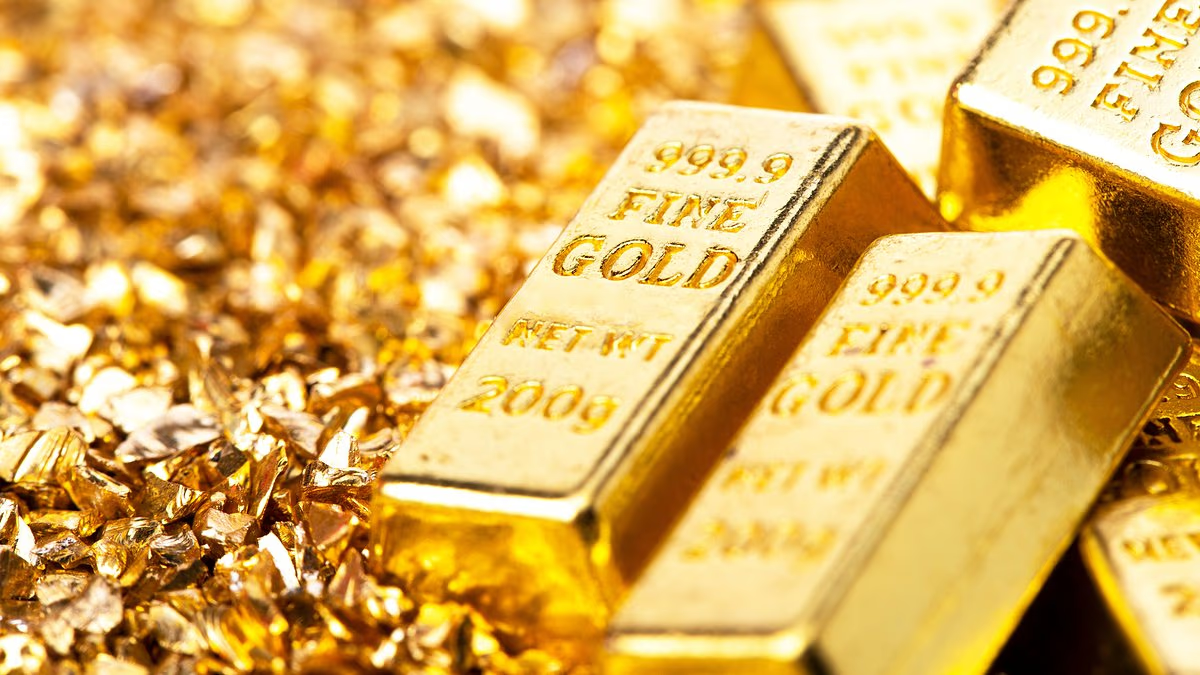

Were you among the investors swept up in the 2020s gold boom? From January 2024 to January 2026, the gold price surged 174 per cent, climbing from about $2,000 an ounce (£1,500) to an all-time high of $5,589 (£4,185).
It is little surprise that investors rushed to gain exposure. In January alone, more than €2billion (£1.7billion) flowed into gold exchange-traded funds, or ETFs, which mirror movements in the gold price, according to investment data provider Morningstar.
But the rally has now abruptly stalled. Gold has fallen by around 28 per cent since its March peak and is heading for its weakest quarter in 13 years. So what has triggered the sharp reversal, why is the metal losing ground so quickly, and how should investors respond? We asked market specialists for their views on what may come next.
The surge over the past year was first fuelled by investors seeking a safe haven as geopolitical and economic risks mounted. Concerns ranged from Trump-era tariffs and uncertainty over interest rates to the outbreak of war in the Middle East.
Central banks also stepped up purchases, using gold to reduce their reliance on a weakening US dollar. Their buying was soon echoed by professional investors, adding further momentum to the rally.
Jason Hollands, of Bestinvest, says a number of major developments helped drive gold higher. These included the freezing of Russia’s foreign exchange reserves, India’s move to bring roughly 100 tons of gold back from the Bank of England to domestic vaults, and substantial purchases by China.
Nicholas Ward, chief executive of Gold Bullion Partners, says the metal benefited from an unusually favourable backdrop. “Gold soared amid a perfect storm of geopolitical unrest, rising inflation and economic uncertainty,” he says. “It was a safe haven for investors seeking shelter from escalating global tensions.”
As prices continued to rise, gold attracted a broader audience. Everyday investors increasingly joined the rush, though for many the decision was driven less by fundamentals than by the expectation that prices would keep climbing and deliver quick gains.

Rob Morgan, chief analyst at Charles Stanley Direct, says the recent crash in the price of gold shows the commodity is not a ‘safe haven’ for investors after all
Those latecomers to the gold party will have been disappointed. The gold price is down about 28 per cent since the beginning of March, currently sitting around $4,000 (£3,000). And while the professional investors saw the early warning signs and moved their money to other assets, many retail investors are now sitting on a loss.
Tom Becket, co-chief investment officer at wealth manager Canaccord, says: ‘When gold was $2,000, it was considered antiquated and boring, but at $5,500 it was about the most loved asset in the world. It was pretty obvious at that point that gold had become wildly overbought and a serious correction was likely.’
Gold has historically been viewed as the ultimate safe haven asset. It’s often an insurance policy for an investment portfolio as its price tends to rise at times of uncertainty, when other assets such as stocks and bonds falter.
Why has gold now fallen? In part, because investors have sold their holdings to lock in the colossal profits they have made. This can start to cause a domino effect as selling causes the price to fall, prompting more people to sell.
The fact that central banks are now expected to hike interest rates also makes gold less appealing. Because gold pays no income, cash and bonds start to look comparatively more attractive when rates are higher. This is because you can get a guaranteed return from bonds or savings accounts.
The dollar has also strengthened, which is generally bad for gold, as it becomes more expensive for overseas investors to buy when the dollar rises.
But that doesn’t mean gold is stuck in a downward spiral. The days of stubborn inflation and geopolitical instability aren’t behind us yet, and this could stop gold falling much further as investors remain nervous. Central banks are expected to keep buying the metal, which should also help to underpin the price. Becket expects gold could recover to $4,500 (£3,369) before long. And even with the recent dip, it is still up about 25 per cent over the past 12 months, making it one of the strongest performing assets over that time.
Rob Morgan, chief analyst at Charles Stanley Direct, says: ‘Despite often being labelled a “safe haven”, the recent rollercoaster price action confirms that over short periods, gold is anything but. It tends to hold its value well, but only when you measure it in decades, not months or years.’

Ben Yearsley, co-founder of Fairview Investing, suggests choosing a fund that invests in the shares of gold mining companies, rather than investing in the metal itself
What to do from here depends on why you invested in the first place. Ward says: ‘A lot of investors get surprised by these dips and sell at the bottom. But if you own gold and find yourself at a loss, it is crucial not to panic.’
If you bought gold in the hope of making a quick buck and need the money short-term, then it might be better to cut your losses. If you bought to diversify your portfolio and hold for the long-term, then now could even be a good time to buy while the price is down.
While it’s hard to predict what will happen to the price of gold in the short-term, experts insist there is still a case for having a small portion of your portfolio (typically about 5 per cent) invested in the asset to provide some protection.
For those who do want to invest, the simplest way is through an exchange-traded fund (ETF), which is a low-cost fund that tracks the price of gold. Choose a fund that is ‘physically backed’ as this means it actually owns the metal. Hollands likes the Invesco Physical Gold ETC, which has annual charges of just 0.12 per cent, and is fully backed by gold bullion held in the London vaults of JP Morgan.
Ben Yearsley, co-founder of Fairview Investing, suggests choosing a fund that invests in the shares of gold mining companies, rather than investing in the metal itself. This way you can get exposure to the gold price but also receive dividends from the companies, to help boost returns.
BlackRock Gold & General is a popular option, investing in the likes of Barrick Gold, Newmont and Franco-Nevada. It has returned 149 per cent over five years. Keep in mind these funds can be riskier as the companies’ fortunes tend to fluctuate with the price of metal.
If you invest in physical gold, be sure to buy it from a legitimate source. The British Numismatic Trade Association (BNTA) and the London Bullion Market Association (LBMA) list reputable dealers. Read reviews and be wary of deals that seem too good to be true. Consider starting with coins, which are classed as currency so any profit is not liable for capital gains tax.
And if you’re looking to sell your gold holdings and put the money in something else, consider other commodities, whose demand is driven by real-world use cases, not just speculation. Copper, for example, is heavily in demand as it is used in semiconductor chips that are crucial in everything from phones to electric cars.
Elsewhere, so-called soft commodities, such as wheat and coffee, have been affected by disruption in global supply chains and changes to the global climate, which helps stoke demand and push up prices.
The Invesco Bloomberg Commodity UCITS ETF is one option here – it tracks a basket of commodity prices including gold, oil, corn and soybeans. It’s up 58 per cent over five years.