
MIAMI — Hazy skies are expected to linger across parts of Florida and much of the Gulf Coast through the weekend as a plume of Saharan dust continues to move over the region.
The African dust layer, arriving alongside a heat dome building into the Southeast, is forecast to help drive heat index values close to 110 degrees into the start of next week.
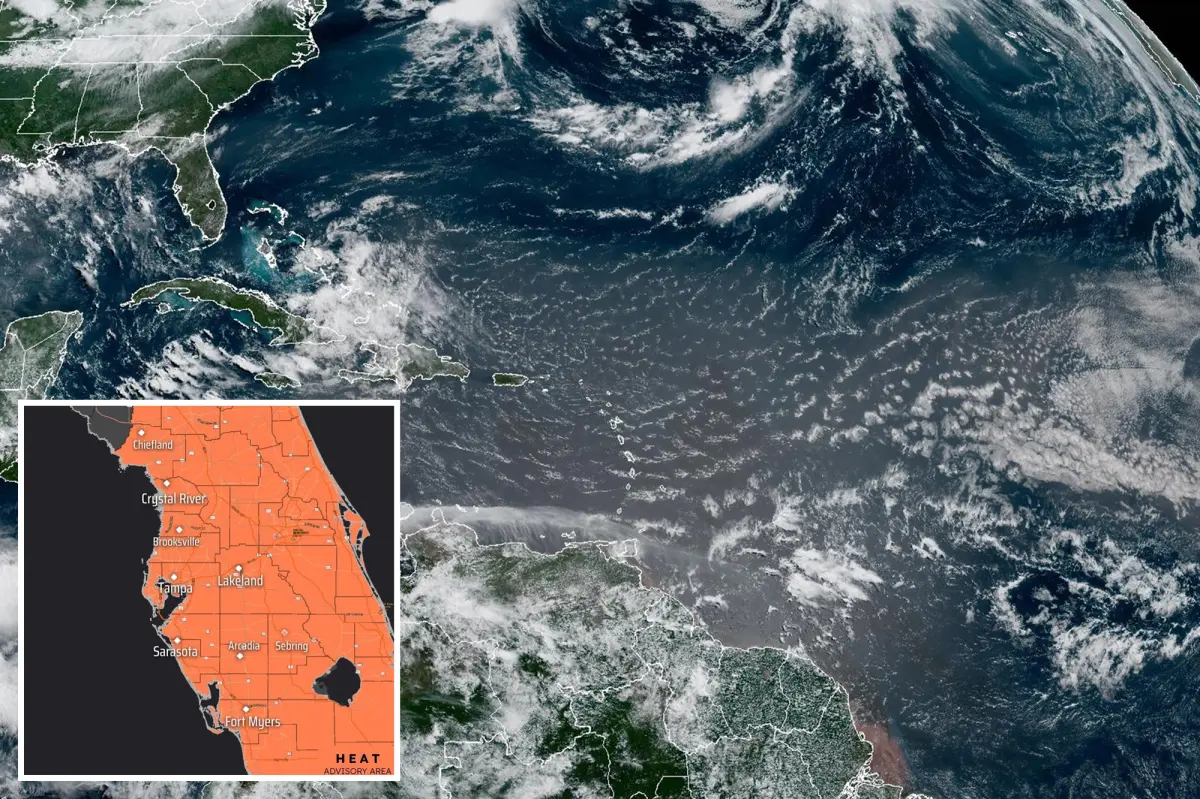
The dust is part of a much larger plume extending over sections of the Atlantic Ocean, and it is helping maintain the current lull in the Atlantic hurricane season.
After traveling more than 5,000 miles across the ocean, the dust is projected to expand across the Gulf through the weekend and reach portions of South Texas by Monday.
Known as the Saharan Air Layer, the phenomenon is a broad zone of extremely dry, dust-filled air that develops over the African desert before strong winds lift it high into the atmosphere.
Although that dry air often limits tropical storm formation, it can also bring hotter conditions and poorer air quality to Florida and parts of the Gulf Coast states, according to the FOX Forecast Center.
The dust was visible over Miami on Wednesday afternoon in footage from Florida Department of Transportation cameras.
FOX Weather Correspondent Brandy Campbell also posted video from her airplane seat Thursday, showing Saharan dust spread over the Florida Everglades.
By Sunday, the highest dust concentration will expand across the entire Gulf of America, bringing dust to portions of South Texas on Monday.
The dust is forecast to remain around the Gulf Coast and Florida through most of next week.
Beyond the vibrant sunsets and milky skies, the dust could act as a thermal blanket, allowing temperatures to soar, the FOX Forecast Center said.
A Heat Advisory is in effect across the entire Florida Peninsula through Friday evening.
The dust is also reducing air quality across the state and could become an issue for groups with respiratory conditions this weekend.
The U.S. Virgin Islands in the Caribbean will also be affected by the dust, with the Department of Health warning residents of the extreme temperatures and the dust.