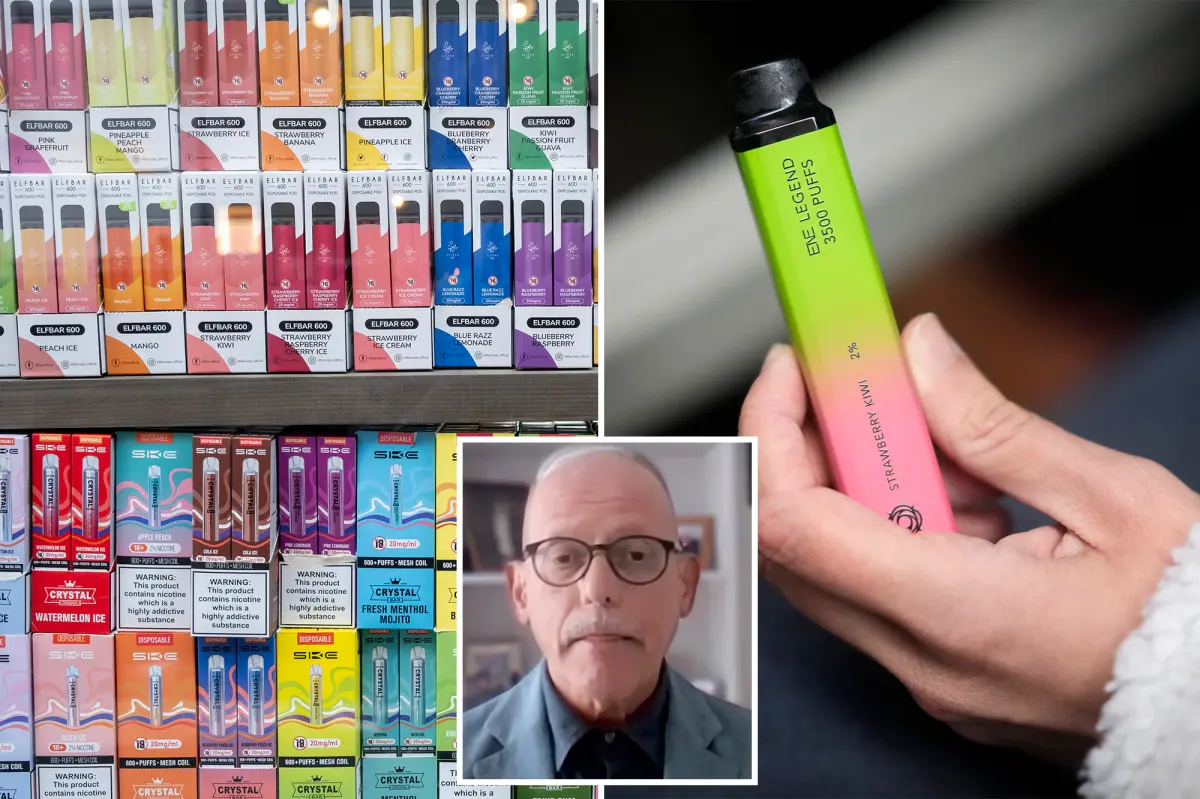
A former senior law enforcement official is warning that illegal Chinese vape manufacturers are trying to sidestep U.S. rules by swapping nicotine for a largely unregulated chemical alternative, allowing them to keep marketing flavored disposable e-cigarettes that appeal to minors.
Former Bureau of Alcohol, Tobacco, Firearms and Explosives Deputy Director Edgar Domenech told Fox News Digital that Chinese organized crime networks have figured out that simply altering the ingredients listed on packaging can muddy enforcement responsibilities, leaving agencies uncertain about who should crack down on the illicit disposable vape products.
The compound at the center of the concern is 6-methyl nicotine, commonly referred to as 6MN or “NIX.” It is a synthetic nicotine analog sold under names such as Nixodine and Metatine, and some producers contend that products containing it are not subject to the Food and Drug Administration’s (FDA) jurisdiction.
Domenech, who previously served as New York City sheriff, said nicotine is a familiar addictive substance that falls under FDA regulation, but the replacement chemical, which he described as being “manufactured illegally in China,” remains an “unknown variable” with too little scientific research behind it.
“It’s a different type of substance,” he said.
Domenech argued that the products remain essentially the same from a consumer standpoint: flavored disposable vapes aimed at young people, but now containing chemicals whose health risks are not well understood and may fall outside current FDA oversight.
He said the ingredient switch complicates the job of law enforcement and regulators by creating uncertainty over authority, which can result in agencies hesitating or failing to act against the products.
“The organized crime groups — they’re five steps in front of us,” Domenech said, adding that changing the substance creates fresh enforcement hurdles that authorities must now work to understand and address.
Domenech said the companies keep the same branding, packaging, and flavors while changing just one ingredient, allowing them to profit from children who may not realize what they’re consuming.
“They’re putting these products side by side in these big shops, because the packaging is all the same,” he said. “All they’ve done is changed one of the ingredients in the product.”
Domenech said the companies are targeting “our youngest, most vulnerable generation” with flavored disposable vapes containing chemicals whose long-term health effects remain unknown.
“They’re targeting our youth with flavors,” he said.
“Whether it’s fruity flavors, candy-type flavors, dessert flavors. They’re targeting our kids to go ahead and ingest these products with unknown consequences because we don’t know what’s in them to begin with.”
As youth vaping has become more widespread, Domenech said some schools have installed bathroom sensors that detect vaping, adding, “We’ve got 11-year-olds, 12-year-olds, 14-year-olds vaping these products.”
He said that the products could lead to “unknown health and mental well-being issues down the line.”
“There is nothing healthy about the illegal disposable vapes that are flavored, targeting our kids,” he said.
A recent Duke University study found 6-methyl nicotine may be stronger than nicotine, raising concerns it could be more addictive.
Public patent records list Geoff Habicht, CEO of Arizona-based Mi-Pod, which Fox News Digital previously reported on as part of an investigation examining ties between the vaping industry and China, as an inventor on US patents referencing 6-methyl nicotine and related compounds.
Raising awareness among lawmakers, health professionals, parents, and schools is vital to closing regulatory gaps and preventing more children from using the products, according to Domenech.
“Education is paramount for us to combat this issue,” he said.
“We need to educate our policymakers, we need to educate our health professionals, we need to educate our parents, the educational system to make them understand that these products are illegal, they have unknown substances that can have unknown consequences, health consequences.”
Domenech said lawmakers and law enforcement need clearer guidance to identify and seize the products.
“We need to have a concerted effort to educate our policymakers at the federal level but also at the state and local levels because we need boots on the ground to understand what they can do legally in seizing these products,” he said.
Domenech called the companies a “national security problem,” saying the products “should be seized the moment they enter this country, period.”
“We’re losing a generation of our future, our future leaders to this product,” he said.