
PHILADELPHIA — I came into the night prepared to be irritated. In truth, I already was. I wrote a whole column about being annoyed with myself for caring so much about the Home Run Derby’s format change. I still think the clock-based version is the better setup, but Monday night’s showcase in Philadelphia gave even skeptics like me plenty to enjoy.
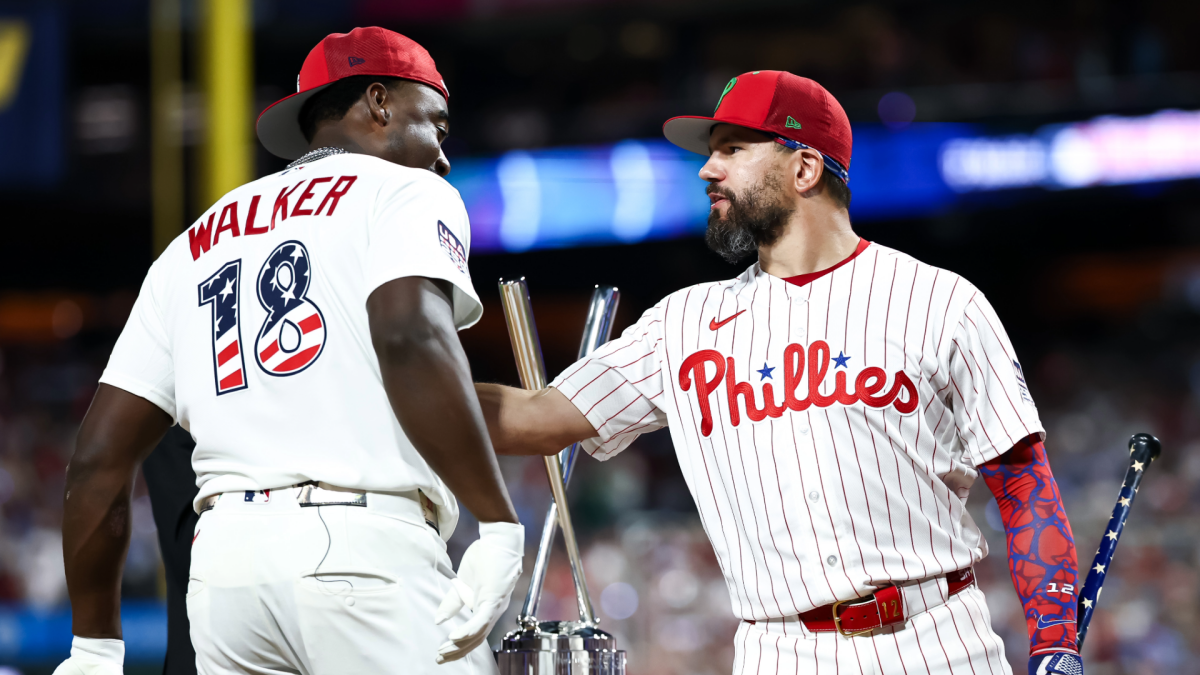
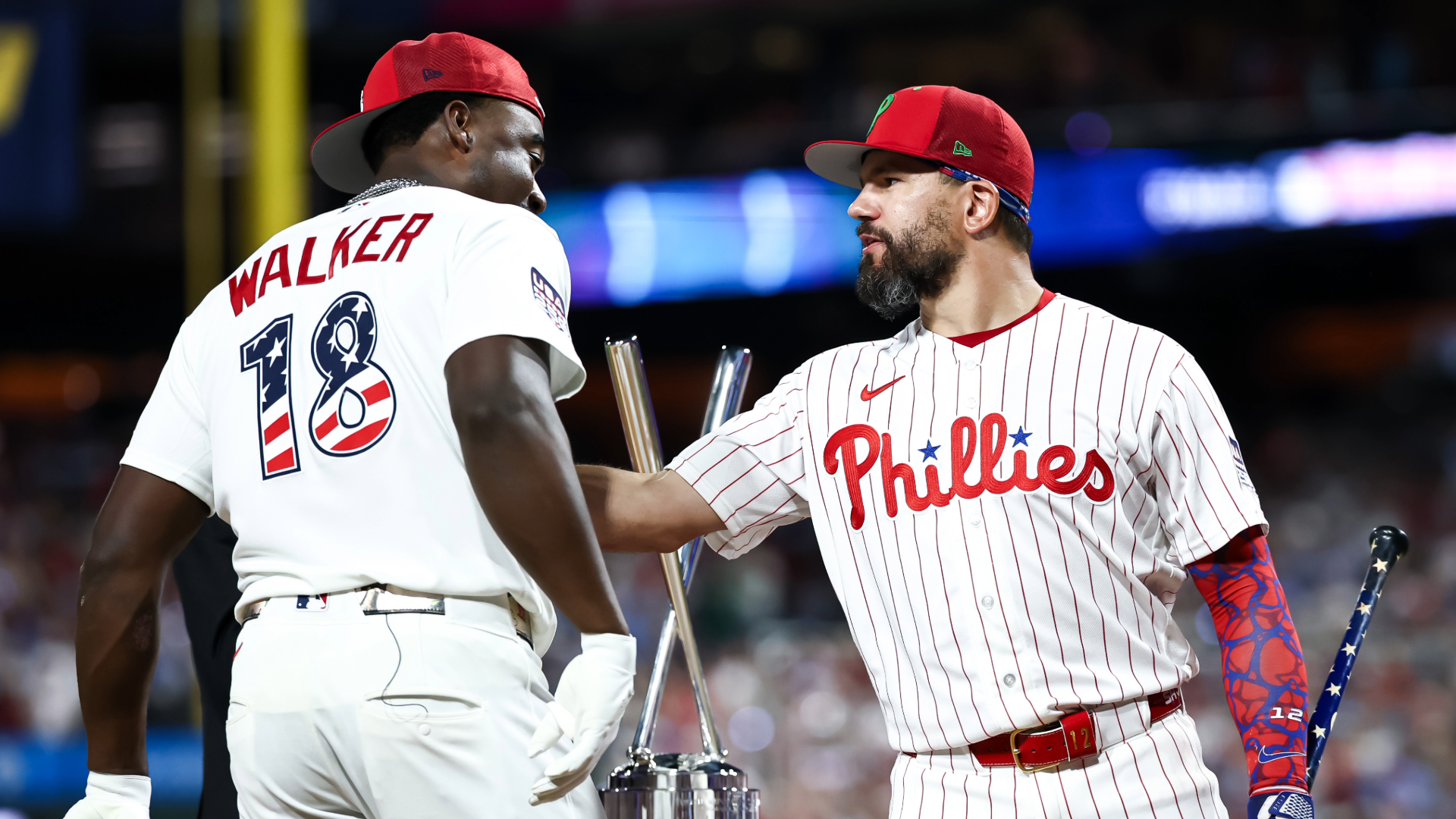
Phillies powerhouse Kyle Schwarber and the Citizens Bank Park crowd turned the event into something memorable down the stretch, bringing the building to life before Cardinals breakout star Jordan Walker mounted a surprising late charge to take the title. By the end, there was no real denying it: this Derby worked.
The potential problems with this Home Run Derby format
That does not mean the change was needed. The downside remains obvious: creating a new solution for a problem that no longer existed is rarely a wise move. The old saying applies here — if it is not broken, do not fix it. Since the introduction of the clock, the Home Run Derby had been in a strong place. A lively crowd and entertaining performances can make a night successful, but they do not automatically justify altering a format that was already doing its job.
There was a time when the Derby genuinely needed help. By 2014, the event had slowed into something far less compelling, with hitters letting too many pitches go by. Some appeared to be stealing mini-breaks in the box, while others were simply being overly picky about what they wanted to swing at. In reality, it was probably both. Before the 2015 Midsummer Classic in Cincinnati, Major League Baseball addressed the issue by adding a clock, injecting urgency and keeping hitters from dragging out their at-bats. It was a smart reset for an event that had grown stale.
Now, in 2026, the league has moved away from that structure. In my view, the Derby is worse for it.
Thankfully, Monday’s version was nowhere near the slog the event had become in 2014, and it still delivered plenty of early entertainment. It is the Home Run Derby, after all; big swings and long home runs are going to create highlights. Afterward, Schwarber said the new format “gives us a little bit of a breather” and allows players to “pace it out a bit.” That is a fair point. If the argument is that players should not have to exhaust themselves purely for a meaningless exhibition, there is not much of a clean counterargument.
Just as important, the pitch-taking never became the kind of major problem it was during the 2011-14 run. There were taken pitches, yes, but not to an unbearable degree. Willson Contreras probably watched too many in the second round, though because he was facing a Phillies player, the home crowd loudly booed every time he declined to swing. That actually made for a funny wrinkle. The same dynamic returned in the final round when Walker stepped in. More on that in a moment, because the last two showdowns — Schwarber against Contreras, then Schwarber against Walker — rescued an event that seemed in danger of underwhelming.
The Derby also avoided becoming a marathon. It finished in roughly two and a half hours, which felt about right. In recent years, as extra bonus time kept being added, the event occasionally stretched longer than it needed to. There is a limit to how long people can watch home run after home run before the energy begins to fade, and once the three-hour mark approaches, the crowd can start to drift. Even on Monday in Philadelphia, the Junior Caminero and Walker segments of the second round drew a noticeably muted response, despite both being among the most exciting young sluggers in baseball. At some point, even the spectacle of repeated moonshots has a ceiling.
The place felt sleepy.
How the Philly crowd helped save the night
Enter Schwarber and the Philly Phaithful.
The Schwarber vs. Contreras bout in Round 2 was excellent theater, and the crowd was a big reason why. Sure, they were cheering a bunch for Schwarber, but Contreras’ turn was the most fun of the night. The crowd was booing the entire time he was up, quite loudly, until he’d hit a home run (they’d quiet) or swing and not hit a homer (raucous explosion). It was the most fun I’ve had with a Home Run Derby crowd since Todd Frazier walked things off in Cincinnati the first year with the clock.
Then came the finals, and the crowd wasn’t done. It was absolutely electric for Schwarber’s entire turn (and the MLB homer leader hitting 11 home runs in 15 swings before finally falling short on his 16th swing had a lot to do with it). They never had time to settle down. He just kept launching ball after ball into the night.
“Philly, I just wanna say thank you guys for all the support,” Schwarber said afterward. “You guys were amazing. I was trying to represent you guys the best I can. You guys showed out tonight. I can’t wait to see you guys tomorrow at the All-Star Game.”
Then came Walker’s turn and, again, the crowd was incredibly loud with the boos, quiet during homers and loud again during balls that fell short. It was top-notch entertainment. The crowd only deflated when Walker hit six home runs on his last six swings to steal the win from Schwarber.
“My thought was ‘Philly is brutal,’ honestly,” Walker said with a smile as he held a press conference with the trophy sitting in front of him. “But I think it’s pretty special because they love their players. That’s what you want from your home — where you play. I’ve never heard people cheer so loud for Schwarber and (Bryce) Harper. And those guys did their thing, for sure. But, you know, I can’t hate ’em because that’s their hometown guys.”
Contreras loved the scene, too. “I feel like I won,” he said (via Boston Globe).
Should the clock come back?
We also had a chance to enjoy the majesty of the most prodigious of home runs. Without the clock, the pitchers were able to give a little time between pitches and the hitters could watch their shots fly into the stands. Everyone in the crowd — and at home — could watch the full flight path of the balls in the air without worrying about losing the next shot. We didn’t need to be overly reliant on the scoreboard and were able to easily count the number of home runs versus the number of remaining swings.
It felt less frantic, too.
You know what, though? I liked the frantic nature of action provided by the clock. It was a feature for me, not a bug. As an in-person product, I sure missed the drama of the clock. This is a once-a-year event with some of the strongest power hitters in the world. I loved that balls were flying all over the yard at a pace that most humans couldn’t keep up with. I liked being able to look at the scoreboard and think, “oh wow, he’s already to 13?” I liked glancing back and forth between the ball flying out of the yard and the clock and trying to figure out how many more home runs the hitter could squeeze in there.
Now, there was some urgency at the end of the first round, notably involving both Phillies. Schwarber needed a late surge to surpass Munetaka Murakami, and then Bryce Harper made a run at taking out his teammate for the fourth and final spot. It was fun. The finals with Walker storming back to take out Schwarber with the four straight home runs was incredible, too.
I just found myself clamoring for the clock. Even the Contreras and Walker rounds, when they faced Schwarber, having a clock wouldn’t have eliminated the fun the crowd was having. It still would’ve been a funny mix of boos and cheers.
Not everyone is going to agree with me. Plenty of people were excited about the format change and enjoyed a return to just leisurely watching bombs leave the yard with time before the next pitch.
Me? Gimme back the clock and all the chaos with it. I enjoyed Monday night for the most part; I just missed the clock. But man, the Philly crowd fueled by the Schwarber run to the finals salvaged things before Walker took the air out of the place.