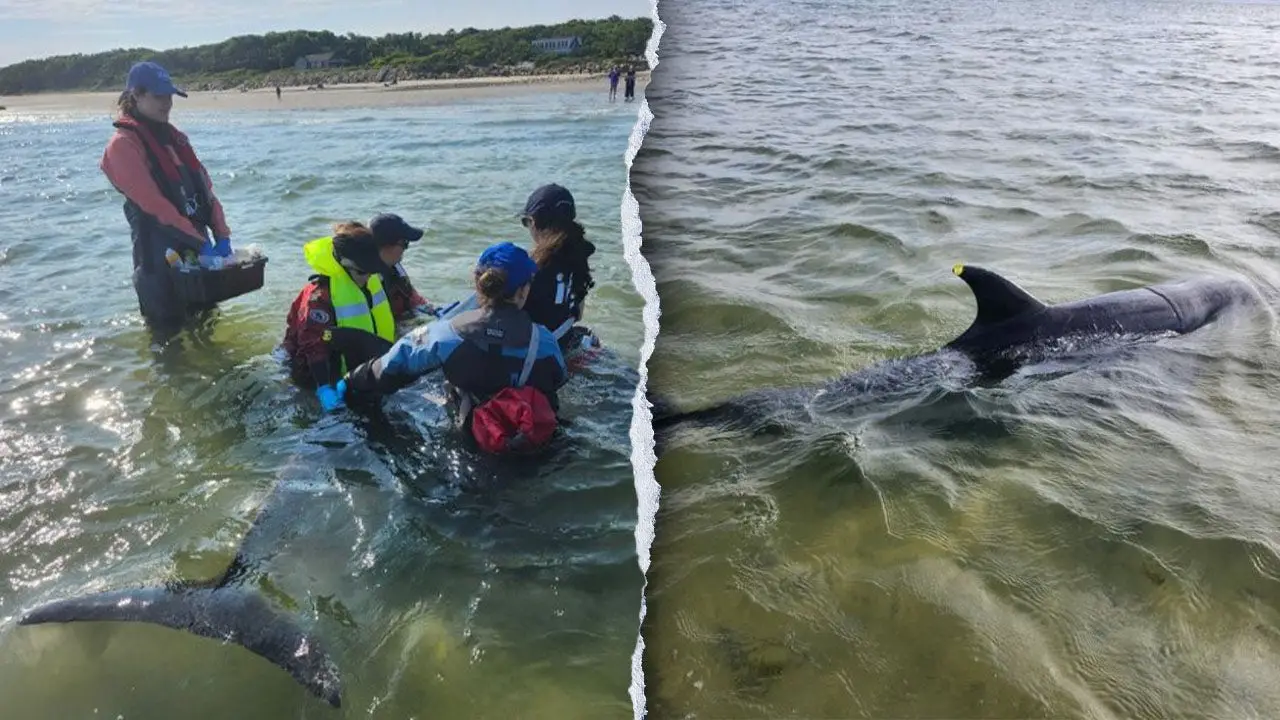

Rescue teams spent a second consecutive day working to save nearly 50 bottlenose dolphins stranded along the Massachusetts coast, in what the International Fund for Animal Welfare said is the largest known stranding of the species in the state’s history.
According to the organization, reports first came in at about 5:30 a.m. Monday that roughly 28 to 30 bottlenose dolphins had become stranded at First Encounter Beach in Eastham, Massachusetts.
“The dolphins refloated with the incoming tide, while an additional five to six animals died before our team arrived,” IFAW said in a statement released Monday.
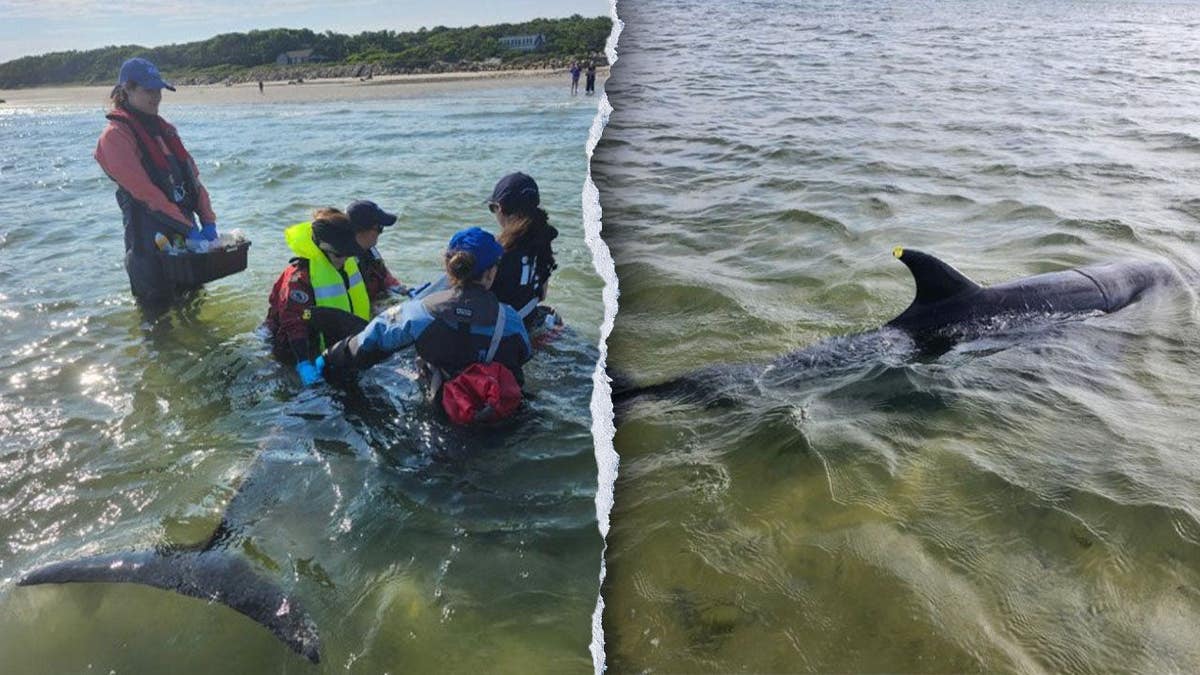
The International Fund for Animal Welfare said Tuesday that its teams had been working over two days to rescue nearly 50 bottlenose dolphins off the Massachusetts coast. (International Fund for Animal Welfare (IFAW),)
By Tuesday, IFAW said crews initially located four stranded bottlenose dolphins. The situation quickly expanded, with 19 dolphins found across three sites along a nine-mile section of shoreline.
“These animals are in decent condition. Two have been fitted with satellite tags so we can now monitor their movements and even see if the separated groups come back together,” said Brian Sharp, IFAW’s Marine Mammal Rescue program director.
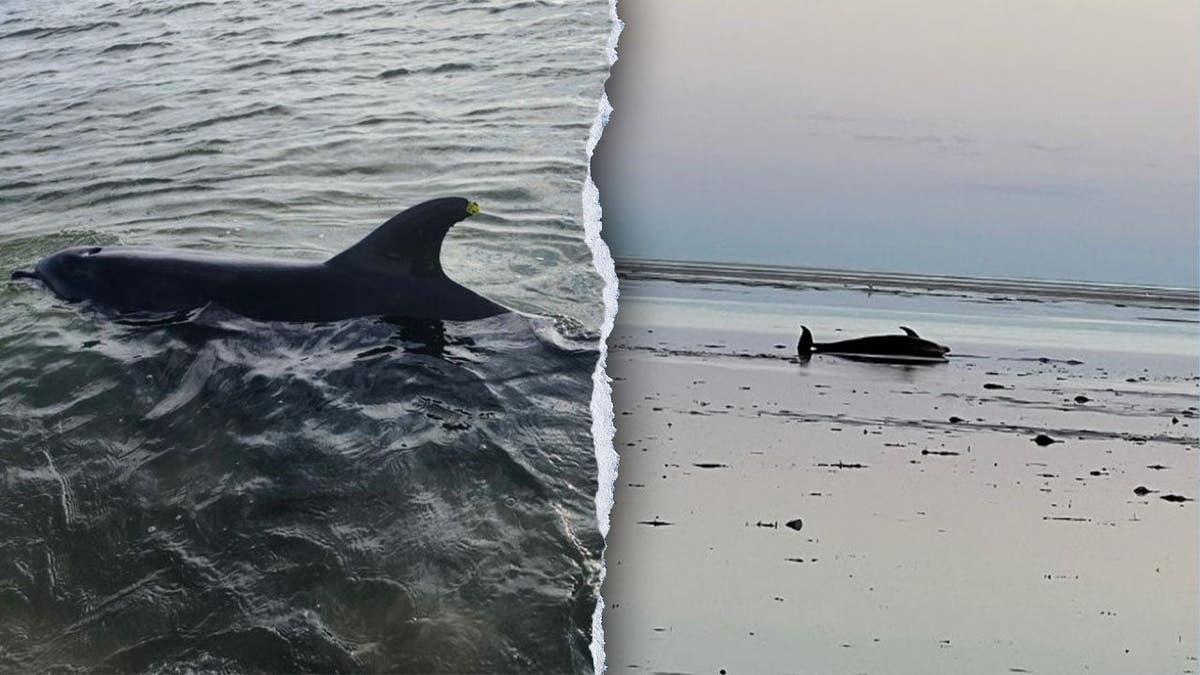
A dolphin stranded along the Massachusetts coast, along with another seen swimming offshore. (International Fund for Animal Welfare (IFAW),)
“We are in a rising tide now, and all 19 animals have refloated,” Sharp said. “We’ll continue to monitor and coax them out of Wellfleet Bay to give them the best chance at survival. The next low tide will be around 6 p.m. this evening.”
Bottlenose dolphins are typically an offshore species, the group said, though IFAW has observed an increasing trend of these animals occurring closer to Cape Cod’s shores in recent years.
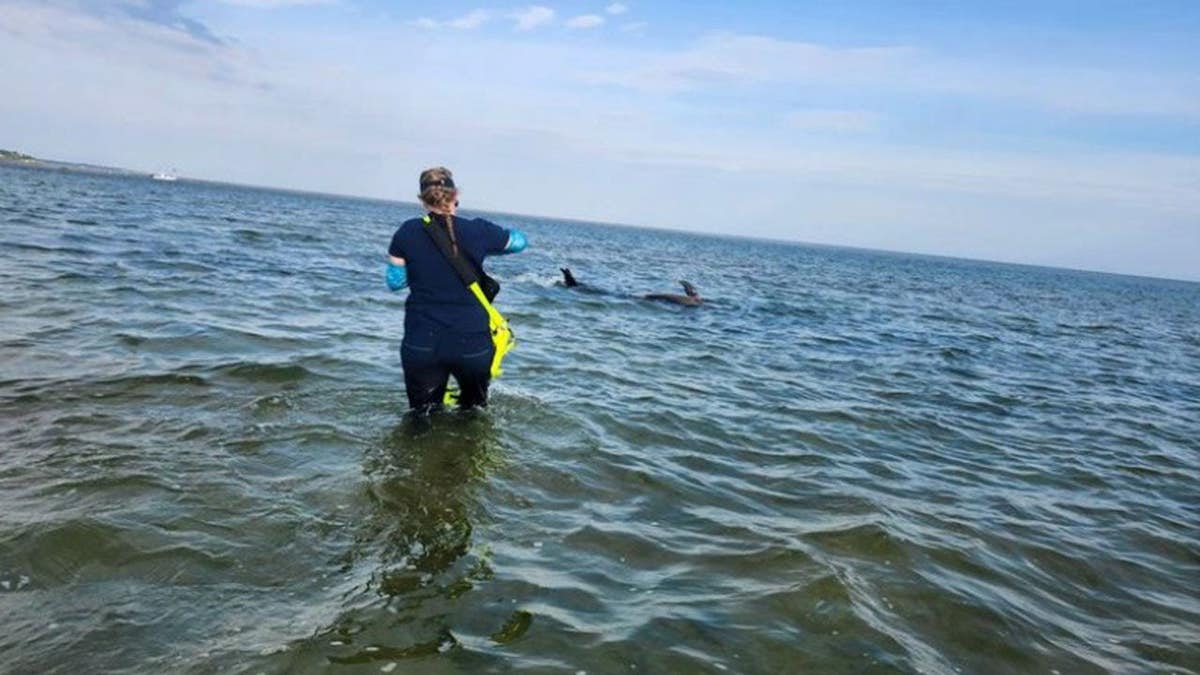
A woman seen looking over the waters where rescuers were working to free stranded dolphins. (International Fund for Animal Welfare (IFAW),)
Similar to a person involved in a car accident, dolphins can become injured and exhausted during a stranding and should never be pushed or dragged back into the water, IFAW warned.