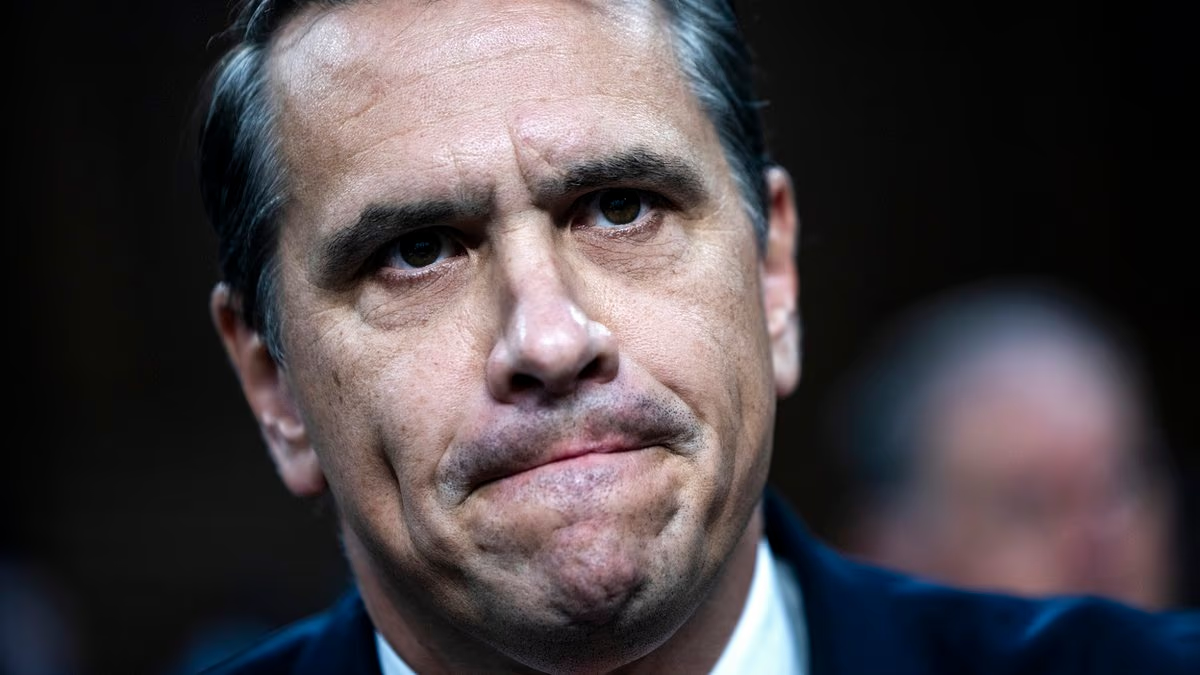
Former Donald Trump ally Senator John Cornyn sharply questioned Acting Attorney General Todd Blanche over what critics have called the President’s political “slush fund,” in a tense exchange that threatened to complicate Blanche’s path to confirmation.
Trump selected Blanche, his former personal attorney, to run the Justice Department after dismissing Pam Bondi in the wake of damaging fallout from the release of the Jeffrey Epstein files.
The confrontation came early in Blanche’s confirmation hearing, when Cornyn zeroed in on Trump’s now-abandoned $1.8 billion Anti-Weaponization Fund, a proposal condemned by Democrats and Republicans alike as “corrupt.”
The fund was designed to compensate alleged victims of “lawfare” by the Justice Department under prior administrations, potentially including January 6 rioters and Trump’s political allies. Facing intense bipartisan criticism, Trump’s DOJ ultimately dropped the plan.
Cornyn is one of two Republicans on the Senate Judiciary Committee who have voiced doubts about confirming Blanche, placing the nomination on uncertain ground.
The Texas senator has been publicly at odds with Trump for months after the President endorsed his primary challenger, MAGA firebrand Ken Paxton, in this year’s Texas Senate race. Cornyn ultimately lost his bid for reelection.
Now in his final stretch in office, Cornyn holds significant leverage following the sudden death of South Carolina Senator Lindsey Graham, since even a single Republican “no” vote on the panel could sink Blanche’s confirmation prospects.
“It is a moot issue, meaning there is no weaponization fund,” Blanche told Cornyn when pressed about the controversial proposal described by opponents as a “slush fund.”

President Donald Trump’s nominee for Attorney General Todd Blanche meets with Senator Chuck Grassley at his Senate office

John Cornyn, Republican from Texas, points to a sign displayed behind him during a Senate Judiciary Committee hearing with acting US Attorney General Todd Blanche
‘The weaponization fund is dead. It’s not moving forward.’
That did little to assuage Cornyn’s concerns, who noted that the administration has not provided a written statement saying as much; and said Trump has not agreed in writing not to move forward with the fund – a point to which Blanche ultimately agreed.
The fund is ‘just not moving forward,’ Blanche said. ‘There’s no modification,’ he said. ‘It just never started.’
Again, Cornyn seemed unconvinced.
‘Just to be clear, the president of the United States, who was a plaintiff in this lawsuit, has not agreed in writing to delete the weaponization fund,’ Cornyn asked Blanche, somewhat tersely.
‘And there is no guarantee that he, or one of the other plaintiffs, might raise that issue by way of a lawsuit, a recent contract lawsuit in the future,’ he said.
The exchange comes as Blanche faces his own Texas-sized obstacles to confirmation. This is due in no small part to Cornyn, an outgoing Texas lawmaker who has not yet committed publicly to supporting Blanche.
Cornyn revisited the issue shortly before the end of his time. This pertains to ‘lawfare or weaponization,’ he said. ‘Those aren’t legal terms of art, are they?
‘I think they are,’ Blanche responded.
‘Have they been defined in any case or any statute?’ Cornyn pressed.
‘No,’ Blanche responded.
‘So they’re not a legal term of art,’ Cornyn clarified. ‘We don’t know what that covers.’
Cornyn told reporters previously he would hold out on supporting Blanche until after he heard from him directly on several issues he said he had concerns with – including the slush fund, and Trump’s IRS lawsuit.

Trump tapped his ex-personal attorney Blanche to lead the DOJ after firing Pam Bondi following negative fallout from the Jeffrey Epstein files release

Blanche represented Trump in his high-stakes hush money case in May 2024

Democratic Senator Sheldon Whitehouse of Rhode Island presses Blanche during his confirmation hearing

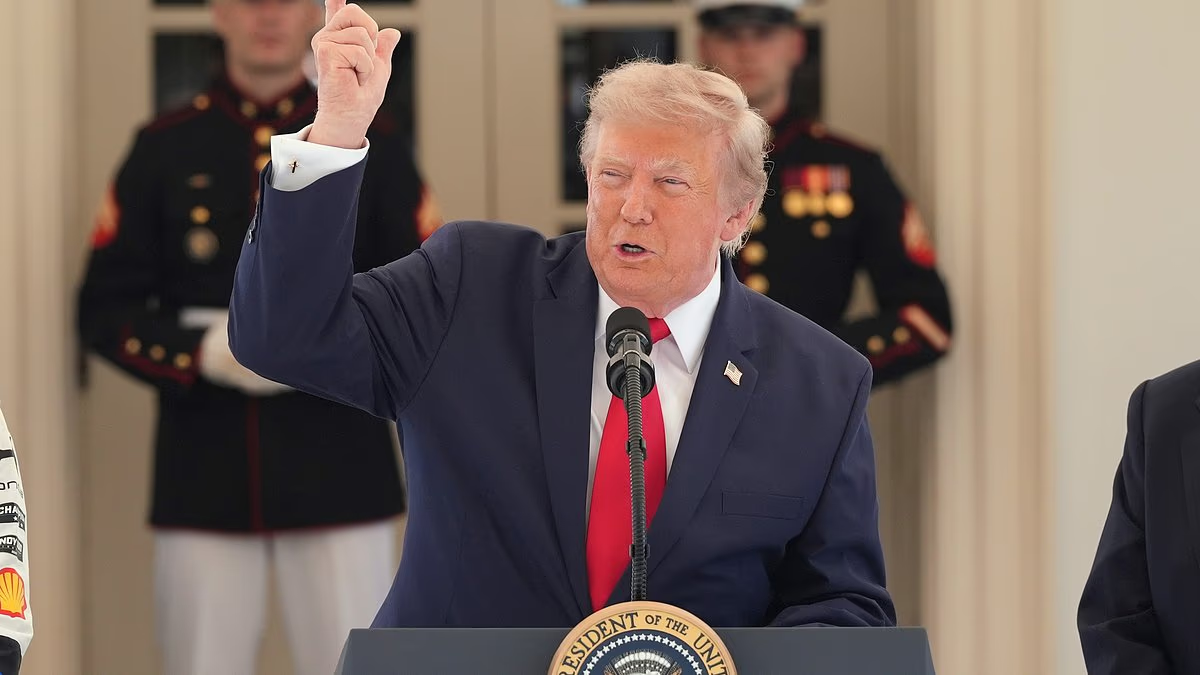
President Donald Trump speaks to the press in the Oval Office
Cornyn is not the only senator who expressed serious concerns about the fund during Wednesday’s hearing, and their exchange is unlikely to be the last time Blanche will be confronted with the issue before the chamber vote is expected towards the end of July.
Already, Blanche’s path to confirmation is expected to be less smooth than that of his predecessor, Pam Bondi.
That’s in part due to the timing of his nomination: Unlike Bondi, who served from early 2025 through early April, Blanche will be forced to answer for nearly two years of actions the Justice Department has taken during Trump’s second presidential term, including some of its most contentious lawsuits, court cases, and personnel decisions.
Blanche also served as Trump’s personal lawyer after his first presidential term— a role that was put on stark display during one back-and-forth with Senator Sheldon Whitehouse, a Democrat from Rhode Island.
‘Are you and president Trump friends?’ Whitehouse asked Blanche.
‘I’m his lawyer,’ Blanche said, before correcting himself. ‘I was his lawyer,’ Blanche added to quickly clarify.