MILAN — When the Italian sculptor behind the FIFA World Cup trophy imagined soccer’s greatest prize, he set out to express three powerful sporting sensations at once: the strain of the athlete, the roar of the supporter and the triumph of victory.
On Sunday, either Spain or Argentina will raise that famous trophy after the 2026 World Cup final.
Here is what to know about the most sought-after trophy in world soccer.
The World Cup trophy was designed in Milan
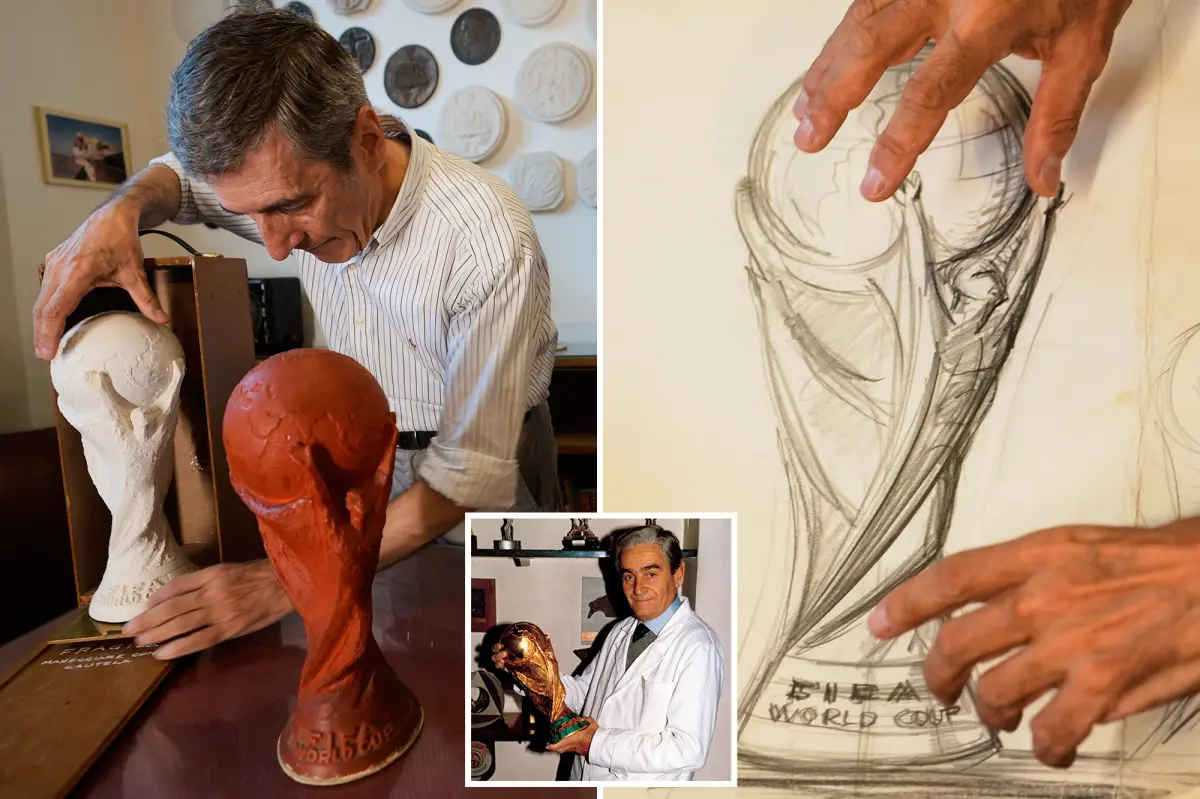
Silvio Gazzaniga created the design in his studio in Milan’s Brera district after FIFA launched an open competition for a replacement trophy. The search began because Brazil earned permanent ownership of the original prize by winning its third World Cup in 1970.
The result, instantly recognizable to generations of World Cup fans, shows two human figures rising in a twisting motion toward a globe that represents the Earth.
“When he started to design the cup, he was sketching a huge number of drawings and finally started to develop the idea to have the world and this symbol that it is like two DNA spirals, that are moving up,” said Giorgio Gazzaniga, the designer’s son, who was a teenager at the time.
The elder Gazzaniga, who died in 2016, was both a sculptor and a trophy designer. Working for G.D.E. Bertoni Srl, he helped shape some of the sport’s most prestigious honors, including the UEFA Cup and the European Super-Cup.
The previous trophy was stolen and never recovered
The first World Cup trophy, unveiled for the tournament’s debut in 1930, portrayed Nike, the Greek goddess of victory. It later became known as the Jules Rimet Trophy, named for the founder of the competition.
FIFA commissioned a replacement after Brazil earned permanent possession of the original after becoming the first nation to win three World Cups.
The Jules Rimet Trophy was stolen twice — first in 1966 while on public display in England, before being recovered by a dog named Pickles beneath a hedge in south London, according to FIFA. It was stolen again from the Brazilian Football Confederation headquarters in 1983 after Brazil had taken permanent possession. It has never been recovered and is widely believed to have been melted down.
Gazzaniga’s design depicts the struggle for victory
More than 50 proposals were submitted, but only Gazzaniga presented a full model — which permitted the jury to appreciate both the form and the story it conveyed, his son said.
“There is the world, which stands above all else, there is the athlete’s exertion, there is the athlete’s movement within the metal, and the athlete’s body is rough, rugged, for it has suffered, had to fight, and struggled for victory,’’ the younger Gazzaniga said.
“That victory is expressed through arms that resemble the wings of Victory, capturing not only the athlete’s triumph but also the jubilation of the fan,” he said.
Gazzaniga’s family has preserved his office at a new location on the outskirts of Milan, including drawings, the original prototype submitted to FIFA and a wax cast.
World Cup winners don’t get to keep the original trophy
The official World Cup trophy hoisted by the winning captain at the end of the final is 36 centimeters (14 inches) tall cast in 18-carat gold, sitting on a base featuring two rings of green malachite, symbolizing the playing fields.
More coverage on the 2026 FIFA World Cup:
After the tournament, the original trophy goes back to FIFA, which keeps it at its Swiss headquarters between World Cups. The winning team brings home a gold-plated replica.
FIFA no longer lets three-time winners keep the original.
This is the 14th World Cup to use Gazzaniga’s design, and FIFA has decided to keep the trophy in use at least through the 2038 tournament, according to Gazzaniga’s website.
The younger Gazzaniga still vividly remembers watching the 1974 World Cup final at home with his family as West Germany faced the Netherlands. It was the first time his father’s trophy was presented at the World Cup.
“The real explosion of joy came when the German team raised the cup in Munich and the whole stadium erupted,” he said. “That was the moment an object became an icon.”