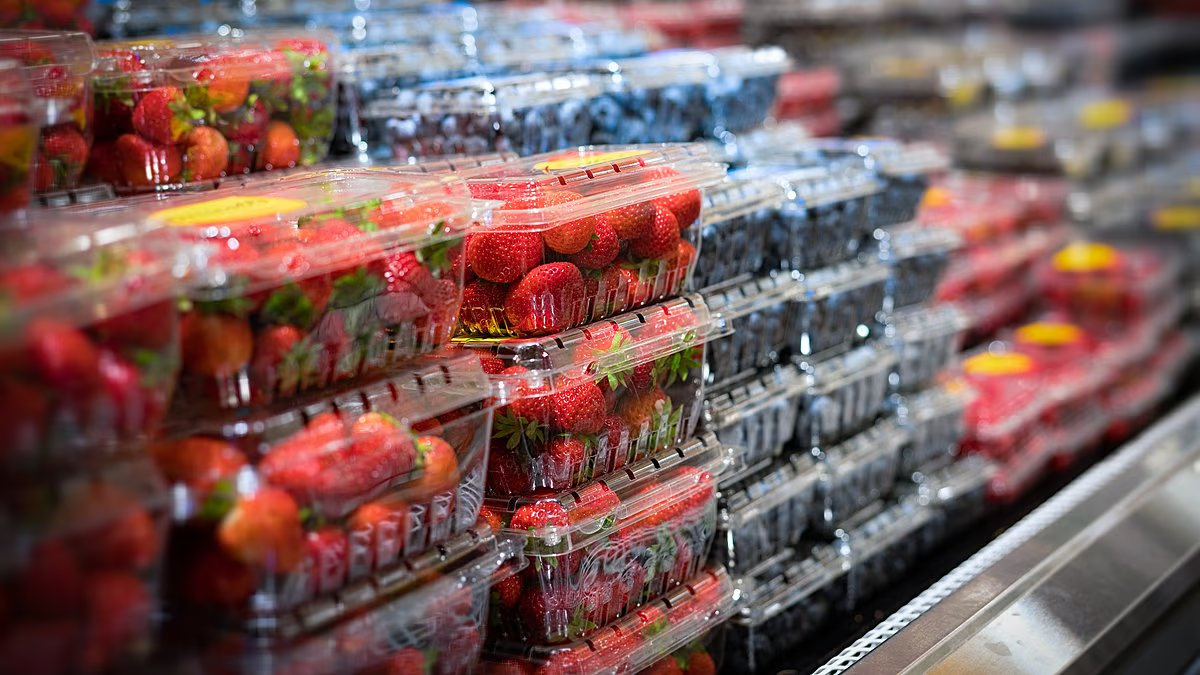

Australian regulators are considering a major change to pesticide rules that would lift the permitted residue level for a contentious insecticide on some berries by as much as 500 times.
The chemical, isocycloseram, has been authorised for use in Australia since 2021 and is applied to crops to control various insects and caterpillars.
The Australian Pesticides and Veterinary Medicines Authority said the proposed increase would not compromise food safety, insisting berries would still be safe for shoppers to eat.
‘A single reference to an amount or level (such as ‘500-fold’) can be misleading as it does not reflect those compounded degrees of protection,’ a spokesperson said.
Products containing the so-called ‘forever chemical’ are required to carry a warning stating it is suspected of ‘damaging the unborn child’.
The proposed rule change has drawn criticism from environmental and public health campaigners, who say too little is known about the pesticide’s long-term impact. Isocycloseram is not approved for use in either the UK or the European Union.
Josh Davis, executive director of Pesticide Action Australia, said the organisation was worried about the possible health effects of chemicals such as isocycloseram, especially for children.
In manufacturer-sponsored studies, rats given high doses of isocycloseram developed shrunken testes, liver toxicity and foetal birth defects, leading regulators to impose low thresholds for human exposure.

Experts are warning berries may no longer be safe to eat after Australia’s chemical regulator considers a proposal to allow a controversial pesticide to be drastically increased on them

The chemical, isocycloseram, is already commonly used in Australia to protect crops from a variety of from bugs and caterpillars
‘Australia was one of the first countries in the world to approve it and (did so) relying on the research from the company that makes the product and profits from it.
‘We want consumers to be able to trust what they’re eating… why are we the human experiment?’
Mr Davis argued the APVMA’s assessment that the proposed MRL was ‘far below the level that would raise health concerns’ did not adequately account for children, who consume more berries relative to their body weight than adults.
The concerns come as Australians are eating more berries than ever, with people now consuming around 1kg of blueberries per person each year and berry production values rising from $567 million in 2013 to $1.3 billion in 2024.
‘This is not something that we think consumers should have to navigate. This is a problem that is being pushed onto us as consumers – we shouldn’t have to navigate what is an appropriate level of PFAS to expose our toddlers to,’ Mr Davis said.
‘We shouldn’t have to shop around to get safe food. And not all of us can afford organic produce. This isn’t about trying to wash a forever chemical off your fruit and veg, this is a systemic problem.’
Paediatric nutritionist Mandy Sacher also described the APVMA’s proposal as ‘truly crazy’ and said it showed the regulator was ‘focusing on legal limits rather than the safest path forward’.
‘We obviously can’t eliminate every chemical, but our regulators should be doing everything they can to reduce the amount of exposure on the foods that our children love,’ Ms Sacher told news.com.au.

Paediatric nutritionist Mandy Sacher described the APVMA’s proposal as ‘truly crazy’

Josh Davis from Pesticide Action Australia said not enough research has been done on the harms associated with isocycloseram
However, farming groups and food scientists defended the proposal, warning the berry industry could be severely affected.
‘We have some of the best scientific minds in the world in the APVMA, which is an independent scientific medical authority that considers these things,’ National Farmers Federation chief executive Mike Guerin said.
Dr Emma Beckett told Nine: ‘Farmers don’t use pesticides for no reason. It costs them money, time and effort to buy, apply and manage. The reality is growing fresh fruits and vegetables is very complex, and decisions need to be based on balance.
‘The goal should be effective integrated pest management that minimises unnecessary pesticide use while protecting crops, people and the environment.’
Consultation on the proposal closed earlier this week.
The debate over isocycloseram comes just weeks after Australia’s chemical regulator approved the continued use of the herbicide paraquat, despite its links to Parkinson’s disease.
The APVMA said it had imposed ‘significant new restrictions’ while concluding the evidence did not show approved use increased the risk of developing the disease.