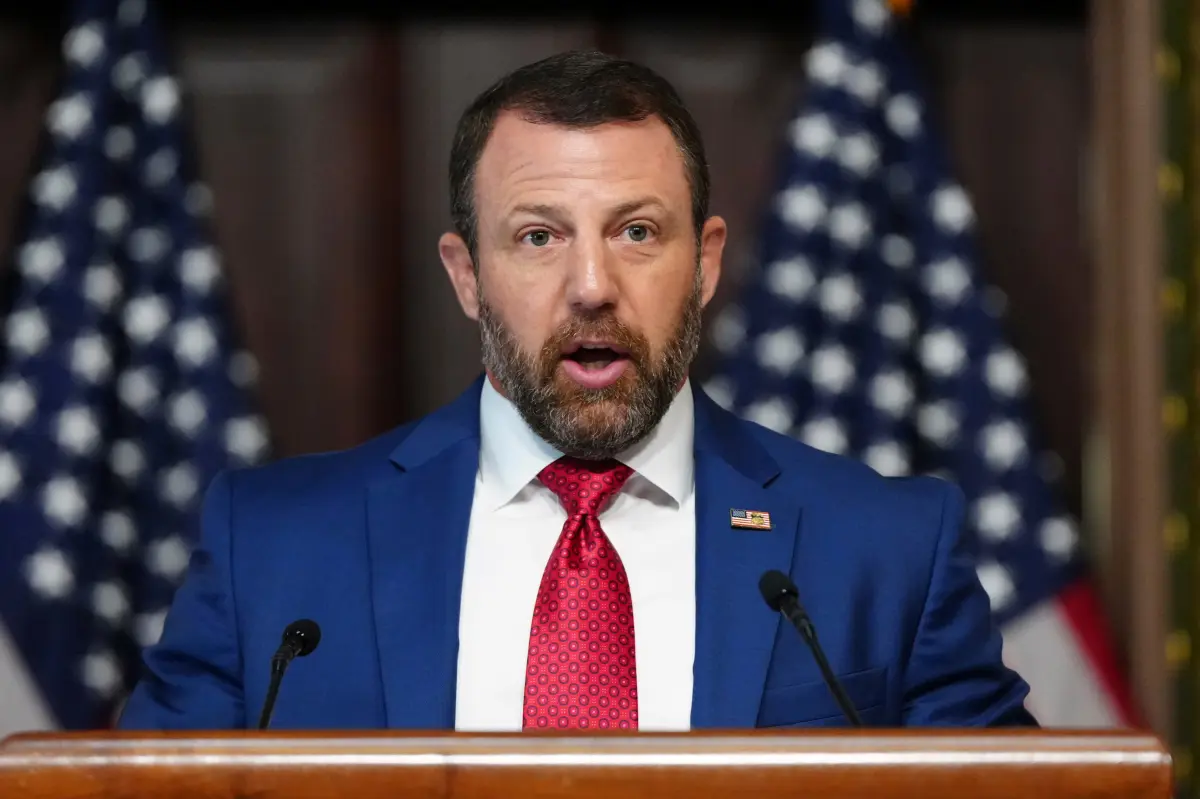

Homeland Security Secretary Markwayne Mullin informed election officials in California, New Jersey, Nevada and Pennsylvania on Friday that the Department of Homeland Security has flagged more than 250,000 people on state voter rolls as potential non-citizens, according to the agency.
The preliminary DHS review identified up to 190,832 possible non-citizen voter registrations in California, 35,152 in New Jersey, 15,903 in Nevada and 14,576 in Pennsylvania, the department said.
“Election security is national security,” Mullin said in a statement. “Only Americans should be electing American leaders.”
The letters, addressed to California Secretary of State Shirley Weber, New Jersey Secretary of State Dale Caldwell, Nevada Secretary of State Francisco Aguilar and Pennsylvania Secretary of State Al Schmidt, ask each state to reply within two weeks. DHS is seeking confirmation on whether the states will cooperate with the department to examine the registrations and support what the administration called “free, fair, and honest elections.”
The move follows a national address by President Trump on Thursday centered on election integrity. During the speech, Trump alleged that China had stolen voter registration information belonging to 220 million Americans.
MORE STORY: Andrew Pierce Reflects on Brandy-Soaked Dinners with Friend Ann Widdecombe

DHS also pointed to several recent election-related actions, including a requirement that recipients of certain Federal Emergency Management Agency grants comply with election integrity provisions. The department said it has also instructed U.S. Immigration and Customs Enforcement to seek tougher consequences, including deportation, for non-citizens who illegally cast ballots.
Federal law bars non-citizens from voting in federal elections, though documented instances of such voting are rare.
Election administrators and voting rights organizations have repeatedly warned that voter roll comparisons can generate false matches, often because of outdated information, similar names or mistakes in source databases.
DHS did not release details describing how it identified the potential registrations.