
Topline
ESPN’s latest round of layoffs, which on Tuesday hit several well-known on-air figures, has sparked fresh backlash from fans and media observers who accuse the sports giant of cutting trusted longtime voices while positioning itself to invest even more heavily in costly stars such as Pat McAfee, whose loud, swaggering style and hypermasculine appeal have made him a major draw with the network’s prized audience of younger men.
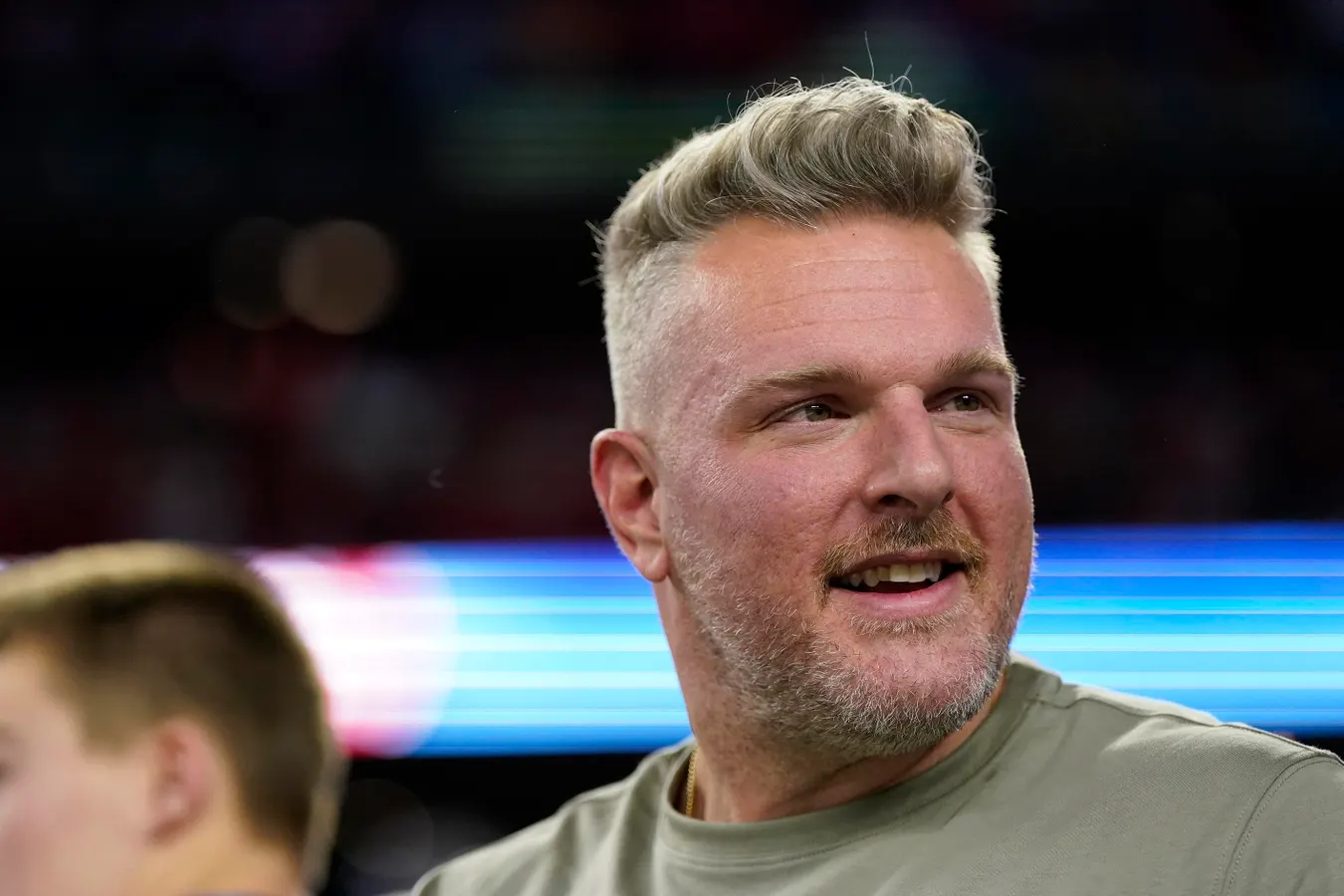
ESPN analyst Pat McAfee on Dec. 29, 2023, in Arlington, Texas.
Getty Images
Key Facts
ESPN announced Tuesday its first wave of job cuts since acquiring the NFL Network earlier this year, and the news quickly rattled viewers as a number of prominent, familiar on-air personalities were revealed to be among those dismissed.
Among the ESPN layoffs were former NFL quarterback Cam Newton, who had agreed to a multi-year extension with the network last August; Karl Ravech, a veteran MLB announcer with 33 years at ESPN; and longtime NFL analyst Tom Pelissero.
Former NFL safety Ryan Clark, who’d been with the network 11 years, learned that he was being laid off midway through his appearance on NFL Live on Monday and did not finish the show, in a move that fans have since called “diabolical” and “so wrong.”
The growing list of departures has drawn particular scrutiny because of its timing: ESPN is reportedly in talks on a record-setting contract extension for McAfee, the host of “The Pat McAfee Show,” that could be worth between $60 million and $65 million annually.
McAfee, whose brash on-air persona, anti-political correctness rhetoric and devoted young male fan base have led some critics to describe him as an “extension” of the Trump-aligned “manosphere,” has carved out a lucrative role at ESPN by attracting younger viewers coveted by advertisers in a cable TV landscape that generally skews older.
McAfee similarly faced criticism after ESPN’s 2023 layoffs, when several household names in sports broadcasting were cut not long after he signed his current deal, reportedly worth $30 million per year, prompting renewed questions about the network’s spending priorities.
At the time, he responded on social media by saying “our goal is that ‘mass exits’ are never a thing again.”
WHO WAS LAID OFF AT ESPN?
Cam Newton—NFL analyst and former Carolina Panthers quarterback
Ryan Clark—NFL analyst and former Pittsburgh Steelers safety
Karl Ravech—MLB play-by-play announcer and “Baseball Tonight” host
Tom Pelissero—NFL Network insider
Stephania Bell—NFL injury analyst and physician who had been a fixture on ESPN’s NFL coverage
David Lloyd—SportsCenter anchor
Charles Davis—NFL Network analyst and draft expert
Bart Scott—NFL analyst and radio co-host
Andreas Hale—Boxing, MMA and professional wrestling reporter
Dan Hajducky—ESPN.com staff writer
Key background
ESPN in January acquired NFL Network, NFL RedZone and the NFL’s fantasy football business in a deal that gave the league a 10% equity stake in ESPN. The integration brought hundreds of NFL Media employees under ESPN’s umbrella, and chairman Jimmy Pitaro blamed the acquisition for the layoffs in a memo to employees Tuesday obtained by Forbes.
TANGENT
Though he’s not as directly tied to the movement as names like Andrew Tate, Joe Rogan and Theo Von, McAfee benefits from an audience overlap with the so-called “manosphere,” a loosely-defined network of podcasts, influencers and online communities centered on men’s issues, masculinity and politics. In recent years, the manosphere’s audience has become increasingly commercially valuable as media companies and advertisers compete for the attention of young men—a demographic that has shifted away from traditional television in favor of podcasts, YouTube and creator-driven content. Critics argue the manosphere often promotes misogyny and far-right politics disguised as a welcoming alternative to mainstream media. McAfee is not generally considered a manosphere creator, but media journalists at The Guardian described The Pat McAfee Show as “an extension” of the community and argued that his appeal reflects ESPN’s broader effort to attract younger male viewers. The essay, titled “How the rightwing sports bro conquered America,” highlighted how some of McAfee’s rhetoric—including calling WNBA star Caitlin Clark a “white bitch” and amplifying stories that degrade women—appeal to a similar conservative audience.