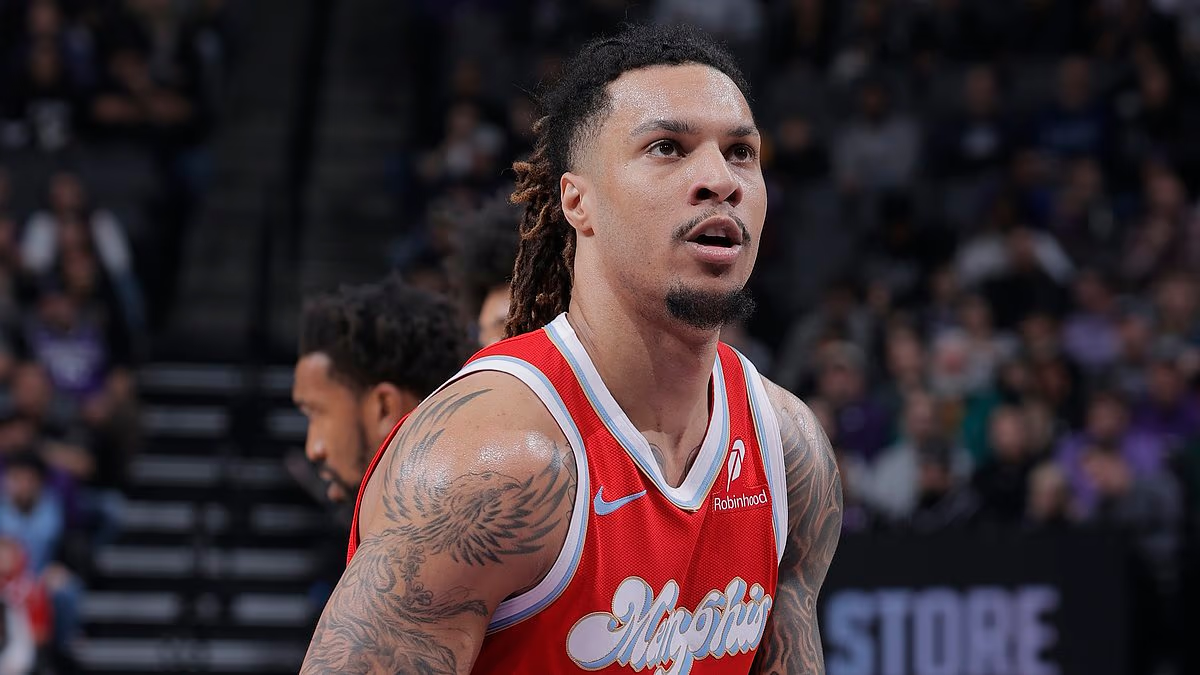

NBA player Brandon Clarke was reportedly taken into custody on April 1 after police in eastern Arkansas said he passed several vehicles in a no-passing zone while driving faster than 100mph.
During a search of his Corvette, however, officers said the speeding allegation was not the only thing that drew their focus. Inside the vehicle, they found a blue duffle bag containing several small packets filled with a green powder.
‘It’s just kratom, it is legal,’ Clarke told officers, according to the report. While kratom remains legal across much of the United States, Arkansas is among the states where the substance is banned.
Six weeks after that Arkansas traffic stop, the account says, Clarke was dead.
‘Kratom is an addictive substance. It can, and does, kill,’ Dr Josef G Thundiyil, a medical toxicologist and emergency physician with Orlando Health, told the Daily Mail.
Often promoted as a plant-based wellness aid, kratom is widely available through smoke shops, convenience stores and online retailers. The substance — increasingly described by critics as ‘gas station heroin’ — has become a booming business, with the American Kratom Association estimating the market is worth about $1.5billion annually.

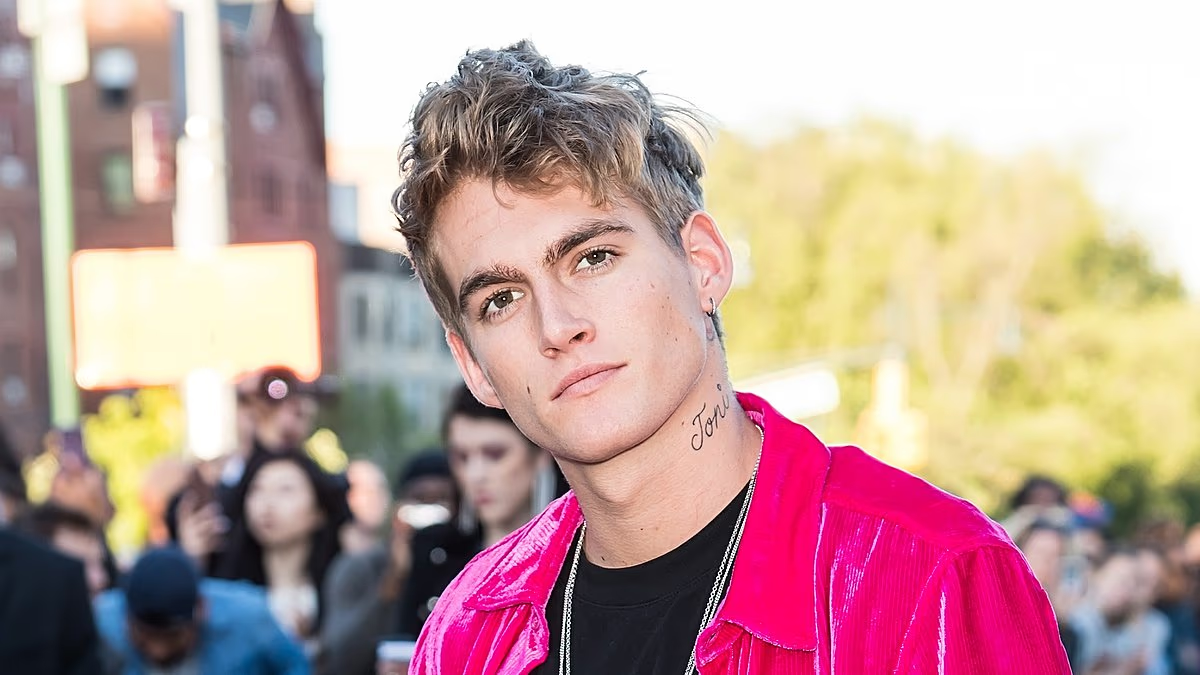
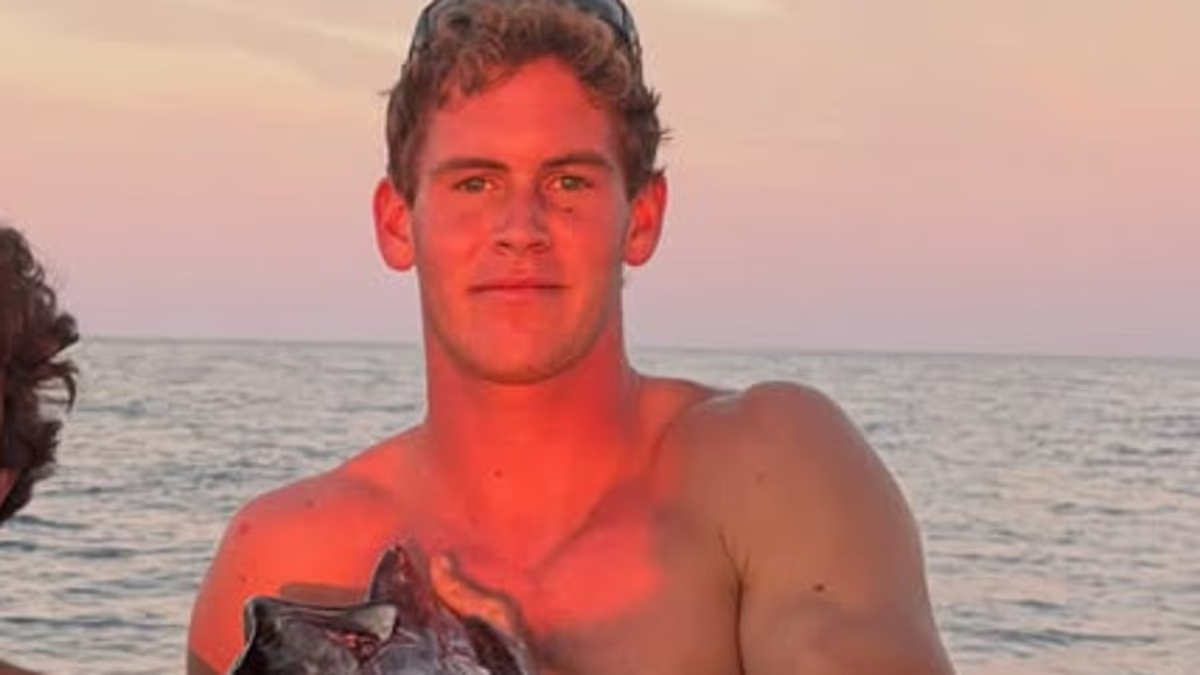
Memphis Grizzlies player Brandon Clarke died in May at the age of 29

Arkansas police said they discovered kratom, a substance critics have nicknamed ‘gas station heroin,’ during Clarke’s arrest weeks before his death
In the same botanical family as coffee, kratom is derived from the leaves of a tropical tree native to Southeast Asia and has been used there for centuries. Only recently has it gained in popularity in the US for purported pain relief and stamina benefits.
Sold in brightly-colored cans resembling energy drinks, capsules pass as everyday vitamins or sugar-coated gummies. But experts say looks are deceiving.
‘That it’s sold very unregulated in tea shops, smoke shops, gives a false reassurance,’ Dr Thundiyil explained.
He warned, a ‘whole host’ of negative and dangerous side effects have been reported amid kratom’s boom, including ‘severe compulsive addiction.’
‘Users describe: I feel it’s just as bad as when I was on an opioid, meaning it’s very addictive,’ he continued. ‘And what we have found of the different outcomes, we’ve seen reported things like seizures and liver failure. But the one that really caught our attention was death.’
A government report showed poison center calls about kratom have skyrocketed. In 2025 alone, they jumped 1,200 percent to 3,400. There were 233 kratom-associated deaths reported between 2015 and 2025, according to the US Centers for Disease Control and Prevention.
Many incidents are a consequence of kratom being mixed with alcohol or other drugs.
‘[Kratom] has two different ways of working,’ Dr Zaid Fadul, a board-certified physician and founder of Bespoke Concierge MD, told Daily Mail. ‘At low doses, it can be a stimulant and can cause pain relief.

In the same botanical family as coffee, kratom comes from leaves of a tree native to Asia

Kratom comes in brightly-colored cans resembling energy drinks and capsules look like candy
‘Higher doses have different effects. It can be sedating. Any dose for a prolonged period of time, you get chemical dependence, then eventually addiction.’
The risks don’t end there. Dehydration is a side effect, triggered by the loss of appetite caused by kratom, Dr Fadul said.
‘Two, kratom is going to mask pain,’ he added. ‘It’s not going to treat pain.’
Kratom does not treat injuries. Instead, it lessens pain for athletes to continue training and competing.
‘That’s when a stress fracture turns into a real fracture,’ Dr Fadul said. ‘You want recovery for athletes. You don’t want pain masking. You want real recovery.’
In an industry where the body is the money-maker, preserving health is key – and kratom puts that in jeopardy.
Given its accessibility and legal status, it is a product athletes may not necessarily have to disclose to teams and risk a trade.
RELATED: Subtle Fingernail Signs That May Reveal Silent Health Issues
‘I get that athletes are hesitant to take opioids, or they want to get off opioids, and so they’re looking for alternatives,’ Dr Thundiyil said. ‘My warning would be kratom is probably not that solution; it’s unproven.

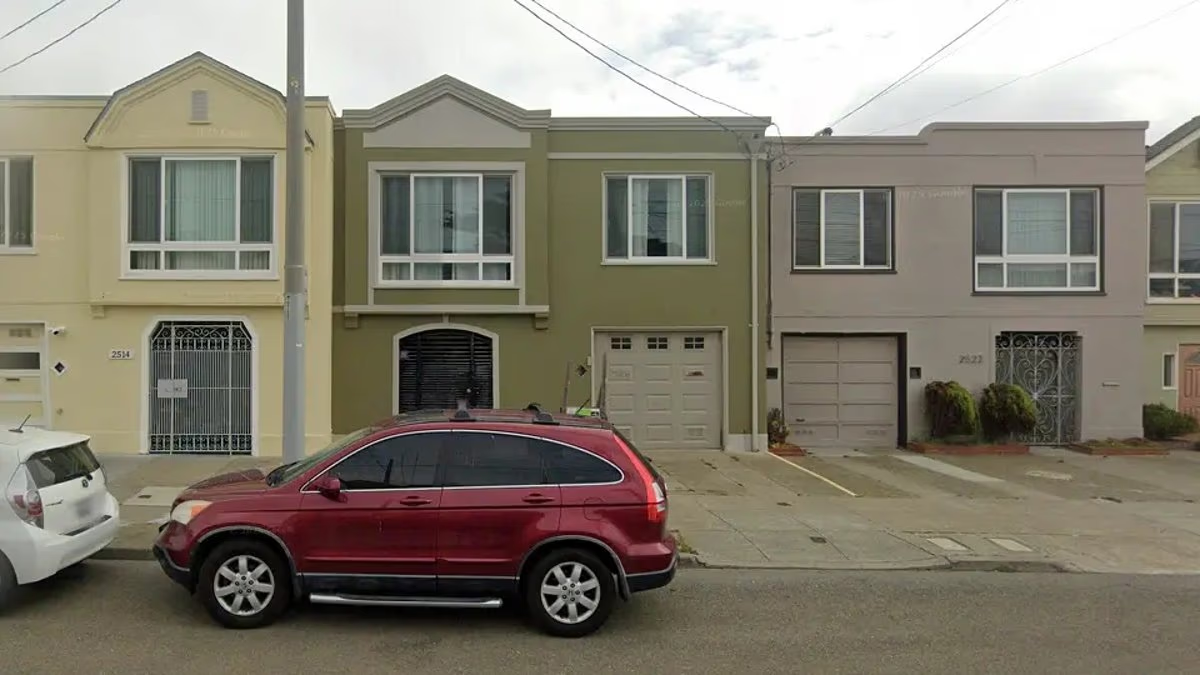
Clarke died near Los Angeles, where he had been staying with a friend from college

An investigation into the power forward’s death is still ongoing
‘The harms are growing. You may be jumping out the pot and into the fire.’
Clarke was discovered with 235 grams of kratom in April.
The Canadian-American star was restricted to two games for the Grizzlies’ last season with injury. He missed 73 games, sitting out 26 recovering from surgery on his right knee before another 46 with a right calf strain.
In addition to kratom, Clarke had a THC vape pen and a prescription for a common painkiller used to treat sporting injuries when he was arrested
‘That right there is legal pain medicine,’ Clarke said in the dashcam video of his arrest. ‘That’s Toradol.’
Six weeks later, Clarke was found dead on May 12 in the San Fernando Valley. His death is being investigated as a potential overdose after drug paraphernalia was found at the scene.
No official cause has been announced and the inquest is ongoing.

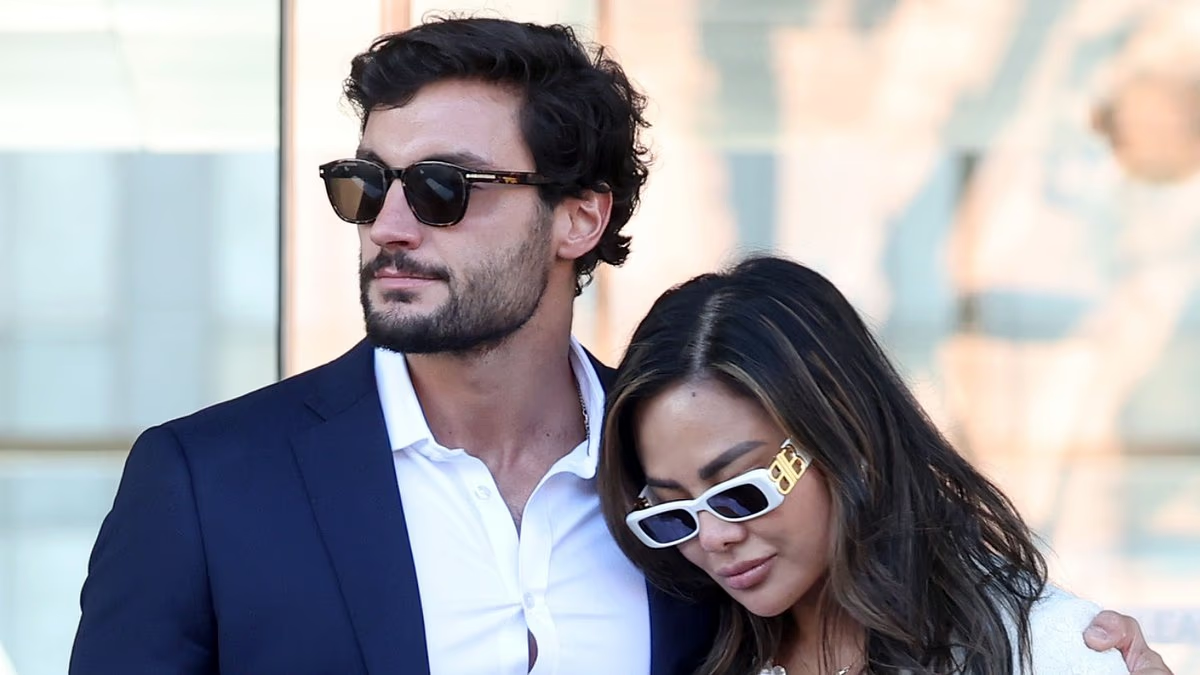
Clarke and a woman attend his sister’s 2024 wedding in Mexico City, Mexico

Clarke poses for a picture with his mother, Whitney Triplett, his step father and his half siblings
Clarke is not alone.
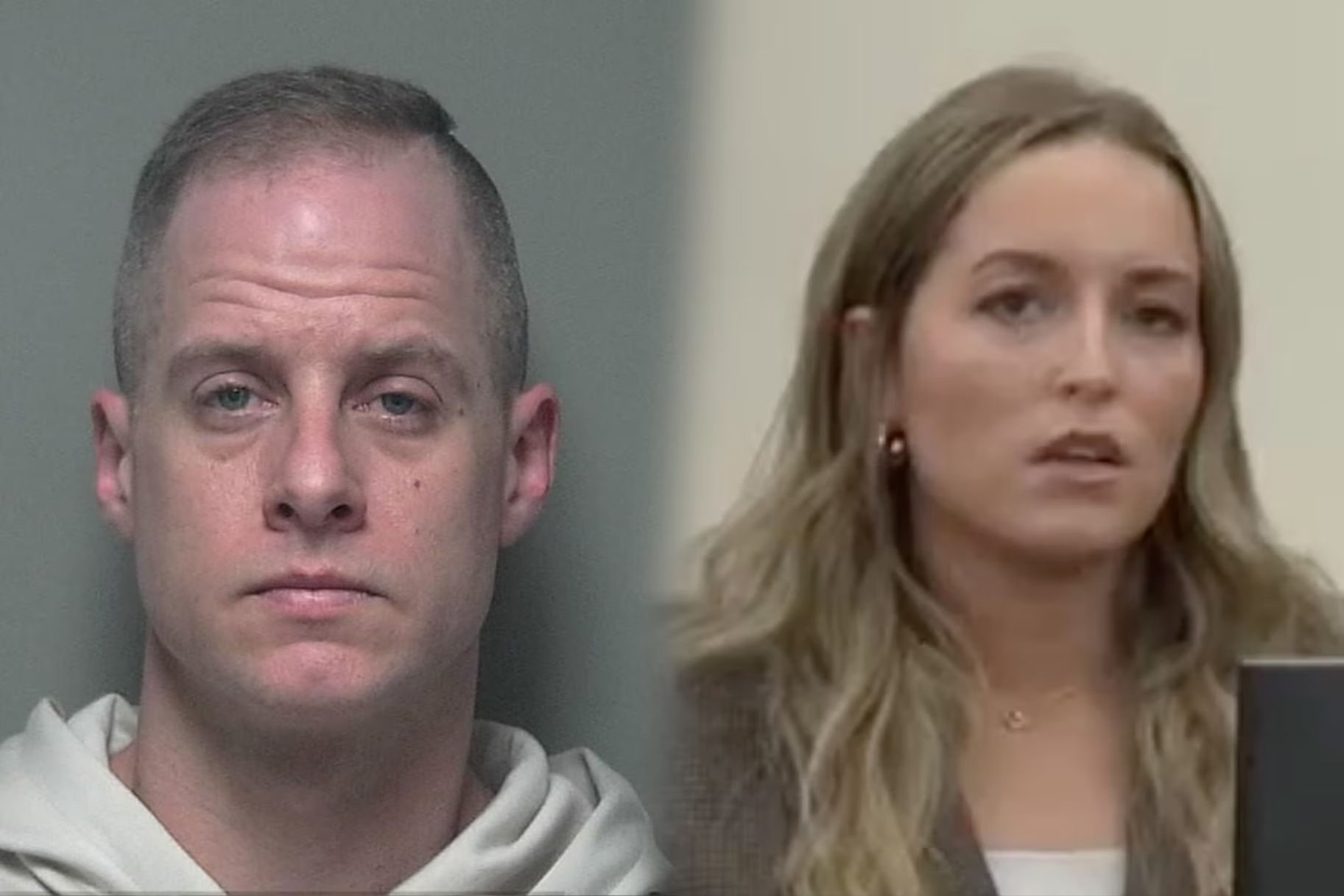
UFC veteran Diego Sanchez’s former coach Joshua Fabia accused him of being ‘strung out’ on kratom and other substances in 2021. Fabia claimed the fighter was an ‘addict’ following their split. Sanchez denied the allegations.
Wrestler Sabu was allegedly given kratom ahead of his final match amid fears he would not show up to the ring, fellow wrestler Joey Janela claimed in a 2025 interview. Janela later claimed that Sabu – whose real name was Terrance Brunk – took kratom ‘daily for years’ to help him get off other substances.
Sabu died at age 61 in May 2025 three weeks after his final match. GCW, which hosted the bout, denied any involvement in his death.
Meanwhile, the United Football League – the eight-team spring football league – embraced CBD Kratom in 2024 as its official partner, highlighting potential to ‘enhance physical performance’ as well as ‘kratom’s ability to aid in chronic pain’.
The Missouri Attorney General’s Office launched an investigation into CBD Kratom in November for ‘deception, fraud, false promises’ among other acts. It is one of nearly two dozen kratom companies under investigation by the Missouri AG office. The UFL’s partnership ended before the start of this season.
CBD Kratom, meanwhile, said it relished an ‘opportunity to demonstrate the strength of our safety standards, compliance practices, and long-standing commitment to consumer education.’

UFC veteran Diego Sanchez (right) denied accusations of being ‘strung out’ on kratom
Kratom is not considered performance-enhancing by the World Anti-Doping Agency. It was briefly monitored by WADA but removed from the tracking list in 2018.
The United States Anti-Doping Agency, which handles the drug testing for Olympians, explicitly advises against using it over health hazards, but has not banned it.
In Tennessee, where Clarke played for the Grizzlies, kratom was legal when he was arrested. Three months later, Tennessee became the latest state to ban it, with the illegal status enforced from July 1.