
Eric Tostrud Biography – Eric Tostrud Wiki
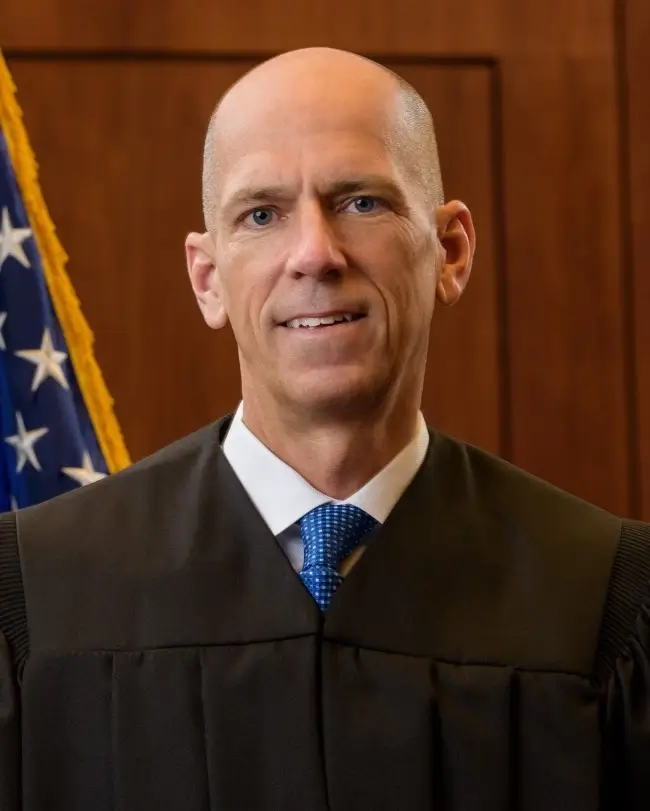
Eric Tostrud serves as chief judge of the U.S. District Court for the District of Minnesota, a key leadership role within the federal judiciary in the state. He was nominated to the federal bench by President Donald J. Trump in February 2018, confirmed by the U.S. Senate through a unanimous voice vote on September 6, 2018, and formally sworn in on September 14. Tostrud filled the seat previously held by Judge Donovan W. Frank, who had moved to senior status.
Tostrud assumed the position of chief judge on July 1, 2026, taking over from Chief Judge Patrick J. Schiltz. Schiltz concluded his four-year tenure in the post on June 30, 2026, after what was described as a period of distinguished service to the District of Minnesota.
Under 28 U.S.C. § 136, each of the nation’s 94 federal district courts is led administratively by a chief judge. The law generally assigns the role to the active district judge with the longest service who is under 65, has served at least one year on the district court, and has not previously held the chief judgeship. A chief judge may serve for up to seven years, though the term can end earlier if the judge retires or takes senior status after reaching age 65.
Education
A Minnesota native with deep academic and legal roots in the state, Judge Tostrud graduated cum laude from St. Olaf College in 1987 with a B.A. in Political Science and Speech. He went on to earn his J.D. summa cum laude from William Mitchell College of Law in 1990 and was admitted to the Minnesota Bar that October.
Career
Early in his legal career, Tostrud gained experience inside the federal courts through two clerkships. From 1990 to 1992, he clerked for Judge Edward J. Devitt of the U.S. District Court for the District of Minnesota, followed by a 1992 clerkship with Judge George E. MacKinnon of the U.S. Court of Appeals for the District of Columbia Circuit.
After returning to Minnesota, Tostrud built a long career in private practice at the Minneapolis law firm Lockridge Grindal Nauen. Over 27 years with the firm, he became a partner in 1998 and later served as of counsel from 2015 until his appointment as a federal judge.
Tostrud has also maintained a significant presence in legal education. He began teaching at William Mitchell College of Law, now Mitchell Hamline School of Law, as an adjunct professor in 1993, and has taught at the University of Minnesota Law School since 2011. From 2006 to 2015, he served on Mitchell Hamline’s Board of Trustees before joining the school full time as a distinguished practitioner in residence.
Eric Tostrud Age
Eric Christian Tostrud was born in 1965 in St. Paul, Minnesota, to Alleen and Jerrol Tostrud. His father, Jerrol Tostrud, died on October 3, 2024, at the age of 86.
Eric Tostrud Wife
Eric Tostrud is married to Laurie Sagedahl Tostrud. She graduated from St. Olaf College in 1989.
Eric Tostrud Family
Eric Tostrud and his wife, Laurie Sagedahl Tostrud, have two children, Elsa Tostrud and Ty Tostrud. He has two siblings, sister Karen Tostrud Hoffman and brother Jon Tostrud.
Eric Tostrud Political Party
Chief Judge Eric Tostrud was nominated to the federal bench by President Donald J. Trump, a member of the Republican Party.
Eric Tostrud Religion
Eric Tostrud is steadfast in his faith. When asked if he has a deeply held belief or value that guides him, he told the St. Olaf Magazine: “The Gospel is not a call to service of self, it’s a call to service of others.” He added: “I cannot allow principles of faith or my own biases to infect my decision-making.”
Minnesota Immigration Ruling
On July 20, 2026, U.S. District Judge Eric C. Tostrud ruled against the Trump administration in a key case centered on local immigration policy in Minnesota. According to a filing, the administration affirmed that Minnesota “sanctuary” laws violate the Supremacy Clause of the Constitution, which states that federal law must be supreme to state and local law. The administration looked to have the laws and policies declared unconstitutional and asked the court to block them, per the filing.
The Trump-nominated federal judge dismissed the case in his ruling, writing that “the challenged provisions do not single the federal government out for less favorable treatment, at least not in any sense that shows an intergovernmental immunity violation.”