
Topline
Dubai is rolling out a high-profile, costly campaign to win back the surge of tourists it once enjoyed, after visitor numbers fell sharply following the outbreak of the Iran war. The city is now offering travel incentives valued at more than $800 to eligible visitors arriving before the end of October.
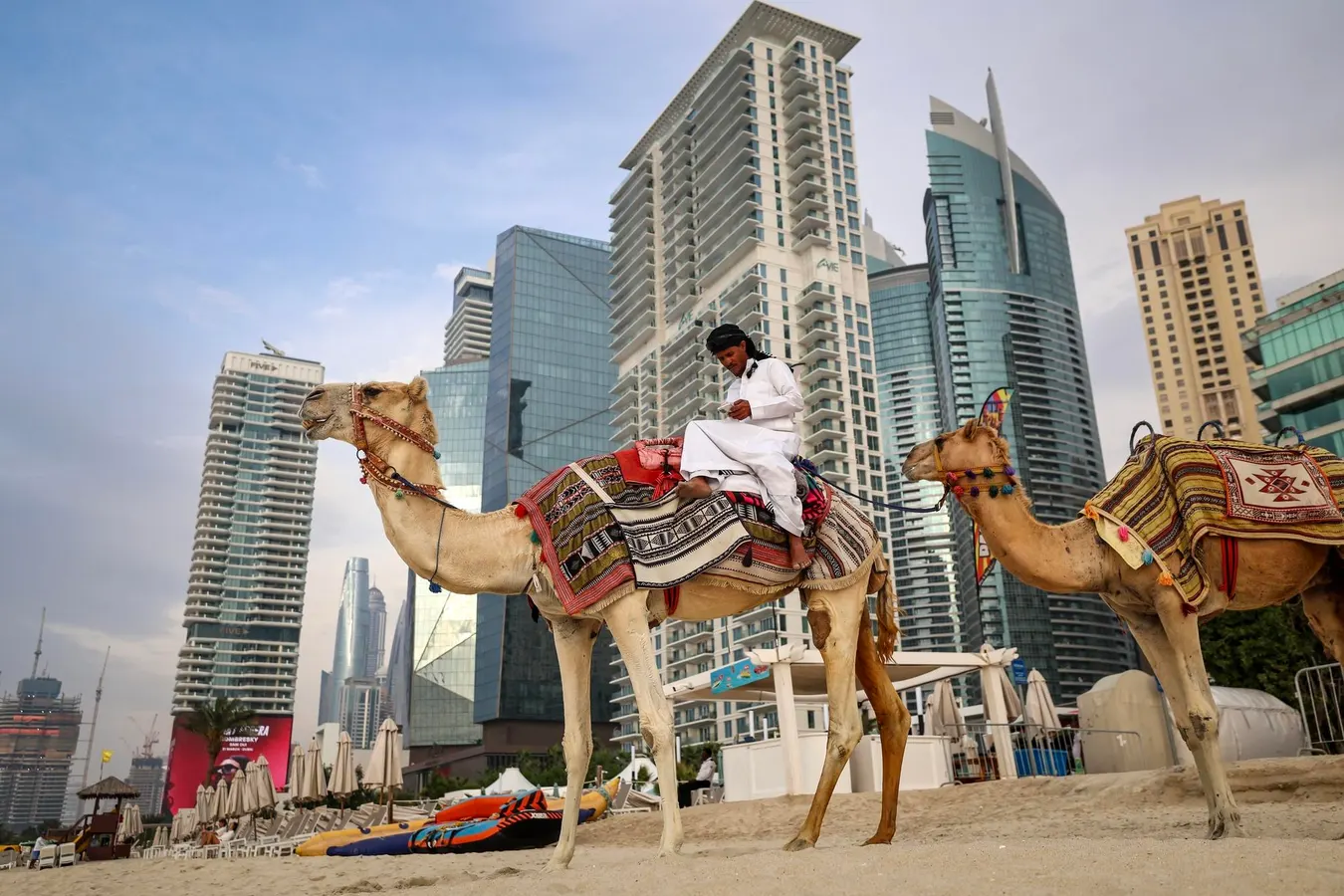
A camel pictured on a Dubai beach on March 10, 2026.
AFP via Getty Images
Key Facts
The initiative, branded “A Dubai Invite,” gives United Arab Emirates residents the chance to nominate friends and family members for a visit, with selected guests receiving perks worth over AED 3,000, or roughly $800.
According to Visit Dubai, those nominated can receive a “benefits package” that may feature hotel accommodation, restaurant offers or tickets to popular attractions. Travelers who arrive between July 20 and Oct. 31, 2026, qualify for the promotion.
The invitation-based travel offer is the latest move in Dubai’s broader effort to revive its tourism industry after the U.S.-Israeli war with Iran began in February, disrupting regional travel, cutting the number of airlines serving Dubai airports by half and prompting many international travelers to avoid Middle East flight routes.
Dubai this year has also introduced a new five-year, multiple-entry tourist visa to encourage frequent and repeat travel, collaborated with Emirates airline to offer complimentary stays at luxury hotels and eased financial regulations to make it easier for extended visitors to open local UAE bank accounts.
The campaign comes after Dubai spent three consecutive years setting new tourism records, with visitor totals climbing in 2023, 2024 and again last year.
BIG NUMBER
19.5 million. That was the number of international overnight visitors Dubai welcomed last year, capping its third straight record-breaking year for tourism. Hotel occupancy averaged 80.7%, close to New York City’s 84.1%, and in December, Dubai surpassed 2 million international visitors in a single month for the first time.
Key background
Early in the conflict, Iranian missile and drone attacks near Dubai saw debris fall across parts of the city, including major residential areas, hotels and the airport. Images of fragments striking the Fairmont hotel on the upscale Palm Island were circulated widely online, and more than a dozen people have been killed in Dubai. Airlines suspended or rerouted thousands of flights, countries repeatedly closed their airspace and governments issued tougher travel advisories, making the Middle East riskier to reach. The conflict has also dented tourism and local businesses are taking the hit. One Dubai restaurant group told the BBC revenues have fallen more than 50% and some eateries that depend heavily on tourists have seen declines of 70% to 80%. One senior executive at a restaurant chain in Dubai told the outlet foot traffic has dropped to 15% to 20% of normal and more than half of the chain’s staff has been placed on unpaid leave. Some of Dubai’s most famous hotels have closed entirely and moved up renovation and refurbishment plans, including the sail-shaped Burj Al Arab which will close for 18 months for a major restoration. The number of international visitors to Jordan has fallen about 30%, tourism in Lebanon has effectively collapsed with industry groups reporting an 80% decline in visitor numbers and the broader Middle East recorded a 14% drop in international tourist arrivals during the first quarter of 2026.
further reading