
North Wales has been formally placed in drought status, as exceptionally dry weather continues to grip the UK and around 23 million people remain subject to hosepipe bans.
The region has seen less than 2 per cent of its normal July rainfall so far, pushing river levels dangerously low and leaving large stretches of countryside parched.
It is the first area of the UK to be officially declared in drought in 2026, following weeks of unusually hot and dry summer conditions.
Rhian Thomas, sustainable water and nature manager at Natural Resources Wales, said: ‘While drought status does not automatically mean water shortages for customers, it does reflect the growing pressure being placed on our environment.
‘We are asking everyone to play their part by using water wisely and helping to protect Wales’ natural resources during this exceptionally dry period.’
Across England, rainfall has also been strikingly scarce, with the country receiving only 3 per cent of its typical July total and many areas now classed as experiencing prolonged dry weather.
According to the Met Office, regional rainfall totals for the month so far range from just 9 per cent of the long-term average in the North West to no measurable rain at all in the East and South East.
The latest drought declaration follows last year’s record-breaking June heat, which also triggered drought conditions in parts of the UK, including North West England and Yorkshire.

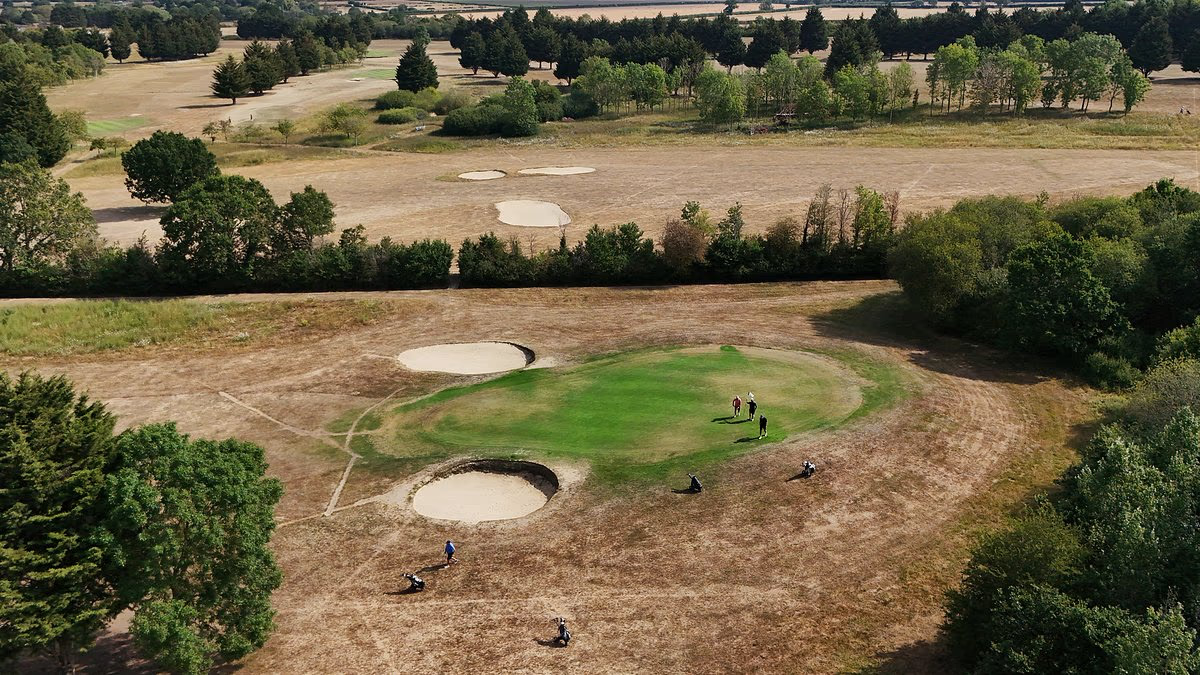
A drought has officially been declared in North Wales as 23million Brits remain under hosepipe bans amid record-breaking dry weather (Stock Photo)

Thames Water became the latest in a string of hosepipe bans already announced this month
The announcement comes after the Environment Agency revealed large parts of southern, central and eastern England have moved closer to official drought status.
The Agency said six reservoirs are currently classed as having ‘notably low’ levels, including Wimbleball in Somerset, Grafham in Cambridgeshire and Hanningfield in Essex, while Blagdon reservoir in Somerset is classed as being ‘exceptionally low’.
Meanwhile, only 13 per cent of rivers are classed at normal levels for this time of year, with the Avon (Hampshire), Cam, Derwent (Yorkshire), Swale, Tone, Wye and Yare currently seeing exceptionally low levels.
Meanwhile millions of Londoners come to terms with a hosepipe ban enforced across the city.
Thames Water announced the ban for more than ten million customers as the exceptionally dry and hot weather drove a surge in demand.
The restriction came into effect at 12.01am on Thursday – but the UK’s biggest water company asked households to begin following the ban on its announcement on Tuesday, ahead of its official start date.
It means customers must not use hosepipes for any non-essential activities, such as watering gardens, cleaning cars, filling paddling pools or topping up hot tubs.
Pressure on water resources is intensifying, with the current spell of warm weather following three unprecedented heatwaves and the driest spring on record for England and Wales.
Thames Water becomes the latest in a string of firms to impose hosepipe bans in southern England, which has seen very little rainfall this month.
The company said water use is currently 10 per cent above normal in the Thames Valley and the Home Counties, as well as 7 per cent above normal in London.
Customers are currently using an extra 100million litres every day – equivalent to adding all the homes in Manchester to the network, the firm added.
Periods of hot weather can push up demand as customers consume more water to stay cool and water gardens, while farmers use more for crop irrigation and industries use more for protecting infrastructure from the heat.
Hotter temperatures can also lead to physical pressure on underground water pipes, leading to higher rates of bursts and leaks, while the lack of rainfall means very little replenishment for reservoirs.

The Thames Water hosepipe ban covers the 10.1million customers that the firm supplies across London, the Thames Valley and the home counties. These areas are marked in blue
The water firm said it will keep the situation under review and lift restrictions as soon as it is safe to do so.
Bans are also in place for Southern Water customers in Hampshire and the Isle of Wight, Cambridge Water customers, Affinity Water customers in Bedfordshire, Berkshire, Buckinghamshire, Essex, Hertfordshire, Surrey and parts of London, and Anglian Water customers in the East of England.
Yesterday South East Water also announced that 2.4million customers will be affected by temporary restrictions in Sussex, Surrey, Hampshire and Berkshire from Saturday, coming on top of a ban it already put in place for areas of Kent.
Severn Trent, Essex and Suffolk Water, Wessex Water and Portsmouth Water have also urged customers to use water wisely amid the heatwave.