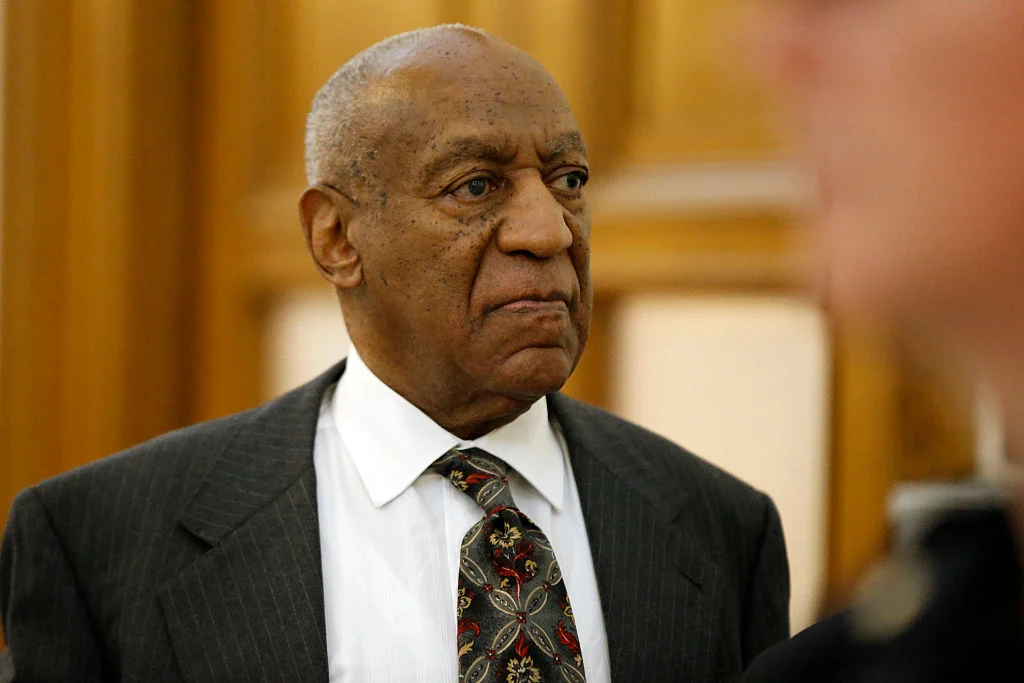

At the peak of his fame, Bill Cosby ranked among the wealthiest figures in entertainment, with a fortune built on television success few performers have ever matched.
“The Cosby Show” made Cosby far more than a top-earning sitcom star. He was also a creator, producer, and major backend participant, reportedly holding 20% of the show’s equity. During the series’ biggest years, his combined acting salary, production fees, and profit participation were estimated at roughly $4 million per episode.
The show’s long afterlife proved even more lucrative. Over several decades, “The Cosby Show” brought in more than $1.5 billion in syndication revenue. With his reported 20% stake, Cosby’s syndication earnings alone reached at least $300 million.
Cosby used that wealth to assemble a portfolio of high-end real estate and a remarkable art collection featuring pieces by Rembrandt, Picasso, Matisse, Renoir, Thomas Hart Benton, and numerous influential Black American artists. According to CelebrityNetWorth, Bill Cosby’s net worth once climbed as high as $400 million.
But the empire surrounding his name eventually came apart.
In the years that followed, dozens of women publicly accused Cosby of sexual misconduct. Cosby has denied the allegations and has said that any sexual encounters were consensual. In 2018, a Pennsylvania jury found him guilty on three counts of aggravated indecent assault for drugging and sexually assaulting Andrea Constand at his home in 2004. He received a prison sentence of three to ten years.
Cosby spent almost three years behind bars before the Pennsylvania Supreme Court vacated his conviction in June 2021. The court determined that the prosecution violated his due process rights because Cosby had relied on an earlier district attorney’s decision not to bring charges. The ruling led to his release and prevented a retrial in that case. Still, even after the criminal proceedings ended, the financial fallout continued to mount.
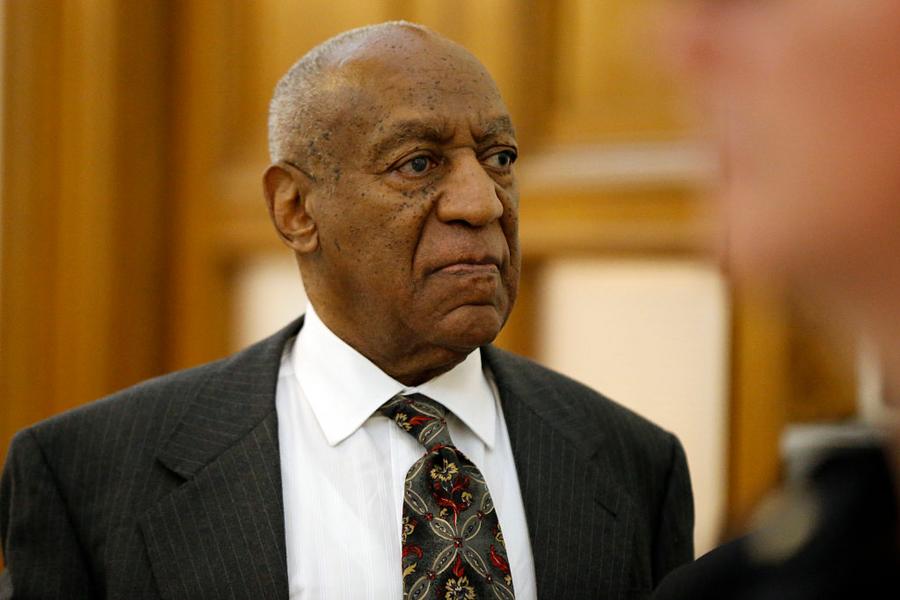
Matt Rourke-Pool/Getty Images
The Civil Cases Did Not End
Even after his criminal conviction was overturned, he remained exposed to civil lawsuits, which operate under different rules and carry a lower burden of proof than criminal cases.
In 2022, a California jury found Cosby liable for sexually assaulting Judy Huth at the Playboy Mansion in 1975, when she was 16 years old. She was awarded $500,000.
A much larger threat arrived the following year.
In September 2023, a woman named Donna Motsinger filed a civil lawsuit in California alleging that Cosby had drugged and sexually assaulted her more than five decades earlier. The case was permitted to proceed under a California law that temporarily revived certain sexual-assault claims that otherwise would have been blocked by the statute of limitations.
Motsinger said she was working as a restaurant server in Sausalito in 1972 when she met Cosby. According to her lawsuit, Cosby invited her to one of his performances, gave her wine and a pill, and later sexually assaulted her after she became incapacitated.
On March 23, 2026, a Santa Monica jury found him liable for sexual battery and assault. The jurors awarded Motsinger:
- $17.5 million for past damages
- $1.75 million for future damages
- $40 million in punitive damages
The total award came to $59.25 million.
Bill Claims His Net Worth Has Been Decimated
The Motsinger litigation already produced a rare public admission from Cosby about the state of his finances.
During a 2026 deposition, Cosby claimed that his inability to work had devastated his fortune:
“Due to allegations, whether they be newspaper, radio, television, magazines or just plain internet, I have not worked in about 10 years, or more. That means I have not earned a cent through my being an entertainer, a writer, a television performer, except in reruns, and my net worth has gone down like a submarine with no motor.”
The description may be dramatic, but there is ample evidence that Cosby’s financial position has deteriorated.
“The Cosby Show” largely disappeared from syndication. New television projects were canceled. Endorsement contracts and speaking opportunities evaporated. His touring career ended. At the same time, he incurred years of legal expenses and faced settlements, judgments, property costs, and loan payments.
Crucially, much of what remains may be locked in illiquid assets such as artwork and real estate rather than cash that can immediately satisfy a judgment.
The Manhattan Warning Signs
The clearest signs of Cosby’s cash problems emerged through two Upper East Side townhouses.
In late 2024, Cosby and his wife, Camille Cosby, were hit with foreclosure actions after allegedly defaulting on more than $20 million in loans secured by the properties.
The larger home, a roughly 13,000-square-foot mansion on East 71st Street, was burdened by two loans totaling $17.5 million. The lender alleged that the Cosbys stopped making payments in June 2024 and also owed more than $300,000 in property taxes.
A second townhouse on East 61st Street was tied to a separate $4.2 million CitiMortgage loan, with approximately $3.7 million in principal allegedly remaining unpaid.
Several months later, the smaller East 61st Street property quietly appeared on the market for $6.99 million. The four-story residence offered approximately 5,000 square feet, six bedrooms, a private backyard, and one of the oldest residential elevators in New York City.
At the time, we described Cosby as potentially “asset-rich but cash-poor” in our article about how he had listed the townhouse amid mounting foreclosure battles.
Cosby ultimately sold the larger East 71st Street mansion in November 2025 for $28 million. Although that represented a substantial gain over the $6.2 million he paid in 1987, a significant portion of the sale proceeds reportedly went directly to creditors.
He then used funds from the sale to resolve the foreclosure threat against the smaller property, which was subsequently relisted.
An Intimate Examination Of Cosby’s Finances
According to court documents that were dug up by Radar Online, Motsinger’s legal team has served Cosby with a sweeping set of post-judgment interrogatories (fancy word for questions that must be answered under oath). The requests seek detailed answers about virtually every category of property or income that could potentially be used to satisfy the judgment, including:
- Checking, savings, and brokerage accounts
- Cash and cryptocurrency
- Stocks, bonds, and private-equity investments
- Business interests and corporate entities
- Real estate
- Cars, boats, and aircraft
- Jewelry, artwork, and collectibles
- Retirement accounts and insurance policies
- Safe deposit boxes and storage units
- Royalties, residuals, and licensing payments
- Copyrights, trademarks, and other intellectual property
The interrogatories also seek information about trusts in which Cosby is a settlor, trustee, or beneficiary. His lawyers may be required to identify gifts, property transfers, nominees, family-controlled entities, financial advisers, appraisers, and assets that have been sold or moved since earlier financial disclosures.
In other words, Motsinger’s attorneys are not merely asking Cosby what he owns today. They want to know what he used to own, what happened to it, whether it was transferred to someone else, and whether income that otherwise would have been paid to Cosby has been redirected. This is a massive deal.
The requests reportedly extend deep into Camille Cosby’s finances. Motsinger’s attorneys are seeking information about property held solely in Camille’s name, jointly owned assets, trusts, financial accounts, income sources, and any marital agreements that might affect who legally owns what.
They also want to know whether royalties or other payments that once went directly to Bill have instead been routed to Camille or another person.
That does not establish that any improper transfers occurred. The purpose of the discovery is to determine which assets genuinely belong to Camille, which belong to Bill, which are jointly controlled, and which may be available to a judgment creditor.
Could Cosby’s Art Collection Be Seized?
One of the most important targets may be the Cosbys’ art collection.
Bill and Camille spent decades assembling more than 300 works. The collection has been described as one of the most significant privately owned collections of African-American art, while also including pieces by Rembrandt, Picasso, Matisse, Renoir, and other internationally famous artists.
At one point, the total value of their collection was estimated at more than $150 million, though the precise current value, ownership structure, and existing liens are unclear.
The collection has already functioned as a source of liquidity. In 2018, the Cosbys sold Thomas Hart Benton’s “Going West” and used another Benton painting, “The Instruction,” as collateral for a loan. The two paintings were estimated at the time to be worth a combined $12–$14 million.
Cosby Royalties?
The attorneys are not limiting their search to physical property.
They also want detailed information about royalties, residuals, licensing payments, copyrights, trademarks, and other intellectual property capable of producing future income.
Those assets were once the foundation of Cosby’s fortune. But the commercial value of those rights has declined dramatically. Major networks stopped airing the series after the allegations against Cosby received widespread attention, cutting off what had once been a steady and extremely lucrative stream of income.
Any remaining royalty payments could potentially be redirected to a creditor, depending on how the rights are owned, whether they have been assigned to trusts or other entities, and whether another party already holds a superior claim.
What Happens Next?
Cosby continues to challenge the verdict through post-trial proceedings, and his attorneys have said they intend to appeal.
But unless the judgment is vacated, reduced, settled, or stayed during the appeals process, Motsinger’s legal team will continue trying to identify assets that can be used to satisfy it.
For decades, Bill Cosby’s fortune was spread across private trusts, museum-quality artwork, valuable intellectual property, and homes purchased during the height of his television empire.
Now, asset by asset, account by account, and royalty by royalty, a nearly $60 million judgment creditor wants to find out exactly what remains.
(function() {
var _fbq = window._fbq || (window._fbq = []);
if (!_fbq.loaded) {
var fbds = document.createElement(‘script’);
fbds.async = true;
fbds.src = ”
var s = document.getElementsByTagName(‘script’)[0];
s.parentNode.insertBefore(fbds, s);
_fbq.loaded = true;
}
_fbq.push([‘addPixelId’, ‘1471602713096627’]);
})();
window._fbq = window._fbq || [];
window._fbq.push([‘track’, ‘PixelInitialized’, {}]);