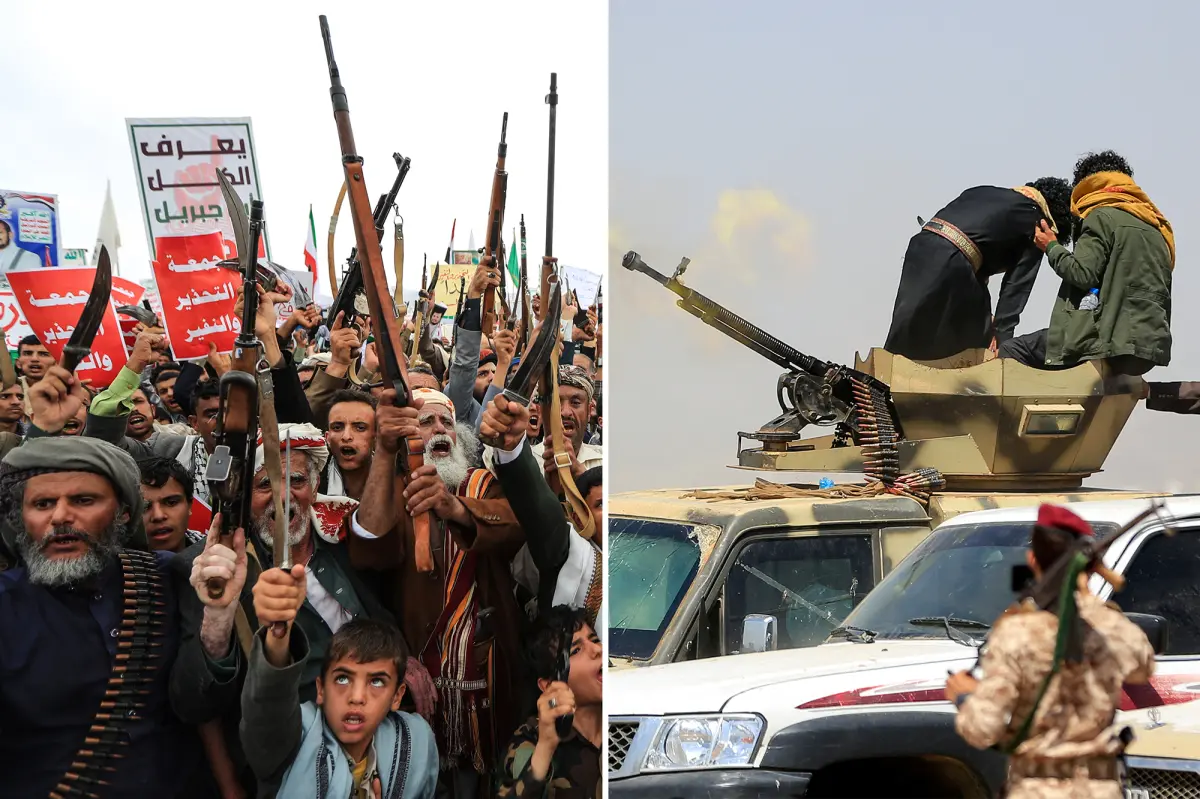

Iran moved personnel and military equipment to its Houthi allies in Yemen before the group launched attacks on oil tankers in the Red Sea, escalating tensions around the Bab el-Mandeb strait — the narrow waterway known as the “Gate of Tears” — and creating another flashpoint in the fight to protect vital Middle East shipping routes.
Islamic Revolutionary Guard Corps commanders, military advisers, and components for missiles and drones were flown by Iran into Yemen ahead of the overnight strikes on two Red Sea vessels, sources told Reuters on Wednesday.
The Houthi attacks, combined with earlier threats from the group, have already disrupted traffic along one of the world’s most important commercial corridors, prompting multiple ships to reverse course rather than pass through the Bab el-Mandeb, which links the Red Sea with broader global sea lanes.
The pressure on maritime trade comes as Iran has also severely restricted movement through the Strait of Hormuz, located on the opposite side of the Arabian Peninsula. That route, which provides access to and from the Persian Gulf, has historically handled roughly 20% of the world’s oil supply.
Wednesday’s Houthi strikes on two Saudi oil tankers rattled energy markets, pushing Brent crude above $100 a barrel for the first time since May.
President Trump warned that Iran would be held responsible if the Houthis carry out additional attacks in the Red Sea.
“Please let this TRUTH serve to represent that if they do this again, the U.S. will hold Iran responsible, in that the Houthis are a Surrogate and/or Proxy of Iran, and major military punishment will be inflicted upon Iran and, of course, the Houthis, themselves, who I am very disappointed with,” Trump wrote on Truth Social.
ALSO READ: New Data Shows LA Homelessness Worsening as Mayor Bass Responds
By Thursday morning, Brent crude had climbed about 7% to $100.74 a barrel, extending a sharp monthly rally that has lifted the benchmark by roughly 40%.
Wednesday’s attack raised fears that the Houthis could attempt to shut down the Bab-el-Mandeb — aka “Gate of Tears” — strait entirely. The waterway carries roughly 5% of the world’s oil and also connects to the Mediterranean via the Suez Canal in the north of the Red Sea.
Going the long way around costs ships bound for India and China an extra 10 to 15 days journey.
Iran and its proxies have attacked 13 commercial ships since the war flared up again.
Iran’s move to put the Houthis in play involved sending between 10 and 21 IRGC personnel, including senior commanders, from Tehran to Yemen on July 13, Reuters said.
“The IRGC commanders travelled there to support Houthi operations and provide training on new missile systems,” one of the sources said, adding that Iran also sent gold on the aircraft to fund Houthi activities.
The Houthis claimed to have attacked the Saudi tankers ENCELIA and LAYLA with missiles and drones on Wednesday “for their violation of the blockade decision,” Houthi spokesman Yahya Saree posted to X.
Until the attack, the Houthis had largely stayed out of the conflict. The incident also marked the first oil disruption incident in the critical Red Sea trade route after the terror group declared the naval blockade against Saudi Arabia.