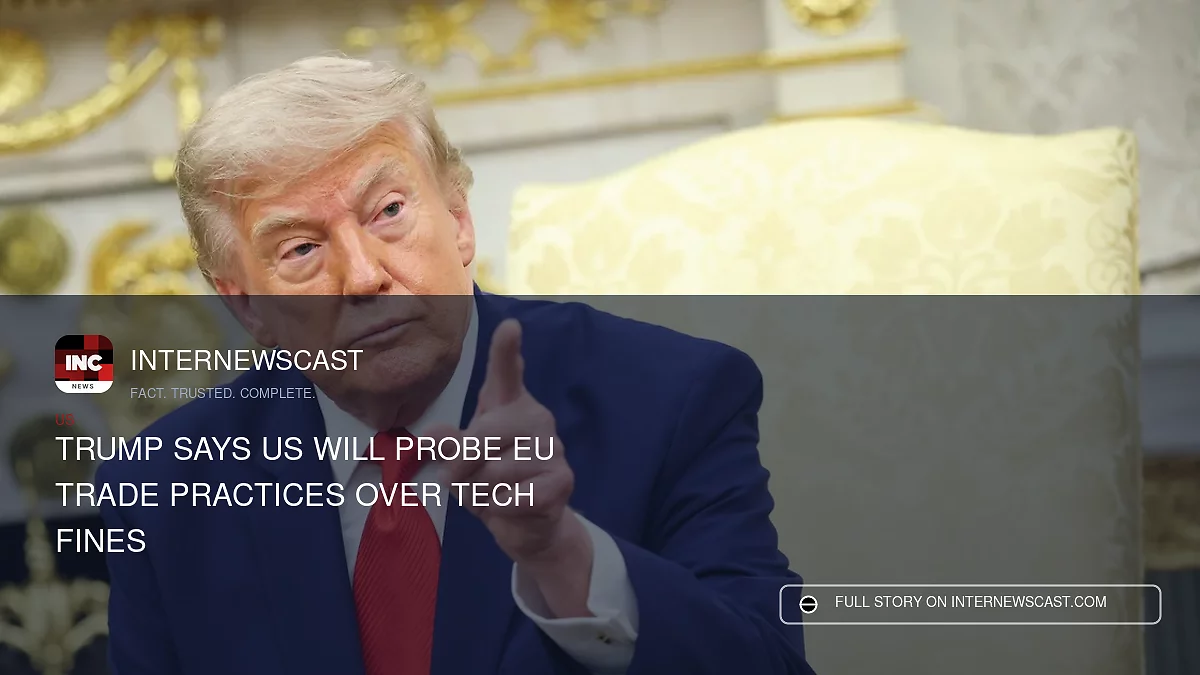

Washington — President Trump said Friday that his administration is opening a trade investigation into the European Union, escalating a dispute over multibillion-dollar penalties imposed on some of America’s largest technology companies.
In a post on Truth Social, Mr. Trump said the probe, launched under Section 301 of the Trade Act, would begin “immediately.” He accused the EU of “robbing” U.S. companies and American taxpayers through its enforcement actions.
“The European Union will pay a very big price for this illegal and highly unethical conduct, which I have consistently warned them about,” he wrote.
The announcement follows a series of EU penalties targeting major U.S. tech firms, including Apple, Meta — the parent company of Facebook and Instagram — Amazon and Google. On Thursday, the EU announced it was fining Google 890 million euros, or about $1 billion, citing alleged antitrust violations tied to Google Play and the company’s search engine.
Mr. Trump claimed the fines against the technology companies “will be entirely reversed” and warned that “a substantial TARIFF” could be imposed on the EU “at the earliest possible moment.”
Section 301 is a U.S. trade tool designed to confront foreign practices that harm American commerce. Investigations under the law assess whether another country’s actions are “unreasonable or discriminatory and burden or restrict U.S. commerce,” according to the Office of the U.S. Trade Representative.
If investigators determine that unfair trade practices occurred, the statute gives the administration authority to respond with tariffs or other penalties.
The Trump administration has previously used Section 301 to examine trade practices involving Brazil, India, Japan and other countries. On Thursday, the White House also announced it would be slapping tariffs on goods from 60 U.S. trading partners that it said had not done enough to combat forced labor.
The tariff rates range from 10% to 12.5% and went into effect Friday at 12:01 a.m. Those duties replace a 10% levy on most imports under a different trade authority, Section 122, which expired Friday.
Tariffs are a key aspect of Mr. Trump’s economic agenda. But earlier this year, he faced a significant setback when the Supreme Court struck down sweeping tariffs on nearly every U.S. trading partner, which were invoked under a federal emergency powers law.
In response to the decision, the administration has turned to the other trade authorities — Section 122 and Section 301 — to impose tariffs on other countries.