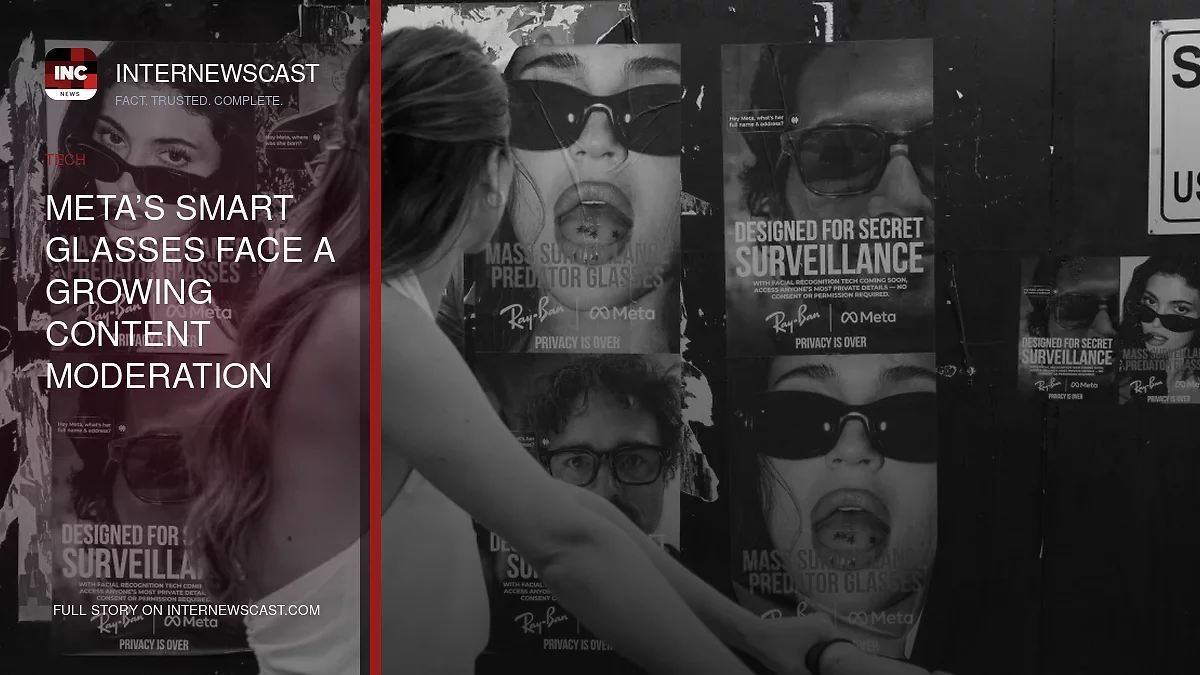

Meta’s smart glasses have turned into a public relations problem the company can’t easily blink away. The criticism has been immediate and intense, driven by fears that the devices chip away at privacy and normalize everyday surveillance. In the worst examples, users have filmed themselves staging “pranks” on unsuspecting strangers. Women, in particular, have been turned into involuntary social media content by men recording pickup attempts without their awareness. Once people start calling your product “pervert glasses,” the brand problem is no longer theoretical.
On Thursday, Business Insider reported that Meta is taking the unusual step of barring certain videos shot with Meta glasses from its own platform. Instagram chief Adam Mosseri recently said the app would remove content that is “taking advantage of people and harassing them, like a lot of these pickup line kind of videos.”
It is worth pausing on the strange position Meta now occupies: The company built a product that made it easier for customers to behave in ways so objectionable that Meta has had to respond with a content crackdown — essentially telling users, “Please stop making our device look creepy.”
“We don’t want people to be surreptitiously taking videos of other people and harassing them and then posting them on our platform,” Mosseri said, according to Business Insider. “So we’re trying to fight that every way we can.”
Still, the larger issue is how this became a problem in the first place. A Meta glasses content ban also raises a thicket of practical questions: What exactly counts as banned smart glasses footage? Who decides when a video crosses the line? And how consistently can Instagram enforce such a policy when so much public filming already exists in a murky space between documentation, entertainment and exploitation?
In public, people have limited expectations of privacy. A person can become the subject of an Instagram Reel while walking down the sidewalk, riding the train or browsing in a store. The explosion of short-form video has revived the old man-on-the-street format because it is cheap, fast and endlessly repeatable. Entire creator niches are built around approaching strangers to ask how much they earn, what they pay in rent or whether they recognize a song. Others simply record people going about their lives, or rush up to strangers with over-the-top compliments in hopes of capturing a startled, awkward or grateful reaction. Sharing public space has always meant being seen by others. Increasingly, it also means risking becoming raw material for someone else’s monetized content.
That helps explain why content creators were among the earliest adopters of Meta smart glasses. One of the device’s core selling points is that it makes filming even more seamless. To be clear, not everyone using Meta glasses is harassing women or bothering service workers. Some people record ordinary “day in the life” videos, meals, concerts or travel moments. But between harmless personal footage and the harassment Instagram says it will remove lies a vast gray area. What happens to accounts that film homeless encampments for shock value, or quietly record people in public who appear to be struggling with addiction? Is it harassment if a man records women at the gym but never speaks to them? If someone discovers they were filmed without their knowledge or consent, should that be enough for Instagram to take the video down?
And there is one more unavoidable question: If someone is “surreptitiously taking videos of other people and harassing them,” but doing it the old-fashioned way — with a phone rather than smart glasses — then what?
Meta spokesperson Albert Aydin told The Verge in an email that the company is working on disabling cameras on glasses when tampering is detected and removing content from accounts associated with those devices. Aydin didn’t answer specific questions about whether a person who was filmed could appeal to Meta to have content removed; Aydin said Meta is trying to “fight surreptitious filming and LED tampering in every way we can.” Aydin also did not provide The Verge with a copy of the actual policy.
The anger over smart glasses is partially due to the especially egregious “pervert” use cases of glasses that Meta has had to denounce — but even more innocuous examples put people on edge, too. When it comes to smart glasses, it’s less about the specific content being filmed than it is about the capability to do so at all, without others realizing what’s happening. In saying the company will police the creepiest version of smart glasses content but sidestepping deeper questions, Meta is trying to have it both ways: It gets to tout its enforcement while creating the conditions for this content to exist in the first place.