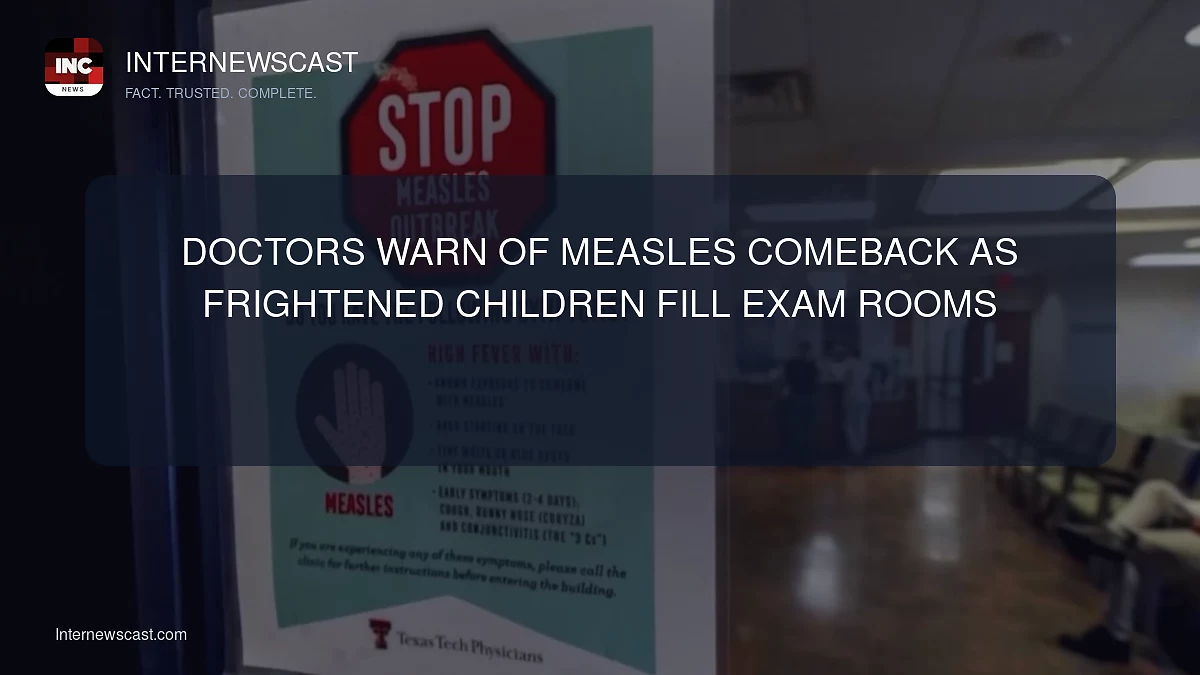
The measles surge in the United States is no longer looking like a temporary setback. It is beginning to resemble the opening chapter of a more dangerous period for public health. Confirmed measles cases have climbed to their highest level in 35 years — and the country is only halfway through July. Taken together with last year’s numbers, the total now surpasses all cases recorded across the previous 25 years combined. Most infections are tied to outbreaks that began inside the U.S., driven largely by pockets of low vaccination coverage as immunization rates continue to slip.
For the first time in 25 years, the nation appears to have fallen short of a key benchmark used to determine whether measles has been eliminated as a public health threat. Under that standard, occasional outbreaks must burn out within 12 months. But Utah’s outbreak has stretched beyond that window, continuing since June 2025.
The toll has already been significant. Over this year and last, nearly 400 people in the U.S. have been hospitalized with measles, three have died, and at least three others developed brain swelling followed by ongoing symptoms.
The Centers for Disease Control and Prevention is expected this month to complete an extensive review of the country’s measles landscape, covering cases and transmission patterns from January 2025 through June 2026.
“I don’t think we could say with a straight face that there hasn’t been transmission over the past 12 months,” said a CDC scientist familiar with the agency’s measles report. KFF Health News agreed not to identify the researcher because of concerns about possible retaliation. According to the scientist, a national panel of measles experts will examine the CDC’s internal findings before they are sent to the Pan American Health Organization, which assesses measles elimination status for countries across North America, South America, Central America and the Caribbean.
PAHO is expected to announce its determinations during its annual meeting this fall. But many public health experts believe the conclusion is already clear. “The assessment for elimination isn’t until November, but that is a scheduling issue, basically,” said Anne Schuchat, who directed the CDC’s immunization and respiratory diseases division from 2006 to 2015.
Schuchat called the resurgence deeply troubling. “It’s just so sad, because some people will get brutally ill,” she said. “This is a wake-up call.”
In Utah, pediatricians have been working on the front lines as measles and other vaccine-preventable diseases reemerge in the U.S. In interviews with KFF Health News, six doctors described what they are seeing in this new climate of vaccine hesitancy — and what they believe could help steer the country back toward stronger protection.
The conversations have been edited for clarity.
On unvaccinated children hospitalized with measles complications
Emilie Morris, a hospital pediatrician in Salt Lake County and Utah County: When children come in, they’re often bent over. We call it tripoding, which is particular to upper respiratory infections and airway swelling. They have a rash — viruses cause rashes all the time — but in this context, the kid is hunched over, mouth open, drooling, crying, maybe not even producing tears, because they’re so dehydrated. Really labored breathing, kind of tugging in their belly, tugging between their ribs. Their eyes look kind of glazed over. It’s like they’re seeing through you.
Nathan Money, a hospital pediatrician in Salt Lake County and Utah County: If the child has a fever or trouble breathing, and they’re unvaccinated, I have to be way more aggressive from a medical standpoint, because they are at higher risk of having life-threatening illnesses. I have to do more blood work, or lumbar punctures to rule out meningitis. I have to do things which are painful, and it’s traumatic for the families.
I tell them, “Because your child doesn’t have vaccines, I have to be more worried about conditions like sepsis or meningitis, so therefore I need to do more workup.” The last thing I want to do is miss something. These are parents who love their children. They always tell me, “Do what you need to do to make sure my child is safe.”
On treating unvaccinated children hospitalized for measles
Trahern W. Jones, a pediatric infectious disease specialist based in Salt Lake City: So I’m coming into a room and just hearing the most awful barking cough, just a cough and a high-pitch stridor as the child is trying to breathe. And he’s just coughing so hard it just makes you feel short of breath. He looks like he’s been beaten down for days, but he can’t rest, because the cough keeps him awake.
The parents tell me they’re not anti-vaccine, but in the past, somebody they know had a reaction to a vaccine — or something they thought was a reaction to a vaccine — and so they paused vaccines when the child was a baby. They were planning to catch up later.
In another case, the parent was stunned by how awful it was. I asked them what they knew about measles before their child was sick, and they said the only person who’d ever taught them anything about measles was their grandmother who had taken care of her kids with measles ages ago. That’s something I’ve heard from other parents. It’s such an awful illness. Even the best possible course is going to be one of the worst diseases most children ever go through.
There are multiple facets to it. Physically, the child has been beat down for multiple days by this virus. The parents don’t get to sleep, because they’re nursing their child. Then there’s the emotional component because the parent is regretting not getting the vaccine, not realizing how bad this was, and then feeling deeply ashamed, trying to reconcile with family members who are really upset at them for not getting their child vaccinated.
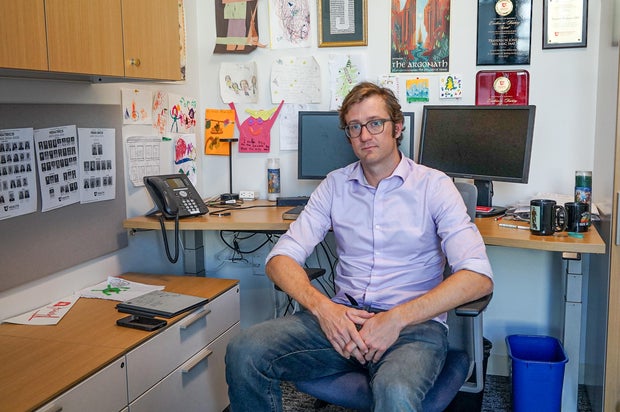
Amy Maxmen/KFF Health News
Morris: One child was from a family that was uninsured because they didn’t feel that they would need to use the medical system. They were faced with the high burden of cost of our healthcare system. The cost was playing into the parents’ decision on whether or not their child should receive necessary medical care. I said something like: “Please don’t go home. Your child needs oxygen. She has pneumonia. We will figure out a way to pay for this, because we acknowledge what we do is expensive.”
On top of that, the parent had several other children in the home who weren’t vaccinated. It was past the period where we could intervene with vaccines to try to prevent infection, so then our recommendation was to quarantine their children at home for 21 days: “Don’t interact with anybody else in your community. Don’t go to the grocery store, even with a mask. Please take this seriously.”
It takes time for parents to understand the level of concern I have, even when their child is physically ill in the hospital requiring ongoing care. It’s pretty indicative of the breakdown of trust between physicians and families. I say, “This is the gravity or severity of your child’s situation and how serious we need to be about protecting other people.”
It’s frustrating. How can I make people understand I have a very genuine concern for their child? And I know they share that concern, but maybe it’s not the same degree of concern, because they don’t understand the illness and how severe it can become.
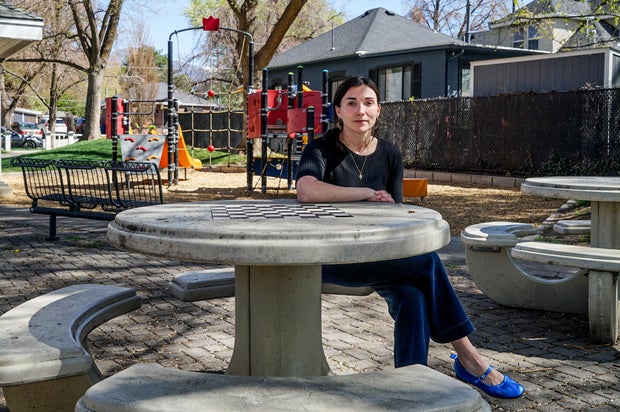
Amy Maxmen/KFF Health News
Money: It’s heartbreaking to see these children struggling to survive when measles could have been easily prevented by a safe mechanism that is readily available and well studied. These are well-meaning parents who love their children, who have gotten bad information from federal leadership or from online sources. The saddest part to me is when I am caring for a child and the parent says, “I didn’t know that this could get so bad.”
On conversations with parents who don’t vaccinate their children
Tim Duffy, a pediatrician in Salt Lake County: A lot of families aren’t aggressively anti-vax, but they’re hesitant. Younger parents who grew up in the digital age have done their research — “research” in quotation marks — for months. And they keep getting confirmation of their concerns on social media. They think they’re doing what’s best for their child.
I’ve told families: “You could do nothing I say as a pediatrician. You could sleep your child on their stomach. You could not put them in a car seat or, when they’re older, not use seat belts. You could do nothing I say, and for your individual child, they will probably be OK. But from my standpoint, where I’m taking care of thousands of kids, within a system that takes care of hundreds of thousands of kids, we will have bad outcomes. These children will show up at our facilities, and it’s so sad.”
Pediatrician in southern Utah whom KFF Health News agreed not to name, because of concerns about harassment after being targeted by anti-vaccine activists in the past: A lot of parents are concerned about autism. I’ve told them that I’d be very concerned if there was any evidence that what we’re doing is causing autism. But if vaccines were causing autism, we should see more cases of autism in vaccinated kids compared to unvaccinated kids, and we’re just not seeing that.
I’ve also had families who say they want to be natural, or that they’re concerned about what is in the shots. A frequently asked question is: “Did you vaccinate your children?” I say that knowing what I know, I’m confident giving this to my kids. They’re all vaccinated.
On the influence of politics on vaccine hesitancy
Jones: Vaccines have become a political football. That wasn’t true 20 years ago. But now it’s used to drive a wedge between groups of people, which is unfortunate. Vaccines are one of the main reasons why we don’t have to worry about losing our kids.
Southern Utah pediatrician: People don’t know who to believe. If politics comes up, I tell parents that my messaging on vaccines is not politically motivated. When parents ask about changes to the vaccine schedule, I’m transparent. [In January, the Department of Health and Human Services controversially recommended reducing the number of vaccines given to children. A few months later, a federal judge blocked those changes.]
I’ve said there was a process for the approval of immunizations through ACIP [the Advisory Committee on Immunization Practices], which is made up of scientists, public health experts, and doctors, and all those people were let go, and a new panel was selected. A couple of individuals changed the recommendation outside of the time-tested, evidence-based process for evaluating vaccines. That raises concerns for me as a doctor. I tell parents that the American Academy of Pediatrics, the American Academy of Family Physicians, and several other professional organizations have issued statements saying that these changes are not based on evidence.
Ellie Brownstein, pediatrician in Salt Lake County and president-elect of the Utah chapter of the American Academy of Pediatrics: I avoid talking about politics, but what’s being said has added another layer to our work. One family asked me about changes to vaccine recommendations, so instead of just telling them what immunizations are due, I talk with them about why physicians and researchers have followed a different schedule for years, about the reasoning and the science behind it. I explain that I trust these experts over someone without a lot of experience.
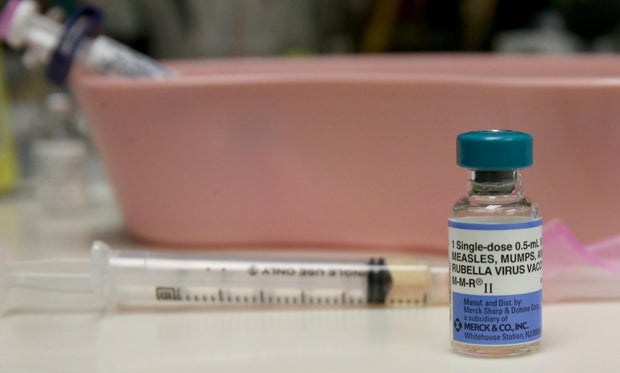
Antonio Perez/Chicago Tribune/Tribune News Service via Getty Images
Money: People are not vaccinated because they’ve lost trust in the medical community. They’re placing trust elsewhere. Rebuilding trust is a complicated process, but it comes from consistent messaging at every level, from the pediatrician to local health departments to community leaders, city leadership, district leadership, religious leadership, educational leadership.
We need consistent messaging from state leadership, which has been pretty absent. I want to see commercials on TV about the safety of the MMR [measles, mumps, and rubella] vaccine and the dangers of the measles, sponsored by my state leadership. I’d like to see this on billboards and in schools, in public buildings and grocery stores. I want to go to a sports event and see messages about the measles and the MMR vaccine. Right now, people have to go out of their way to find information from reputable sources.
We also need policy changes to support vaccination. This train is going in the wrong direction, and it can feel like a helpless situation, because we’re just not seeing the public messaging and leadership that’s needed to turn this around.
Advice on talking with parents who don’t vaccinate their children
Jones: Approach them with as much compassion as you possibly can. Ask open-ended questions to learn about their experiences that led them to have these concerns. I think it’s really important to not come down on them, citing facts and figures and pointing to guidelines on why they need to get their kids vaccinated. But try to direct their attention to the fact that you’re a real person with your own real experiences and knowledge. I point out to families that I have my own kids, and I would never recommend something for your kids that I wouldn’t do for mine.
Southern Utah pediatrician: I’ve learned that if you come down hard, you’re going to lose people who need care. My number one goal now is to build bridges and maintain a relationship with families, because that’s what’s going to allow me to convince some of them.
I approach people differently depending on where they are. Parents who are very skeptical or anti-vax will say no when I tell them their child is due for immunizations. I’ll say: “Fine. You guys get to choose. You’re the parents. But I’m curious to know what your reasoning is.” Sometimes they’re just like, “It’s something I’ve decided.” They don’t want to have a conversation.
It’s a good day if I can have a conversation with someone who doesn’t want to vaccinate, even if I don’t convince them. I try to help them think through things rather than shoving anything down their throat. When they’re done talking, I’ll ask, “Can I share my perspectives on this?” Some will say yes enthusiastically, and others will say yes because they’re being polite.
A lot of parents aren’t sure what to do, and those are the people I focus most of my time on. I focus our conversation on their specific concerns, and I’m open about specific side effects that different immunizations can have. For example, I’ll tell them that some children get a fever after a vaccine, which is OK. The fever is not harmful, but it can make babies feel crummy as their body is building up antibodies against viruses and bacteria.
Brownstein: I don’t like the idea of excluding unvaccinated kids from my practice. I know some do that. But what that does is it ends any future discussion. I can’t keep talking with parents about vaccines if I kick them out of my practice, and if these parents find like-minded doctors, this situation will get worse.
On being on the front lines of measles’ comeback in the U.S.
Money: I wish that people could see what I see. Everyone else sees what people post on Instagram. Or they think, “Someone I know had measles when they were a kid and they were fine.” But as a hospital-based pediatrician, I see what happens when things go poorly. I see what happens when children with measles aren’t able to breathe on their own, and they’re in a hospital bed with a cannula in their nose, struggling to breathe, an IV in their arm because they can’t drink on their own. And the child is terrified, and the parents are scared that their child might die.
It’s heartbreaking as a pediatrician and as a father to know that the entire situation could have been easily prevented.
Duffy: Even though parents say vaccination is their choice, I still feel personally responsible if something bad happens that’s preventable, because I feel like I didn’t say the right thing, I didn’t ask the right questions. Maybe I let it drop because of the look on a parent’s face.
Morris: Every pediatrician I know cares so deeply about what they do. Sometimes people forget that we are human beings practicing this discipline, and we bring all our concerns for our community into this space. I’m trying to navigate a lot of complex human emotions, like how it feels to hold grief with a family when something bad happens that was preventable — which is the worst situation, because you think, “Could I have done something differently?”
Jones: I think we’ll see more diseases start coming back that we thought we had gotten rid of. I think it’s going to take dramatic changes to actually prevent those outcomes. I’m not necessarily seeing those changes being done by those in power.
I think of that quote from The Lord of the Rings. It’s something like, you don’t get to choose the time that you’re born into, but you get to choose what you’re going to do about it. And if there’s any comfort that I have, it’s in knowing that there are right decisions to make and that I’m going to make them, and I’m going to help others make them, too.
KFF Health News is a national newsroom that produces in-depth journalism about health issues and is one of the core operating programs at KFF—an independent source of health policy research, polling, and journalism. Learn more about KFF. This article first appeared on KFF Health News and is republished here under a Creative Commons Attribution-NonCommercial-NoDerivatives 4.0 International License.