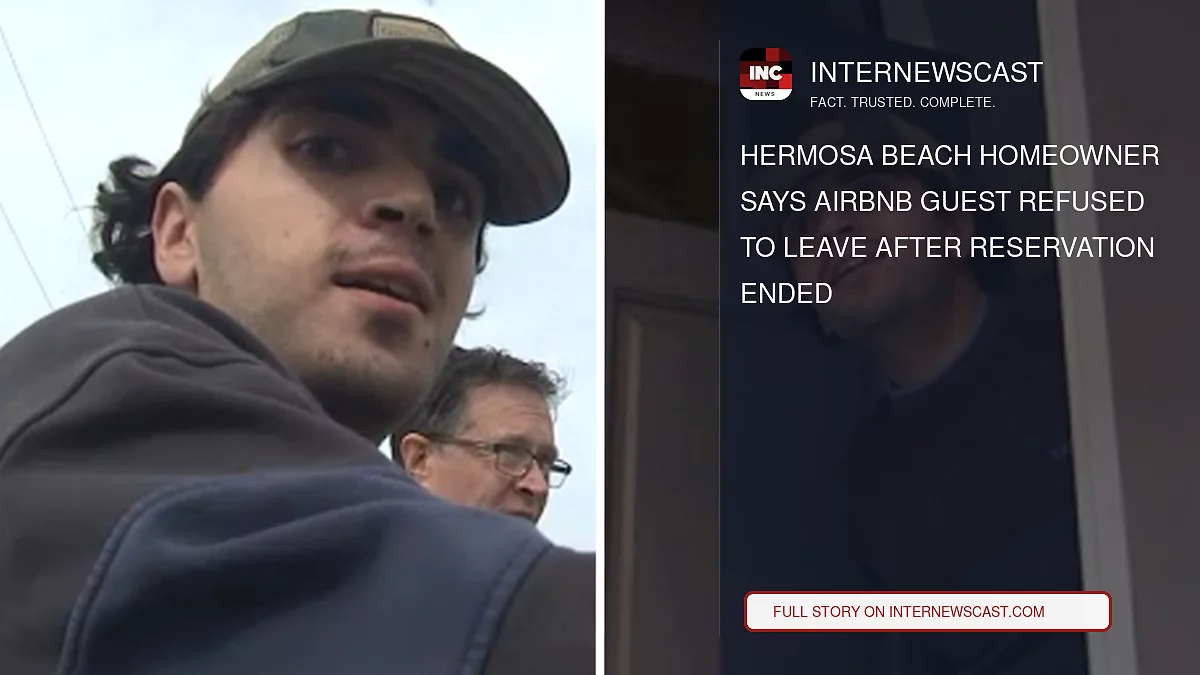

HERMOSA BEACH, Calif. — A Hermosa Beach homeowner says an Airbnb stay turned into a legal ordeal after a guest allegedly refused to leave once his reservation was over, a situation that real estate experts say underscores a tricky gap in California tenancy rules.
Wendy Weissman said she listed her Hermosa Beach townhome on Airbnb and rented it to a guest she identified as Evhan Lemarck, who is from France.
Weissman said Lemarck initially reserved the home for one month. He ultimately paid for 48 days, she said, but then stopped paying and would not move out.
“He just refused to leave,” Weissman said. “It’s squatting. It’s definitely squatting.”
Weissman said local rules in Hermosa Beach limit short-term rentals in her neighborhood, meaning she is only allowed to accept stays of 30 days or more.
That 30-day threshold can make a major legal difference in California, real estate attorney Daniel Bornstein said.
“Once you allow someone to remain in occupancy for 30 days, they establish tenancy rights and then you need to use the civil litigation process to remove the person,” Bornstein said.
Bornstein said removing someone through that process can take about six months and, in some cases, even longer.
He advised homeowners considering rentals through Airbnb or similar platforms to verify guests’ identities, confirm departure dates, check for outbound travel arrangements and avoid rentals longer than 29 days.
“You would have the right to change the locks at that point in time,” Bornstein said.
For Weissman, that option was no longer available.
She said a six-month eviction process could result in more than $70,000 in lost rental income, while she would still be responsible for mortgage payments, property taxes and legal fees.
“This is going to devastate me if he ends up staying for any length of time,” Weissman said.
Weissman also criticized Airbnb’s response to the dispute.
“Airbnb did like the absolute minimum. I mean, they said, ‘Call your local law enforcement,'” she said.
According to Weissman, police were unable to help because the dispute was considered a civil matter.
Weissman said that Lemarck told her his credit card had been stolen and that he could not leave until it was replaced.
The dispute took another turn when Weissman said a neighbor alerted her that water was pouring out of the townhome.
She said the emergency allowed her to enter the property, where she found evidence of damage, including what she described as an attempt to break into a private closet.
Weissman said she believed the situation shifted in her favor at that point. Later that night, she said, Lemarck loaded a U-Haul and left the property, leaving the townhome damaged and in disarray.
While Airbnb offers damage protection through its AirCover program, Weissman said the company should provide insurance for situations involving guests who refuse to leave.
“I would have taken it, that would have been great,” she said.
In a statement, Airbnb said, “Issues like this on Airbnb are very rare. In this case, we are in contact with the host and have removed the guest from our platform.”
Weissman said she now hopes her experience will help spur legislation aimed at protecting short-term rental owners in similar situations.
“Booking it on Airbnb with the lax eviction laws in California – they just get away with it,” Weissman said.
Copyright © 2026 KABC Television, LLC. All rights reserved.