
Anyone who picked up this summer’s political blockbuster, Regime Change, will have seen in painstaking detail just how bitter relations became between Donald Trump’s White House and Jerome Powell, the former chairman of the Federal Reserve.
Powell, for all the pressure aimed in his direction, earned respect for refusing to be pushed into cutting US interest rates simply because the President wanted it.
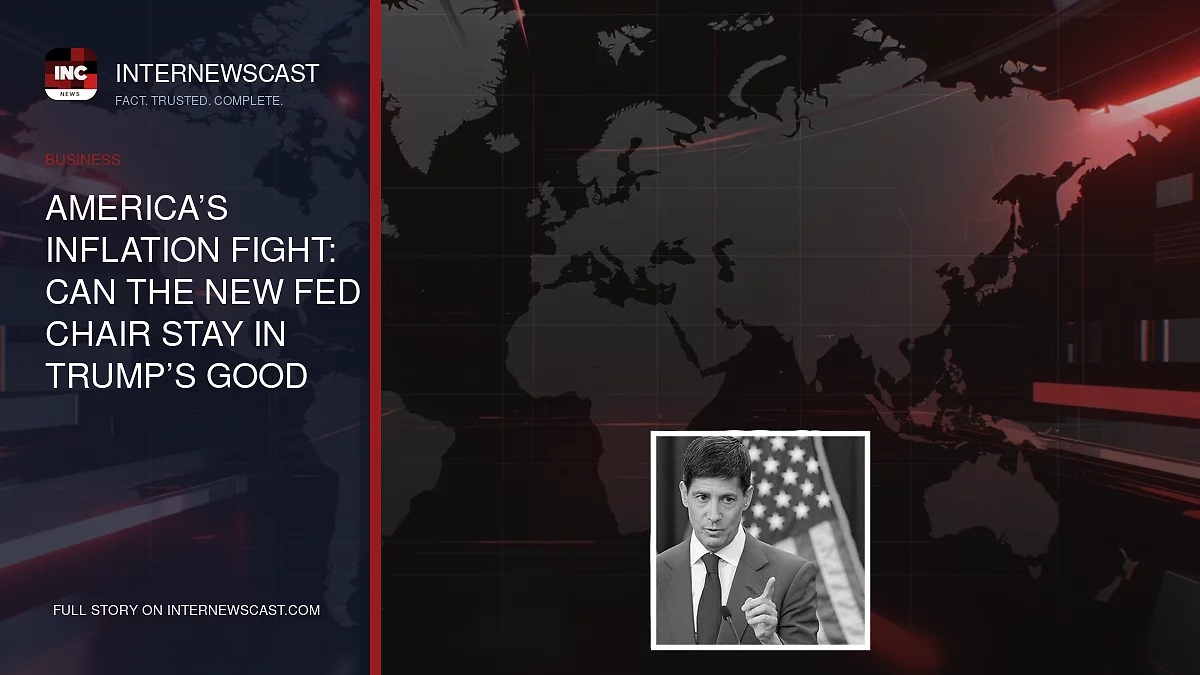
His successor, Kevin Warsh, arrives at the Fed with an early advantage: Trump is said to appreciate not only his economic credentials, but also his polished appearance and considerable personal fortune.
That goodwill, however, has not stopped the President from publicly insisting that “rates should be lowered” as America awaits today’s closely watched decision on borrowing costs.
The debate in Washington, where policymakers are increasingly wary that inflation may be proving stubborn, is likely to feel familiar in London too, as the Bank of England prepares for its own rate vote on Thursday.

Rate review: New Fed chair Kevin Warsh begins with goodwill from Trump, who admires his looks, wealth and intellectual standing
Since taking charge at the Federal Reserve, Warsh’s most noticeable shift has been a more restrained communication style, offering fewer clues about the central bank’s next moves.
Even so, financial markets appear firmly convinced that the Fed will leave the benchmark federal funds rate unchanged in a range of 3.5 per cent to 3.75 per cent.
Yet there is growing sentiment among US economists that it should be tightening if it is to meet the 2 per cent inflation target.
It is wishful thinking to believe that after five years of inflation being well above that level, prices are suddenly going to dive.
Oil prices may be volatile, but they are still 40 per cent higher than when the Iran war reignited earlier this month.
US headline prices are running at 3.7 per cent, gasoline at the pump is 30 per cent higher this summer than last year and food prices were up 3 per cent in June. All of that suggests that current US inflation is anything but transitory.
Warsh has argued that the commitment to the 2 per cent target would be ‘strong, unanimous and unambiguous’.
That should mean a hawkish stance and a tightening of up to half a percentage point. But we can’t be sure he will defy the President just yet.
Inglorious food
The message from Unilever boss Fernando Fernandez is that healthy growth is coming from beauty, wellbeing, personal care and home care.
So why wouldn’t you discard the more pedestrian Hellmann’s, Knorr, Marmite and other food operations?
The growth story in the first half of the year was enough to sharply lift the shares of a sagging top-ten FTSE stalwart.
No one should imagine that the results, bolstered by some hefty World Cup marketing of personal care, make the proposed sale of food brands to US spice specialist McCormick a wonderful deal.
The current six months are likely to offer much more of a pricing challenge for the care brands given surging costs of some vital ingredients.
Unilever has bought itself some market support for the McCormick deal with its offer of a secondary float in London and the injection of top colleagues, including the head of food research and development, into the new joint enterprise.
Grumbles about a lack of a vote for Unilever shareholders on the deal have not gone away. McCormick’s London listing is seen as meaningless as it won’t have an index inclusion and will be illiquid.
Activists reportedly still aim to stop the deal. The chances of success are not rated highly. Food sales may be suffering in the US and Europe, but are going great guns in emerging and developing markets.
Each time Unilever lops off a limb of the business – spreads, teas, ice cream and the rest of food – it shrinks and becomes more vulnerable to an opportunist bid.
Hey-ho.
Cambridge allure
AI offers a huge opportunity for big pharma. Not only can it speed up R&D processes, but it offers the big players a chance to re-examine research findings stretching back decades, showing potential clues for repurposing compounds. GlaxoSmithKline is targeting cost savings of £1.9billion a year.
That will mean fewer jobs.
Accelerated growth means doubling down on R&D and more jobs and status for Cambridge, a pharma hub, with a new £400million research centre. That follows in the steps of AstraZeneca.
The allure of Cambridge is not surprising given Australian chief executive Luke Miels’ history at AZ, where he unleashed several blockbusters.
DIY INVESTING PLATFORMS
AJ Bell
AJ Bell
Easy investing and ready-made portfolios
Hargreaves Lansdown
Hargreaves Lansdown
Free fund dealing and investment ideas

interactive investor
interactive investor
Flat-fee investing from £4.99 per month

Freetrade
Freetrade
Investing Isa now free on basic plan

Trading 212
Trading 212
Free share dealing and no account fee
Affiliate links: If you take out a product This is Money may earn a commission. These deals are chosen by our editorial team, as we think they are worth highlighting. This does not affect our editorial independence.
Compare the best investing account for you