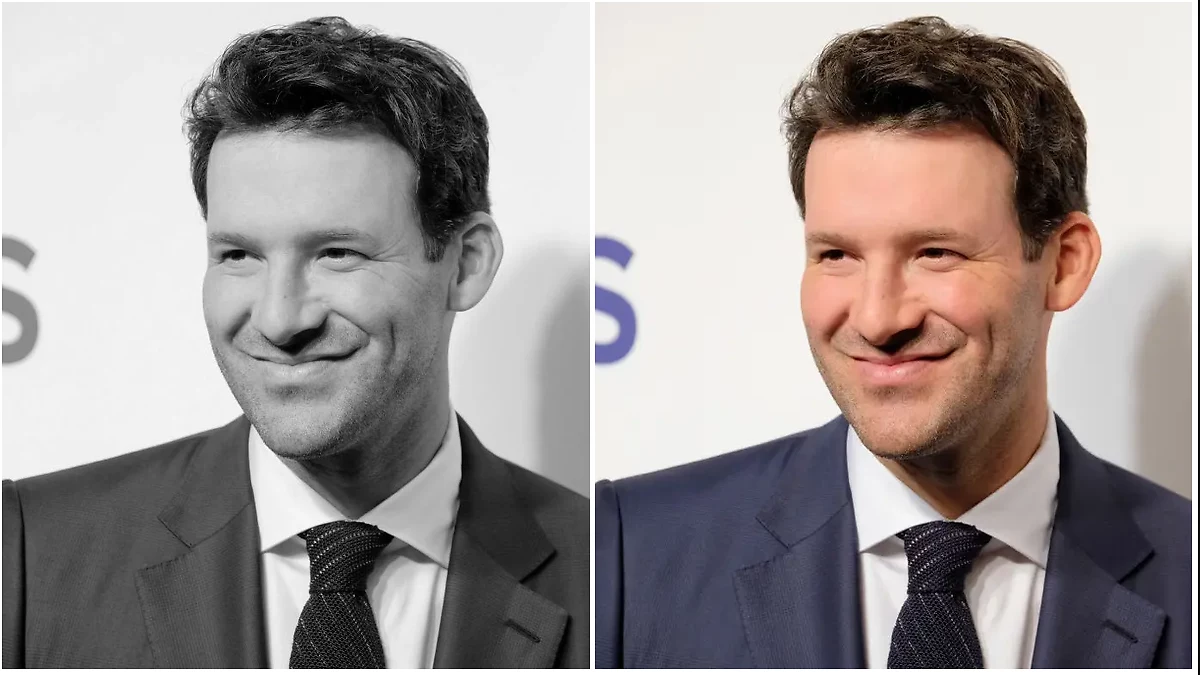

In 2020, Tony Romo was one of the biggest stars in American sports broadcasting. Just three seasons after moving from quarterbacking the Dallas Cowboys to calling NFL games, he was drawing comparisons to John Madden. Fans were captivated by his energy, his sharp reads of defensive schemes, and his knack for calling plays before the snap.
ESPN tried to lure him away, but CBS made sure he stayed put. The network handed Romo a 10-year, $180 million contract, a deal that made him the highest-paid sports analyst in TV history. Six years later, that investment has become far more complicated: CBS has pulled Romo from its broadcasts after his arrest on suspicion of operating a vehicle while intoxicated. If the network ultimately moves on from him in its top NFL booth, it could still owe him $72 million…
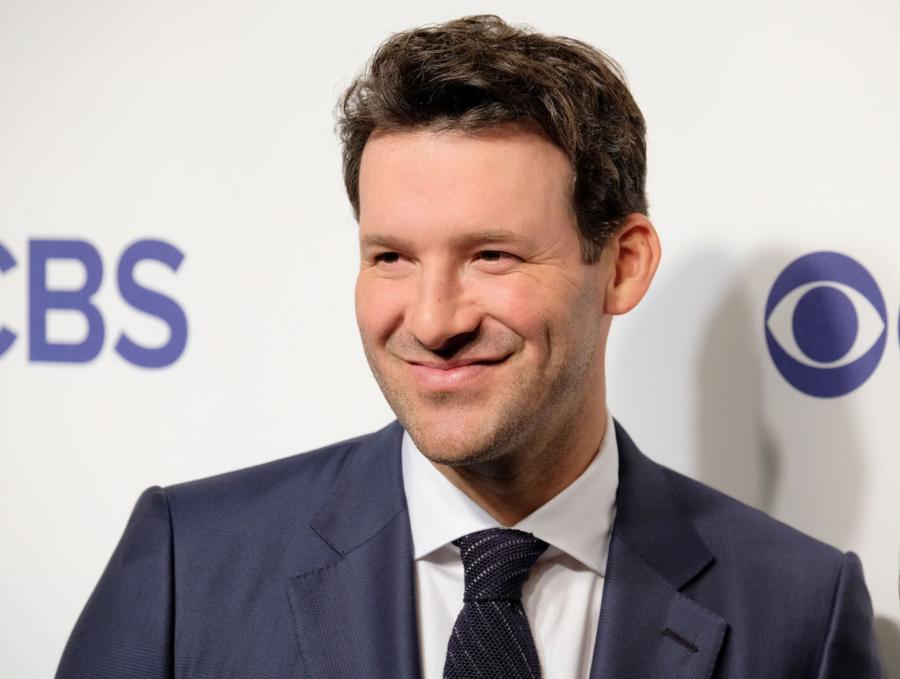
Matthew Eisman/Getty Images
Tony Romo Is On Leave From CBS
CBS Sports said on July 31 that Romo had been placed on leave “until further notice.” The network did not specify how long the leave might last, whether Romo would keep receiving his salary, or what steps he would have to take before being cleared to return.
With Romo sidelined, CBS moved J.J. Watt into the lead booth with Jim Nantz and sideline reporter Tracy Wolfson on its No. 1 NFL broadcast crew. For now, the leave gives CBS a way to keep Romo off its marquee games without immediately resolving the larger question of his contract.
The timing is especially difficult for the network. CBS is gearing up for the NFL season, the period when broadcasters heavily market their top announcing teams. Romo had also been expected to take part in the network’s annual seminar for NFL production staff and on-air talent. He is now scheduled to appear in court on September 21, shortly after the season gets underway.
Romo was arrested in Milwaukee on July 23 following his participation in a golf tournament. According to authorities, he was stopped after passing traffic on the right and driving through a restricted area of the highway.
Police body-camera video showed Romo telling officers he had not consumed alcohol. He had difficulty during field sobriety tests, repeatedly spoke over officers while they explained the instructions, and declined to take a preliminary breath test. Romo also said prior back surgeries made parts of the physical testing hard for him to complete.
Authorities later said an open alcoholic beverage was discovered on the passenger side of his Jeep. Romo was cited for operating while intoxicated, along with an additional moving violation. A first-offense OWI is generally handled as a civil rather than criminal matter in Wisconsin, but it can still result in fines, a driver’s license suspension, and other penalties.
The incident created an immediate public-relations problem for CBS. It also gave the network an opportunity to reconsider a broadcasting relationship that had already become increasingly uncomfortable.
Why CBS Gave Romo $180 Million
When Romo retired from the NFL in 2017, CBS immediately placed him beside Nantz in its lead broadcast booth. It was an enormous gamble. Romo had no significant broadcasting experience and was replacing veteran analyst Phil Simms on the network’s most important NFL crew.
The gamble initially looked brilliant. Romo approached broadcasts like a quarterback still standing at the line of scrimmage. He identified blitzes, explained defensive coverages, and frequently predicted what an offense was about to do before the ball was snapped. His energetic delivery also made complicated football strategy accessible to casual viewers.
Romo’s first CBS contract paid him between $3 million and $4 million per year. When that agreement approached its expiration, ESPN began pursuing him for “Monday Night Football” and was prepared to offer him as much as $14 million annually. CBS responded by offering Romo a 10-year contract worth $180 million, or $18 million per season.
The deal was not merely about retaining a popular announcer. CBS was preparing for negotiations over future NFL television rights and did not want one of its signature personalities defecting to a rival. At the time, losing Romo to ESPN may have appeared riskier than guaranteeing him a record salary.
Romo’s Broadcasting Reputation Was Already Slipping
Romo’s early popularity did not last. The pre-snap predictions that made him famous became less frequent, while critics accused him of talking too much, making strange noises, missing important details, and occasionally sounding unprepared.
During recent playoff broadcasts, he was criticized for confusing players, misstating game situations, and offering commentary that viewers found obvious or unhelpful. Some of that backlash was undoubtedly amplified by social media, where every mistake can be clipped and replayed thousands of times. Even so, Romo had become a divisive broadcaster long before his arrest.
That distinction could become important. CBS is not deciding what to do with an indispensable announcer performing at the peak of his profession. It is evaluating an announcer receiving the largest salary in sports television whose performance had already become a source of criticism.
The arrest did not create CBS’s Tony Romo problem. It gave CBS a reason to confront it.
Can CBS Cancel The Contract?
Romo’s full contract has not been made public, so no outsider can know whether CBS can terminate him without paying the remaining $72 million. Like most major on-air television agreements, his deal reportedly contains a morals clause that could allow CBS to discipline or terminate him if his conduct damages the network’s reputation.
Everything would depend on the precise language. The contract might allow CBS to act following an arrest, or it could require a conviction. It might permit a temporary suspension without pay, a complete termination for cause, or only limited disciplinary action. There is also a difference between having $72 million left on a contract and being unconditionally guaranteed every dollar.
CBS could bring Romo back following a suspension and public apology. That would allow the network to preserve its original investment without initiating a costly contract fight. The decision may depend partly on the outcome of Romo’s legal case and how Watt performs alongside Nantz.
A return in a reduced role is also possible. Romo could move to CBS’s second NFL crew, receive fewer marquee assignments, or appear in the studio. That arrangement would be financially awkward, however, because CBS would still be paying $18 million per year to an analyst who was no longer calling its biggest games.
The cleanest solution may be a negotiated buyout. CBS could pay Romo a portion of the remaining $72 million in exchange for ending the contract without arbitration or litigation. Romo has already earned more than $127 million during his NFL career, more than any undrafted player in league history at the time of his retirement, but he would have no reason to voluntarily surrender tens of millions of dollars.
If CBS attempts to terminate Romo for cause and stop paying him entirely, he would almost certainly challenge the decision. That could turn a broadcasting controversy into a legal fight over the meaning and enforceability of his morals clause.


