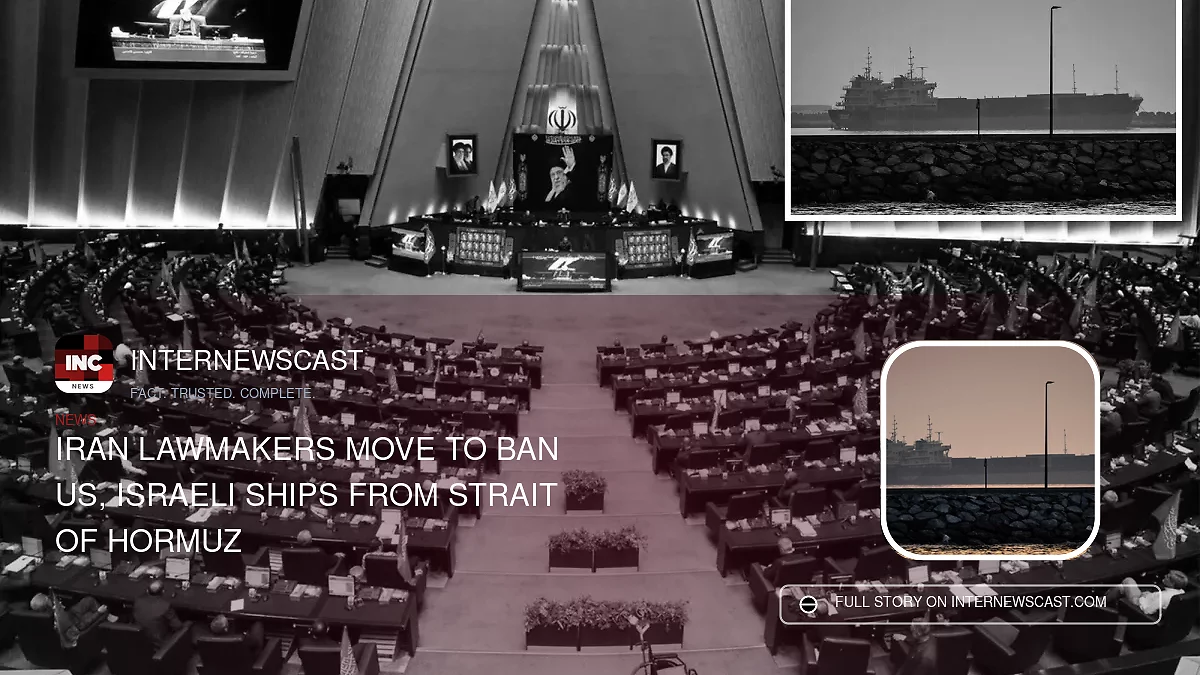

WASHINGTON — Iran’s parliament is considering a far-reaching measure that would seek to block vessels from the United States, Israel and other countries deemed “hostile” by Tehran from passing through the Strait of Hormuz, the semi-official Tasnim News Agency reported.
The draft legislation, titled the “Strategic Action for the Security and Sustainable Development of the Strait of Hormuz and the Persian Gulf,” is currently being examined by parliament’s National Security and Foreign Policy Committee, according to Tasnim.
Abbas Salimi, a member of the parliament’s presiding board, told the IRGC-aligned news outlet that lawmakers are assessing the proposal before it advances in the legislative process.
If approved, the measure would bar ships tied to the United States, Israel and any other nations Iran classifies as hostile from transiting the critical maritime chokepoint, through which about one-fifth of the world’s oil supply passes.
The proposal would also ban both military shipments and civilian cargo that Iranian authorities accuse of aiding Israel from moving through the Strait.
Tasnim reported that the bill includes an additional provision allowing Iran to deny passage to countries or individuals it holds responsible for inflicting damage on Tehran until compensation is paid.
Ships found in violation could face major financial penalties, including fines as high as 20% of the value of their cargo — a sum that could reach tens of millions of dollars.
The United States would be expected to reject such a law if it is enacted, since Washington and much of the international community regard the Strait of Hormuz as an international waterway that should remain open to vessels from all nations.

The proposal comes as Tehran seeks to tighten its grip over the Strait of Hormuz after months of war with the United States brought shipping levels down to just a fraction of pre-war traffic.
The legislation also comes as Iran and Oman negotiate a separate framework for managing maritime traffic through the strait, possibly creating one temporary, central shipping lane jointly managed by the two countries.