

Russian President Vladimir Putin may be weighing a strike against a NATO member within the next several years, a move U.S. intelligence officials believe could be designed to strain the post-World War II alliance and probe the strength of its Article 5 collective-defense pledge, according to a new report.
American intelligence agencies had previously judged that Putin was unlikely to target a NATO nation while Russia remained bogged down in its war against Ukraine. But as Kyiv claims battlefield progress and Moscow searches for a political or military win, U.S. and European officials have reportedly detected more signs that the Kremlin is testing NATO’s limits, The Wall Street Journal reported.
Among the incidents raising concern were a drone that struck an apartment building in Romania in May and cruise missiles that came down in Poland, a NATO member, late last month.
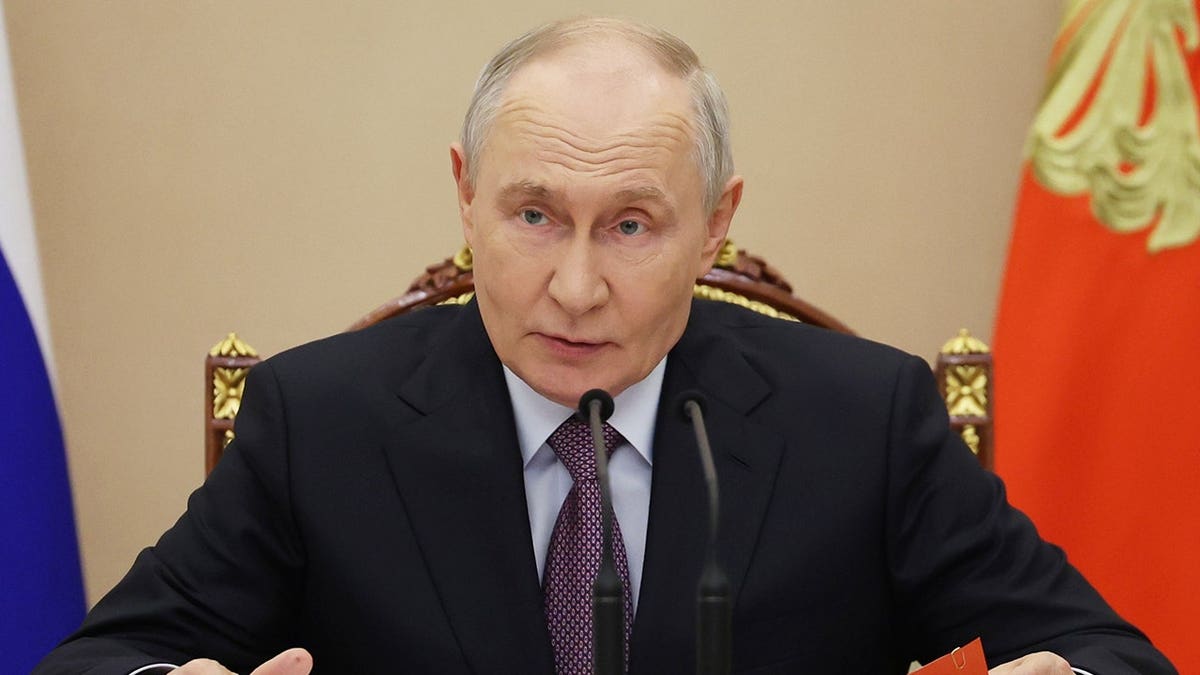
Russian President Vladimir Putin chairs a Security Council meeting in Moscow on Friday, Aug. 7, 2026. (Alexander Kazakov/Pool Sputnik Kremlin via AP)
NATO’s Article 5 is the cornerstone of the alliance, declaring that an attack on one member state is treated as an attack on all members.
The intelligence assessment suggests any Russian action would most likely be limited in scope, potentially taking the form of a cyberattack, a small ground incursion or another contained provocation. Officials believe the Baltic states or Poland could be among the most likely areas of focus.
According to the assessment, such an attack could occur as soon as this fall or at any point through 2029.
“The question mark is how the United States would respond in that case,” Heather Conley, a senior fellow at the American Enterprise Institute, told the Journal. “It has always been a goal [of Russia’s] to challenge the credibility of NATO and to separate the United States from its allies.”
The assessment also comes amid claims the United States’ munitions stockpile has been depleted by arms sent to support Ukraine and due to the war in Iran.
Chief Pentagon spokesman Sean Parnell, however, called those claims false.
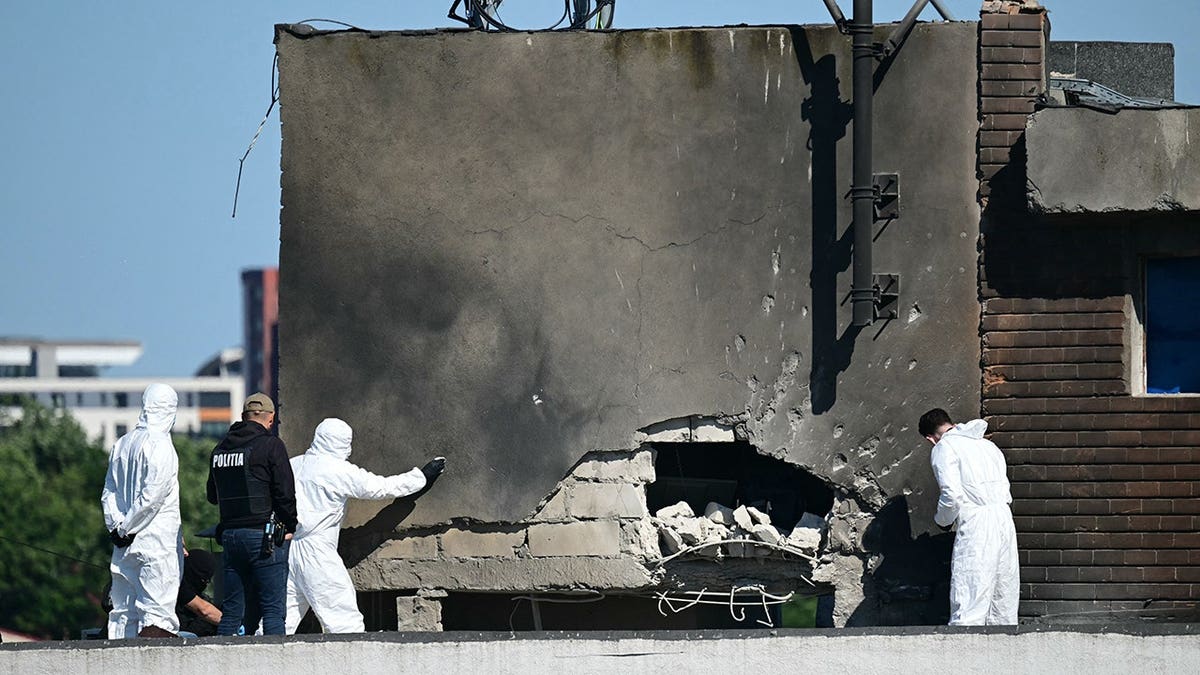
Police and forensic investigators examine the location of impact after a Russian drone struck an apartment building in Galati, Romania, May 29, 2026. (AFP via Getty Images)
“We have everything required to strike at the time and place of the president’s choosing,” Parnell told the Journal. “Across multiple combatant commands, we have already executed successful operations while maintaining a deep, ready arsenal to defend our people and our interests. Any adversary who confuses media noise with American weakness will discover the truth the hard way.”
A land incursion was deemed the least likely because it would trigger Article 5, but it’s unclear what the response would be to something like a cyberattack.

The Polish army secures a large crater, the probable impact site of a projectile linked to overnight strikes in Ukraine, in Tarnawa-Kolonia, eastern Poland, July 30, 2026. (TVN Poland/AFPTV/AFP via Getty Images)
“This has always been NATO’s challenge to respond to a sub-Article 5 attack, and it’s been very true that to this point, NATO allies have preferred not to escalate,” Conley told the Journal.
News Outlet has reached out to NATO for comment.
Col. Martin O’Donnell, a NATO spokesman, told the Journal, “We are always thinking through and preparing for any number of scenarios. NATO is watching, and we are ready to deter and defend as necessary, which we continue to demonstrate.”