
Retired Army Gen. Jack Keane raised doubts about whether Pakistan, Qatar and Saudi Arabia can be reliable partners in shaping talks with Iran, arguing that the regional players have pushed President Donald Trump away from applying military pressure while the United States and Israel remain exposed to the dangers of confronting Tehran.
Keane, a Fox News senior strategic analyst and former Army vice chief of staff, made the remarks Monday on Fox News’ “America’s Newsroom.” He said Pakistan and Qatar were, in his assessment, “compromised” as mediators because they are inclined to side with Iran rather than the United States.
“It is well known in the Middle East region, by our intelligence services, by all the players, that the Pakistanis and the Qataris are compromised because they favor Iran at the expense of the United States,” Keane said. “This is historical. This is not new.”
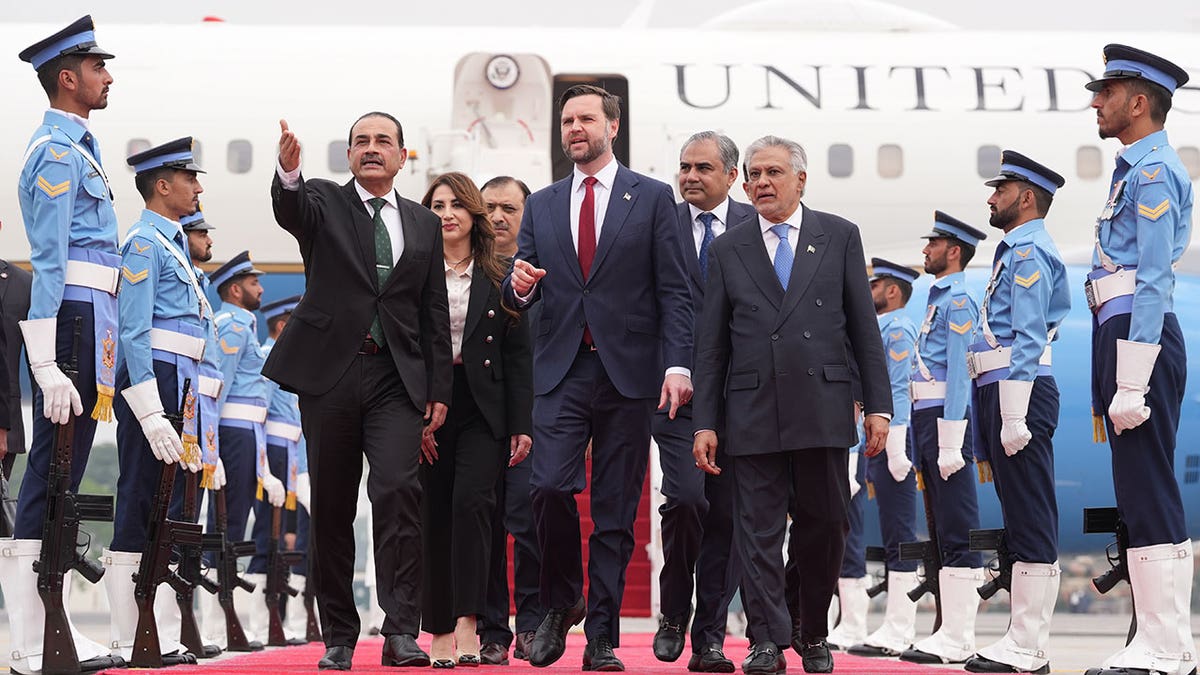
Vice President JD Vance (center) walks with Pakistan’s Chief of Defence Forces and Chief of Army Staff Field Marshal Asim Munir (left), and Pakistani Deputy Prime Minister and Foreign Minister Mohammad Ishaq Dar after arriving for talks with Iranian officials on April 11, 2026, in Islamabad. (Jacquelyn Martin – Pool/Getty Images)
Keane’s sharp criticism stands in contrast to Trump’s public comments about Islamabad, which have been notably positive.
In an April 26 phone interview with Fox News, Trump said he had “great respect for Pakistan,” saying Pakistani officials had “been terrific” and had “really tried” to move negotiations with Iran forward. He also said Pakistan would continue to play a role in the process.
Trump later pointed to Pakistan and Qatar as contributors to diplomatic progress. Speaking with reporters after the G7 summit in France on June 18, he credited both countries with helping advance negotiations that led to the U.S.–Iran memorandum of understanding.
The White House has also stood by its regional partners. Spokesperson Anna Kelly told News Outlet that, “President Trump has great relationships with leaders from Pakistan, Qatar and Saudi Arabia, and he appreciates the involvement of all of our regional partners who are assisting with negotiations.”
“If Iran cannot agree to a good deal with the United States, the fault will lie squarely with the regime, who will suffer the consequences,” Kelly added.
Mediators were preparing a second memorandum focused exclusively on the Strait of Hormuz, Wednesday reports indicated, potentially separating the immediate maritime crisis from the broader dispute over Iran’s nuclear activities.
Keane, a former four-star general, argued that their involvement may have contributed to Washington misunderstanding Iran’s intentions.
“And yet they’re mediators,” Keane said. “So their influence here, I think, had played a part in misleading the United States in terms of Iran’s real intentions.”
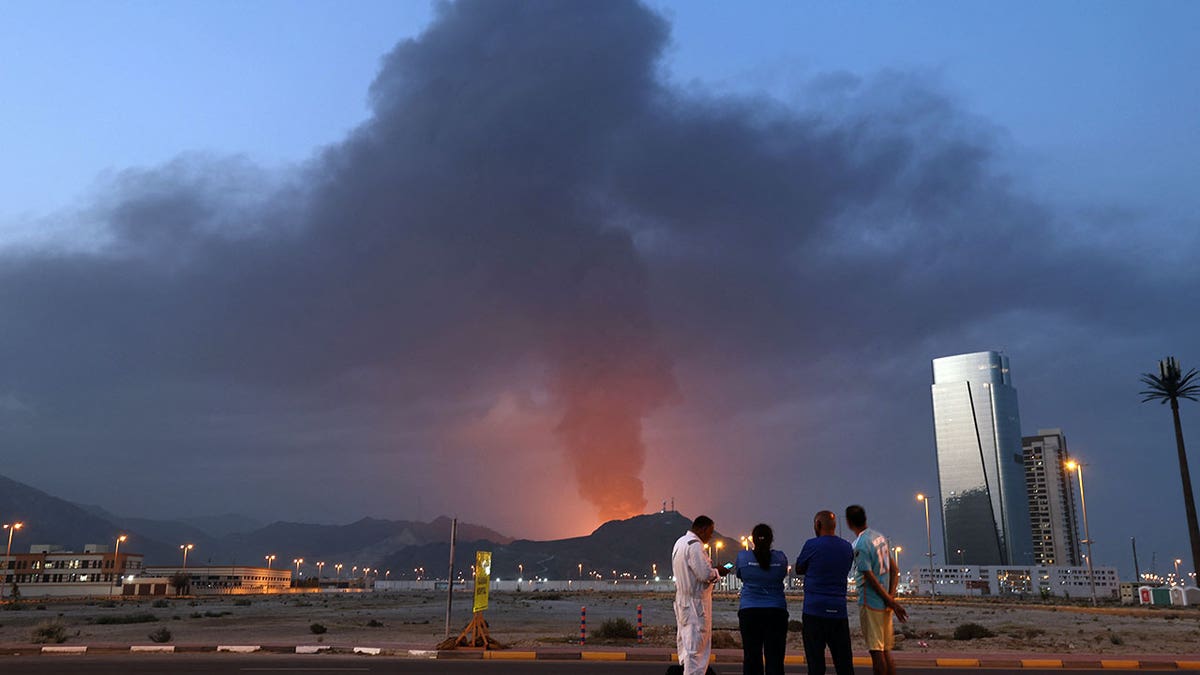
Foreign workers look at a tall plume of black smoke ascends following an explosion in the Fujairah industrial zone on March 3, 2026. Iran’s strikes on Gulf neighbors since February 28, following the U.S.-Israeli attack, forced the UAE to shut its airspace, blindsiding travelers who thought they were headed to one of the region’s safest holiday destinations. (Fadel Senna / AFP via Getty Images)
Pakistan and Qatar have played formal roles in the diplomatic process.
A June 22 joint statement from the two countries said they were mediating talks between the United States and Iran under the Islamabad Memorandum of Understanding. The framework established working groups on nuclear issues, sanctions, monitoring and dispute resolution, as well as a mechanism intended to prevent incidents involving commercial vessels in the Strait of Hormuz.
Pakistan declined to comment on Keane’s criticism. The Saudi and Qatari embassies in Washington did not respond by the time of publication.
Raza Rumi, editor-at-large of Pakistan’s The Friday Times, disputed Keane’s characterization, arguing that Islamabad’s working relationship with Tehran does not make it a compromised mediator.
“Successful mediators are often those that enjoy channels of communication with all sides,” Rumi told News Outlet, saying Pakistan’s approach is shaped more by geography, security and economic concerns than ideological alignment with Iran.
He noted that Pakistan shares a long border with Iran and wants to prevent further instability, while also maintaining longstanding ties with the United States and close partnerships with Saudi Arabia and the United Arab Emirates. Rumi also pointed to the exchange of strikes between Pakistan and Iran in January 2024 as evidence that relations between the neighbors are not uniformly close.
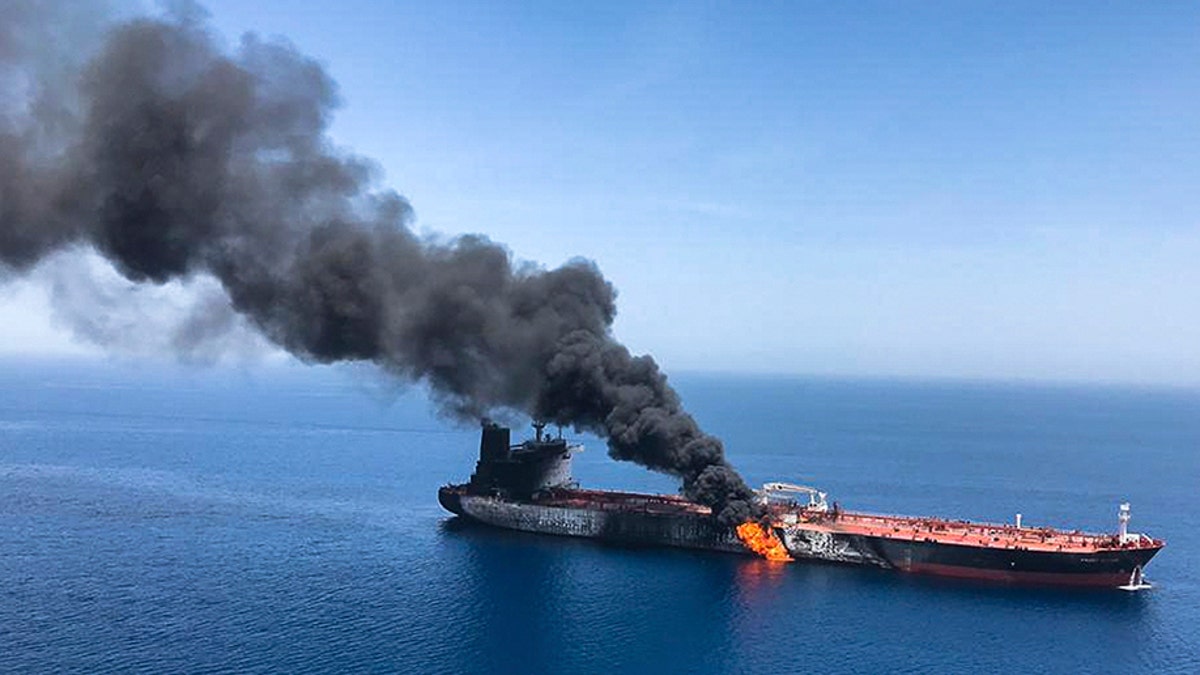
An oil tanker is on fire in the sea of Oman, Thursday, June 13, 2019. Two oil tankers near the strategic Strait of Hormuz were reportedly attacked on Thursday, an assault that left one ablaze and adrift as sailors were evacuated from both vessels and the U.S. Navy rushed to assist amid heightened tensions between Washington and Tehran. (AP Photo/ISNA)
“The suggestion that Pakistan somehow caused Washington to misunderstand Tehran’s intentions is difficult to substantiate,” Rumi said. “It would be a considerable stretch to attribute any American misreading of Iran’s intentions to Pakistani mediation.”
RELATED: NY Doctor Promised Stripper He’d Leave Wife, Then Called Police
Keane directed even sharper criticism at Saudi Arabia, saying that Riyadh denied the United States access to Saudi airspace and a U.S. air base during preparations for a possible operation to forcibly reopen the Strait of Hormuz. He also claimed Saudi officials had repeatedly persuaded Trump not to resume major military operations against Iran.
“The fact of the matter is, the Saudis are not willing to sacrifice to rid the Middle East region of Iran’s aggression,” Keane said, describing the potential costs as casualties and damage to Saudi oil infrastructure.
“They’re willing for us to make that sacrifice, for sure,” he added. “They’re willing for Israel to make that sacrifice, for sure.”
His remarks highlighted a broader debate over whether Saudi caution represents an unwillingness to confront Tehran or a strategic effort to prevent an open-ended regional war.
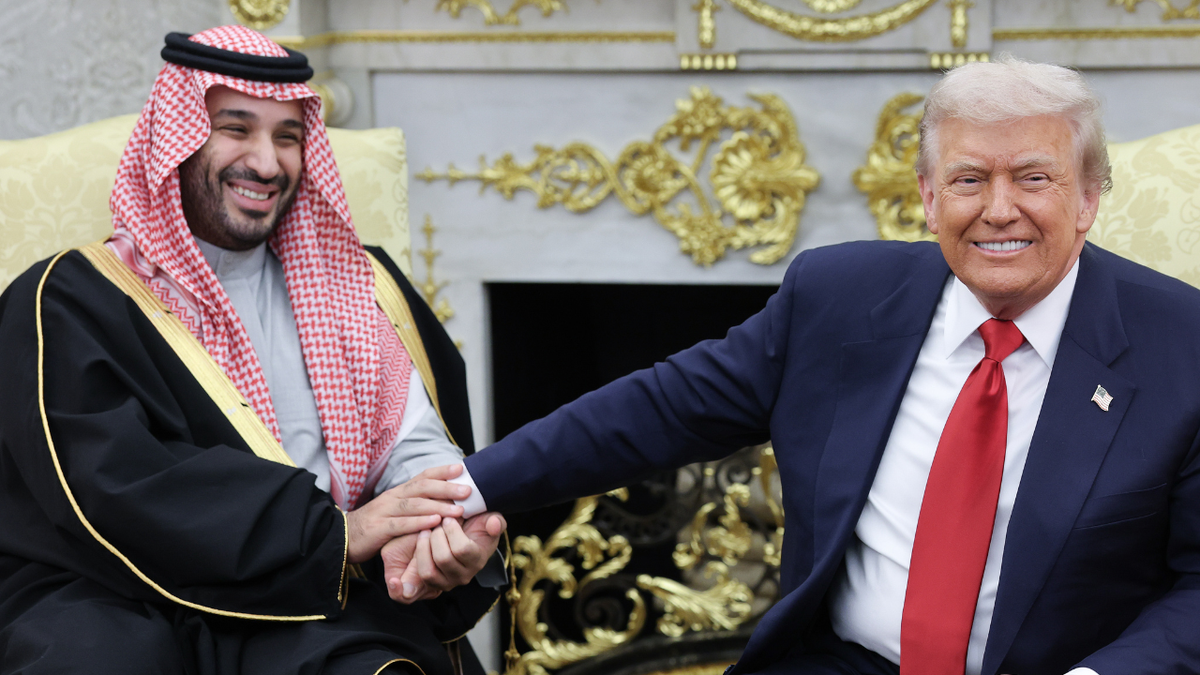
Salman Al-Ansari, a Saudi geopolitical analyst, rejected the suggestion that Riyadh is unwilling to confront Iran, saying the Kingdom distinguishes between credible deterrence and military action without clear objectives. (Win McNamee/Getty Images)
Salman Al-Ansari, a Saudi geopolitical analyst, rejected the suggestion that Riyadh is unwilling to confront Iran, saying the Kingdom distinguishes between credible deterrence and military action without clear objectives.
“Saudi Arabia supports confronting Iranian aggression, but not an open-ended regional war without clear objectives or an endgame,” Al-Ansari told News Outlet.
“Riyadh favors diplomacy backed by credible deterrence, but any agreement must be enforceable and verifiable, addressing Iran’s nuclear program, its proxies, and freedom of navigation in the Strait of Hormuz,” he added.
A Gulf affairs analyst who requested anonymity because of the sensitivity of the issue offered a different assessment, saying Saudi leaders fear that a wider confrontation would expose the Kingdom’s critical infrastructure to Iranian retaliation.
“Saudi Arabia believes it should appease Iran because it is deeply concerned about the consequences of a broader confrontation,” the analyst said. “Riyadh fears the damage Iran could inflict on the Kingdom’s infrastructure and has therefore favored restraint and negotiations over a decisive military campaign.”
The analyst described a widening divide among Gulf states, arguing that Saudi Arabia and Qatar favor accommodation while the United Arab Emirates, Bahrain and Kuwait support stronger pressure on Iran.
Richard Goldberg, a senior adviser at the Foundation for Defense of Democracies think tank and former National Security Council official, said during a separate Fox News appearance Wednesday, that Washington continues to depend on Saudi infrastructure even as disagreements persist over military strategy.
“When we talk about the Gulf states, we talk about Saudi Arabia and General Keane’s comments, remember, we also are relying on Saudi Arabia with their overland pipelines to keep us in the game here,” Goldberg said. “The fact that they’re at maximum capacity moving through the Red Sea also allows us to continue the strangulation strategy.”
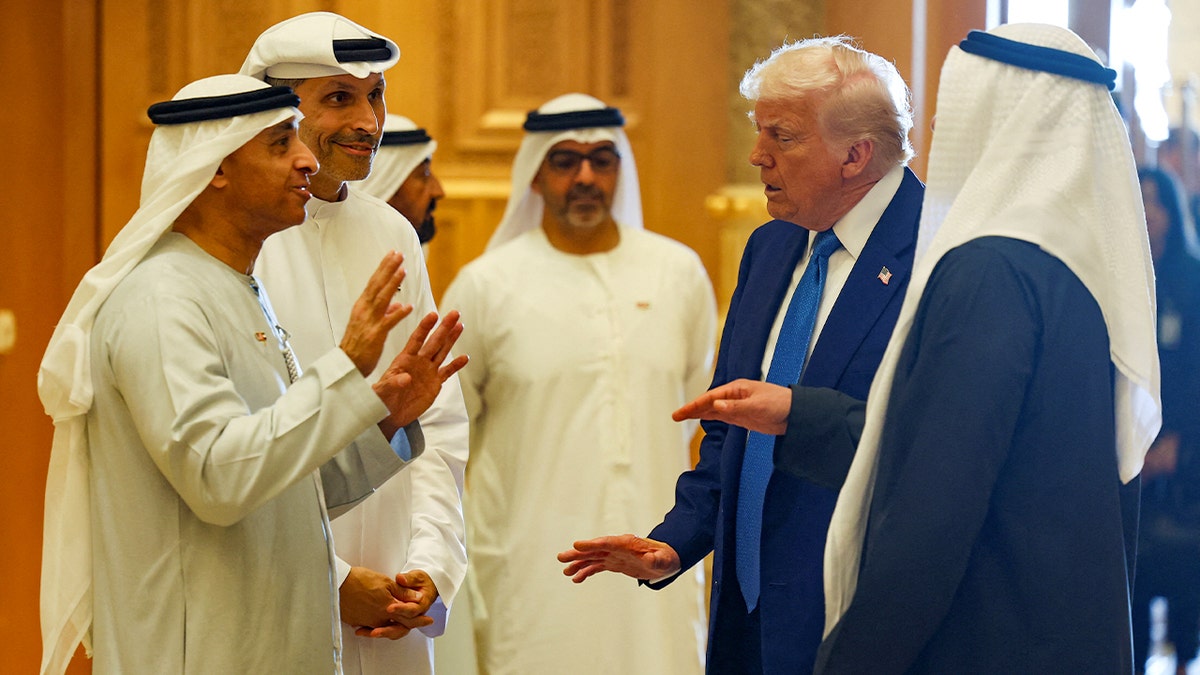
President Donald Trump attends a business forum at Qasr Al Watan during the final stop of his Gulf visit, in Abu Dhabi, United Arab Emirates, May 16, 2025. (Amr Alfiky/Reuters )
The debate comes as the United States and Iran continue negotiations over the Strait of Hormuz.
Oman, Pakistan, Qatar and Saudi Arabia all have been involved in the diplomatic effort, while reports Wednesday indicated that mediators were working on an interim arrangement that could establish separate shipping routes through Iranian and Omani waters as broader nuclear negotiations continue.
The central question is whether those negotiations can produce an enforceable agreement or merely allow Tehran to preserve its leverage over the waterway.
Keane said he remained doubtful that Iran was prepared to surrender meaningful control.
“They are not going to give up the Strait of Hormuz,” he said. “They think it’s a strategic asset.”
He predicted Iran would seek to retain some degree of control over the waterway and warned that reaching an agreement on Iran’s nuclear program would be even more difficult.
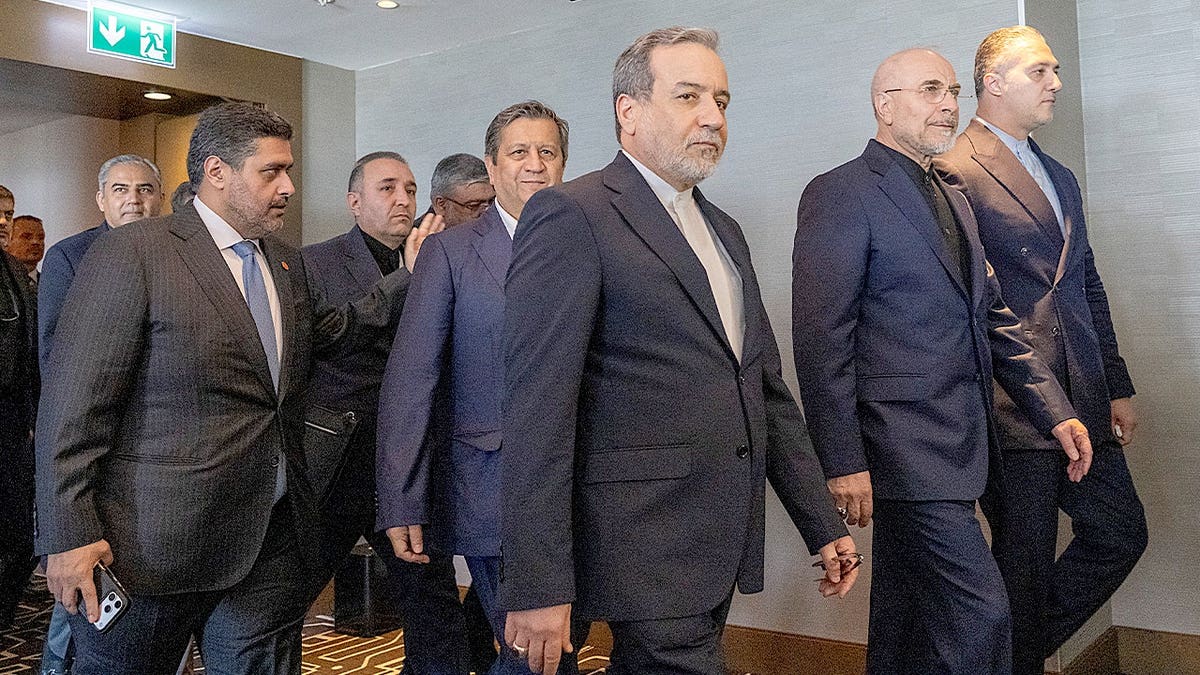
Iran sent an unprecedented “whole-regime” team to the U.S. deal talks which signals one priority, a counterterrorism expert said. (URS FLUEELER/Pool via REUTERS)
“My gut feeling here is no,” Keane said when asked whether Iran was prepared to reach and implement a substantive agreement. “The president is not going to make a bad deal here.”