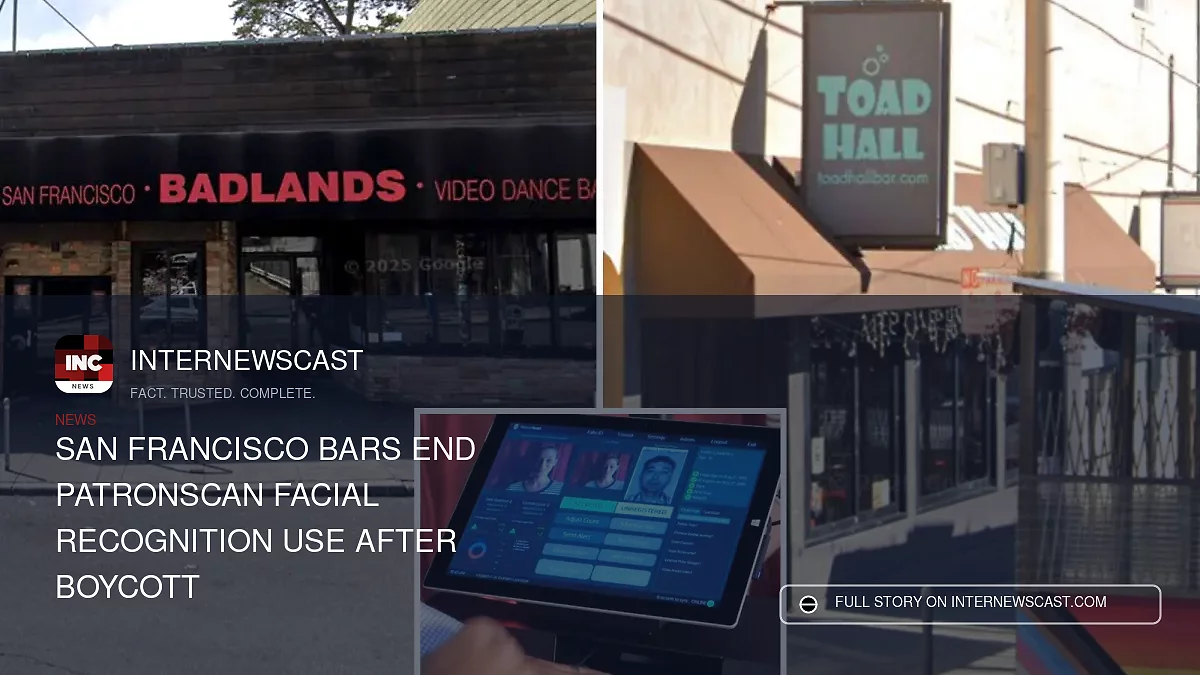

Two well-known LGBTQ+ nightlife spots in San Francisco are backing away from facial recognition software after a wave of public backlash and a boycott campaign raised alarms over customer privacy.
Badlands and Toad Hall announced they would halt their use of PatronScan, an AI-driven system designed to check IDs, confirm ages and identify patrons who have been flagged at participating venues.
In a public statement, the bars said they were suspending PatronScan immediately while they reassess their ID-checking and security procedures. They emphasized that guest and staff safety remains important, but so do privacy and trust, adding that security staff will manually inspect IDs for the time being.
Badlands, a longtime Castro District fixture known for budget-friendly drinks and Top 40 music, reopened following the pandemic. Toad Hall, another Castro bar with deep roots in San Francisco’s LGBTQIA+ history, also became part of the controversy after Gazetteer SF reported in June that both venues were using PatronScan’s Guard+ product.
Privacy advocates are treating the reversal as a significant win. Fight for the Future, the digital rights group that helped organize the campaign, celebrated the decision after gaining support from prominent artists including Rage Against the Machine’s Zack de la Rocha and Tom Morello, The Coup’s Boots Riley and many other musicians.
In an Instagram post, Fight for the Future hailed the outcome as proof that public pressure can work, saying the group will continue pushing to remove what it calls dangerous AI surveillance technology from bars and live entertainment venues across the United States.
According to AI Action’s Club 1984 website, only three San Francisco venues — Mix, Oracle Park and 1015 Folsom — are still listed as using face-scanning technology.
The dispute comes amid broader scrutiny of facial recognition in entertainment spaces, including the 2022 lawsuits that followed Madison Square Garden’s use of the technology to create an “exclusion list.”
Grocery Outlet stores in the Bay Area also began using facial recognition software to identify shoplifters in July, the San Francisco Chronicle reported.
Multiple consumer tech advocacy groups have raised issues about facial recognition tech’s accuracy, especially when it comes to identifying Black and brown people.
Plenty of music festivals have also signed a campaign pledge against using the technology. But events like Outside Lands and the iHeartRadio Music Festival have decided not to participate.
Evan Greer, director of Fight for the Future and a transgender musician, said in a statement that the use of the AI software is especially problematic for more vulnerable communities.
“Queer and trans people want to be able to dance and gather and party without fear,” Greer said in a press release. “We won’t stop until gay bars across the country commit to never using this type of invasive and discriminatory surveillance tech at the door.”
Download The California Post App, follow us on social, and subscribe to our newsletters