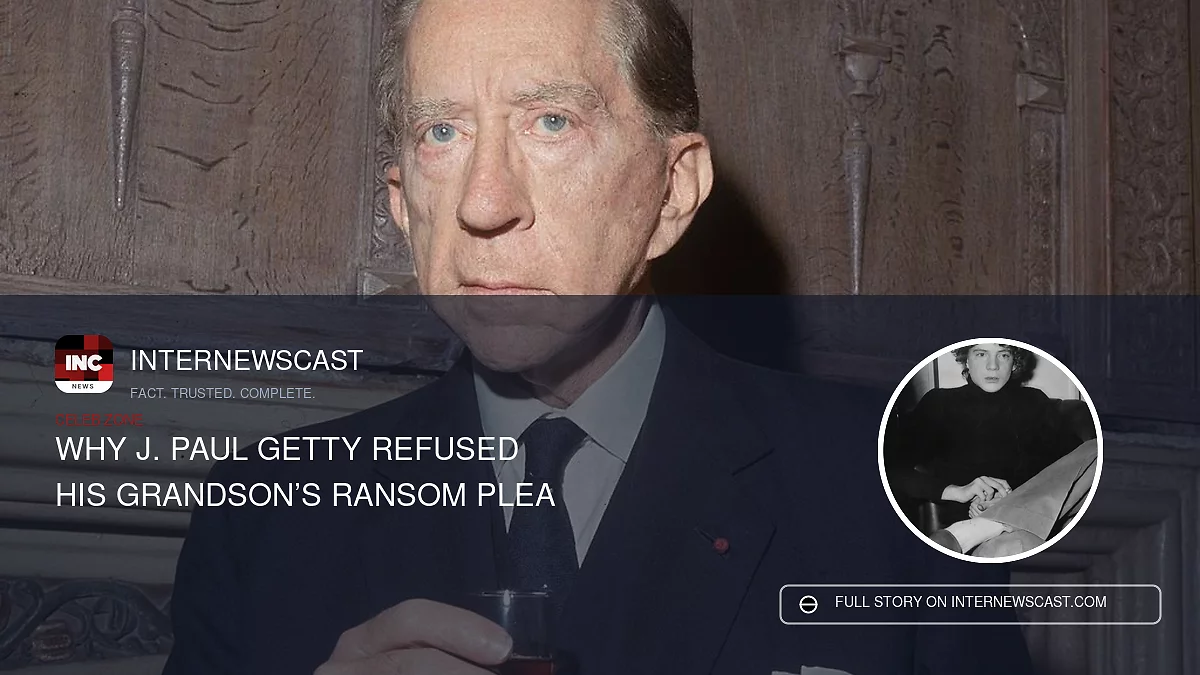

In 1973, 16-year-old John Paul Getty III was kidnapped in Italy, a case that would become one of the most infamous abductions of the 20th century. Paul was not an ordinary teenager caught in a random crime. He was the grandson of J. Paul Getty, the powerful oil magnate once counted among the wealthiest men in the world.
The abductors issued a staggering demand: $17 million for the boy’s release. Adjusted for inflation, that sum would be worth well over $100 million today. It was a breathtaking ransom by any measure, but for J. Paul Getty, whose fortune ran into the billions, the money was clearly within reach.
But there was a complication.
Getty refused to pay.
The billionaire’s reluctance stunned the public but fit his reputation. J. Paul Getty was famously tightfisted, even installing a pay phone at his lavish English estate so guests would stop charging calls to him. When told his grandson’s kidnappers wanted $17 million, he argued that giving in would put his other grandchildren in danger by making them future targets.
That refusal helped turn the John Paul Getty III kidnapping into one of the strangest, darkest and most disturbing chapters in the history of extreme wealth.
Who Was John Paul Getty III?
John Paul Getty III, known to family and friends as Paul, was born on November 4, 1956. His father, John Paul Getty Jr., was one of the oil baron’s sons and was involved in the Getty family’s petroleum operations in Europe.
Paul grew up largely in Rome, surrounded by privilege but also instability. After his father married actress and model Talitha Pol, the family moved through a glamorous, unconventional world that stretched across England, Italy and Morocco.
By his teenage years, Paul had become something of a wild child. He was expelled from schools, experimented with drugs, frequented Rome’s nightlife, participated in political demonstrations, and lived a largely independent bohemian existence. After his father returned to England, Paul remained behind in Rome, supporting himself partly by selling paintings and jewelry.
He had also joked about a potentially lucrative scheme: staging his own kidnapping to extract money from his famously tightfisted grandfather.
That joke would soon have horrifying consequences.
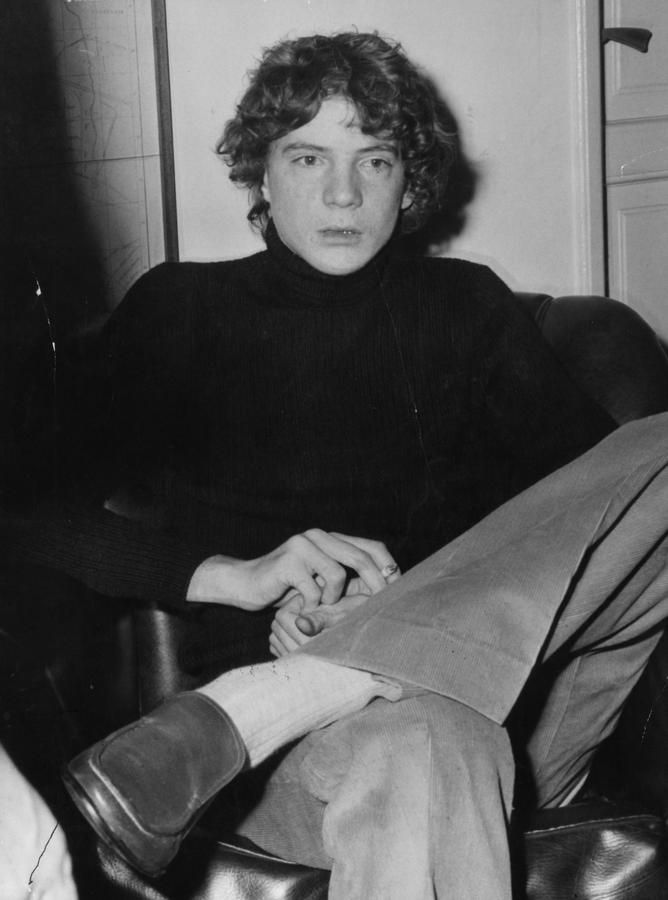
John Paul Getty III / Keystone/Getty Images
The Kidnapping
In the early morning hours of July 10, 1973, Paul was abducted from the streets of Rome. His captors transported him to a remote hideout in southern Italy, where he was blindfolded and held prisoner.
Soon afterward, the family received a ransom demand for $17 million.
Instead of immediately opening his checkbook, J. Paul Getty questioned whether the kidnapping was even real. Given Paul’s rebellious reputation and his previous jokes about staging an abduction, some members of the family initially wondered whether he was somehow involved.
Paul’s mother, Gail Harris, knew otherwise. She had no access to the Getty billions and desperately tried to convince the family to take the threat seriously. Paul’s father appealed to his own father for help.
Getty refused.
His reasoning became one of the most famous quotes of his life:
“I have 14 other grandchildren, and if I pay one penny now, then I’ll have 14 kidnapped grandchildren.”
From a coldly rational security perspective, Getty arguably had a point. Paying $17 million could advertise to every criminal organization in Europe that Getty grandchildren were walking lottery tickets.
Unfortunately for Paul, his kidnappers were not bluffing.
Four Months Pass
Paul remained imprisoned as weeks turned into months. His captors moved him between hideouts in the mountains of Calabria and repeatedly pressured the family to pay.
Meanwhile, negotiations went nowhere.
The kidnappers gradually lowered their demand. But Getty still wouldn’t agree to the amount they wanted, and the family’s initial skepticism increasingly looked absurd as Paul’s captivity dragged on.
By November, more than four months had passed.
That’s when Paul’s captors decided to prove exactly how serious they were.
A package was mailed to the Italian newspaper “Il Messaggero.” Inside was a lock of Paul’s hair.
And one of his severed ears.
The kidnappers had cut it off and included a warning that unless the family paid, further pieces of Paul would follow.
Their ransom demand had now fallen to around $3.2 million.
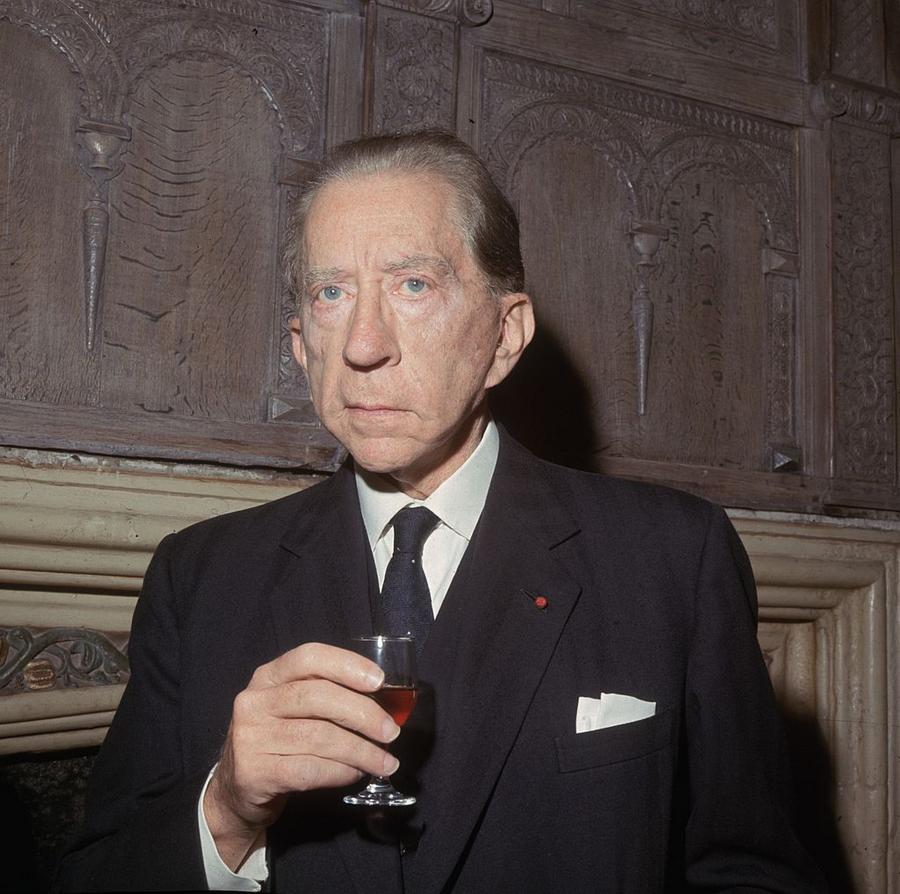
Hulton Archive/Getty Images
Who Was J. Paul Getty?
To understand how a grandfather could haggle over the price of his kidnapped grandson’s freedom, it helps to understand J. Paul Getty.
Getty was born in 1892 into an already-prosperous family. His father, George Getty, made a fortune in the Oklahoma oil boom, and the younger Getty entered the petroleum business in his early 20s. He made his first million dollars while still a young man and spent the following decades buying oil companies, leases, refineries, and other assets.
His most famous gamble came in 1949, when he acquired a 60-year concession to explore the Saudi Arabian half of the Neutral Zone between Saudi Arabia and Kuwait. Getty paid millions upfront and then spent tens of millions more searching for oil.
For four years, his investment produced disappointment. Then, in 1953, oil was discovered in enormous quantities. Production from the Neutral Zone helped transform Getty from a very wealthy American oilman into one of the richest people in the world.
By 1957, “Fortune” had identified him as America’s richest man. At the time of his death in 1976, his fortune was worth at least $2 billion.
Getty was also famously quotable. Among the lines attributed to him:
“If you can count your money, you don’t have a billion dollars.”
“The meek shall inherit the earth, but not the mineral rights.”
And perhaps most appropriately:
“Buy when everyone else is selling and hold until everyone else is buying.”
He had a genius for making money.
Spending it was another matter.
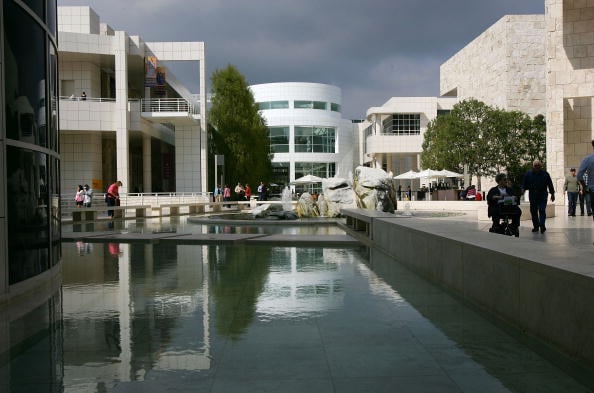
David McNew/Getty Images
Back To The Ransom
Once Paul’s severed ear arrived, even J. Paul Getty could no longer entertain the idea that his grandson might be orchestrating an elaborate scam.
But he still wasn’t going to simply write a $3.2 million check.
The ransom was ultimately negotiated down to around $3 million. Getty agreed to personally contribute roughly $2.2 million, the maximum amount his advisers said could receive favorable tax treatment. He provided the remaining roughly $800,000 to his son as a loan.
At 4% interest.
Yes. One of the richest men on Earth charged his own son interest on the money needed to rescue his grandson from kidnappers who had already cut off the teenager’s ear.
On December 15, 1973, after roughly five months in captivity, Paul was released in southern Italy. The date happened to be J. Paul Getty’s 81st birthday.
Paul was alive, but the ordeal had changed him permanently.
What Happened To The Kidnappers?
Italian authorities eventually arrested nine people in connection with the kidnapping, including men associated with the ‘Ndrangheta, the powerful organized-crime network based in Calabria.
Only two were ultimately convicted for their roles in the kidnapping, with prosecutors unable to make the charges stick against several of the others.
The involvement of the ‘Ndrangheta was particularly ominous. The organization would eventually grow into one of the most powerful criminal enterprises in Europe, earning billions from drug trafficking and other illegal businesses.
But for the Getty family, the criminal investigation was almost beside the point. Paul was home.
Unfortunately, his life would never return to normal.
The Tragic Aftermath
Not long after his release, Paul married Gisela Martine Zacher. Their son, Balthazar Getty, was born in 1975 and later became a successful actor, appearing in “Lord of the Flies,” “Lost Highway,” and “Brothers & Sisters.”
Paul, however, struggled badly in the years following his kidnapping.
In 1981, after years of drug and alcohol abuse, he suffered a devastating stroke. He spent weeks in a coma and emerged with severe disabilities. He was largely paralyzed, had serious vision problems, and required extensive care for the remainder of his life.
He lived for another three decades.
John Paul Getty III died in England on February 5, 2011. He was 54 years old.
His grandfather had died decades earlier, on June 6, 1976, leaving behind one of the largest fortunes in the world and a complicated legacy that included an oil empire, the institutions that became the Getty Museum and Getty Center, five marriages, generations of extraordinarily wealthy descendants, and one kidnapping story that continues to overshadow nearly everything else.
Would You Have Paid?
It’s easy to look back and say J. Paul Getty behaved monstrously. His 16-year-old grandson was chained in a hideout while one of the world’s richest men debated whether paying a ransom would establish a dangerous precedent.
Getty’s concern wasn’t entirely irrational. If criminals learned that kidnapping one Getty grandchild produced an instant $17 million payday, his other grandchildren really might have become targets.
But there’s a rather large gap between refusing an initial $17 million demand and continuing to haggle after your grandson has been held captive for months.
And then there’s the 4% loan.
More than half a century later, that detail remains almost impossible to comprehend. A billionaire whose fortune was so vast that he joked that anyone who could count their money wasn’t really a billionaire ultimately helped rescue his mutilated teenage grandson…and made part of the ransom a loan that earned him interest.
Maybe the kidnappers really should have done more due diligence.
(function() {
var _fbq = window._fbq || (window._fbq = []);
if (!_fbq.loaded) {
var fbds = document.createElement(‘script’);
fbds.async = true;
fbds.src = ”
var s = document.getElementsByTagName(‘script’)[0];
s.parentNode.insertBefore(fbds, s);
_fbq.loaded = true;
}
_fbq.push([‘addPixelId’, ‘1471602713096627’]);
})();
window._fbq = window._fbq || [];
window._fbq.push([‘track’, ‘PixelInitialized’, {}]);


