
Ukraine’s widening campaign of long-range drone strikes reached Russia’s biggest online retailer once more on Thursday, after a drone hit an oil and petrochemical site in Bashkortostan and ignited a fire at a nearby Wildberries facility, according to reports.
Wildberries, widely known as “Russia’s Amazon,” said the site had been evacuated and that no merchandise was being kept there when the incident occurred, Reuters reported.
The latest strike adds to a growing list of Ukrainian attacks that have disrupted the e-commerce giant’s operations inside Russia. The wave began on July 18, when drones hit centers in Kotovsk and Elektrostal, leaving seven people dead and more than 60 others injured, according to reports.
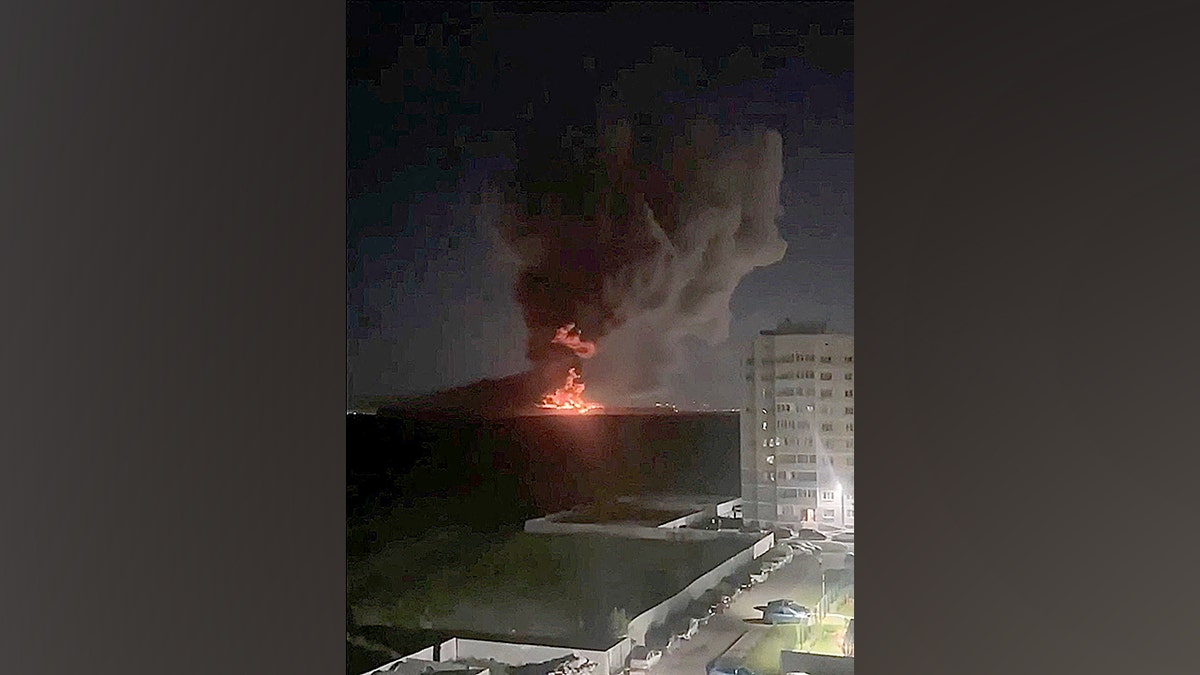
Fire burns at a Wildberries in the Voronezh region in Russia (Reuters)
Just four days after those attacks, drones targeted facilities in Krasnodar and Nevinnomyssk, triggering fires and injuring 15 people.
“We can call it ‘kinetic sanctions enforcement,’ or Ukraine’s adaptation of economic coercion into physical strikes,” Kateryna Bondar, a senior fellow at the Wadhwani AI Center at the Center for Strategic and International Studies, told News Outlet.
Bondar, a former Ukrainian government adviser, said Kyiv appears focused on increasing the financial pressure and operational risks facing Russia’s wartime economy. She added that the broader economic fallout from the strikes could be substantial.
Ukrainian media outlet Pravda reported that total losses for Wildberries and its sellers from the attacks have been estimated at between 600 billion and 800 billion rubles, or roughly $6 billion to $8.5 billion.
“With only 5% to 7% of sellers insured, the damage is cascading onto tens of thousands of small businesses and forcing Russia’s logistics sector to reprice wartime risk,” Bondar said.
“Roughly 27% of Wildberries warehouse capacity is reportedly out of operation,” she added.
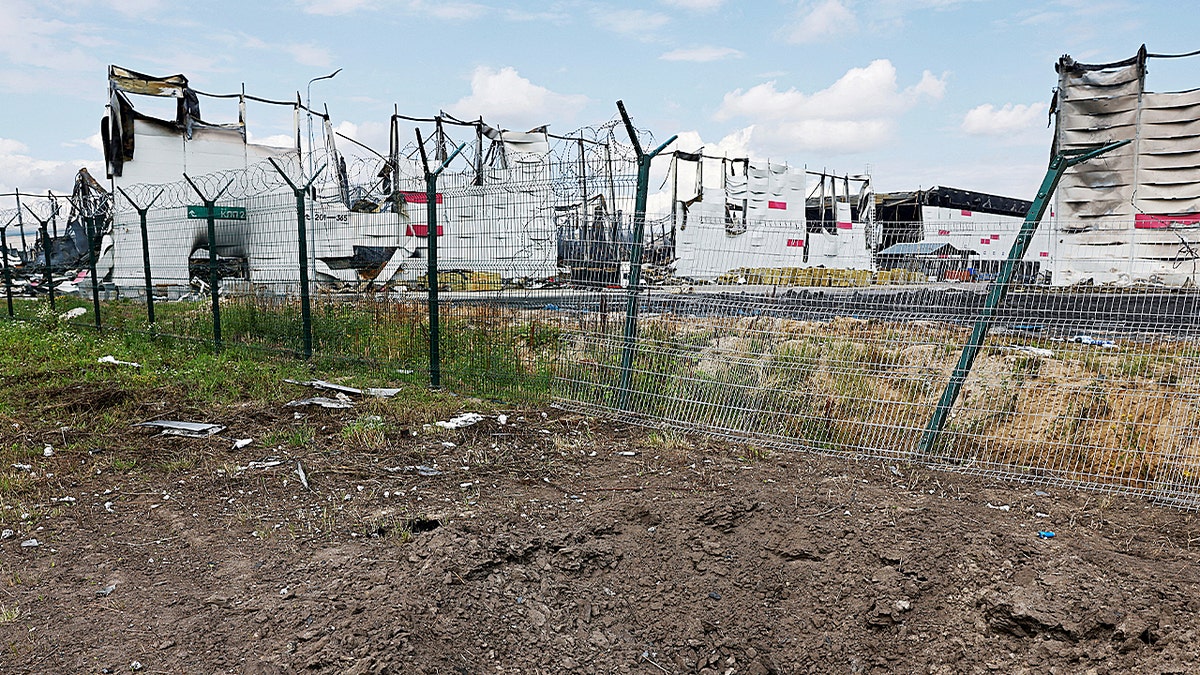
The total losses incurred by Wildberries and its sellers as a result of the attacks have been estimated at RUB 600-800 billion (around US $6-8.5 billion), Ukrainian media reported. (Reuters)
Beyond the financial toll, Bondar said the strikes carry a significant psychological impact.
“I’ve listened to videos recorded by witnesses, and reactions range from fear, shock and anger to disappointment in the capabilities of Russian air defenses,” she said. “So, that effect is clearly being achieved.”
Wildberries founder and CEO Tatyana Kim has since accused Ukraine of deliberately targeting a civilian company. In a July 31 video address, she described the strikes as a “terrorist attack.”
“For nearly two weeks now, our company’s warehouses have been under terrorist attack. Why our warehouses, of all places? Attacks against us are attacks against hundreds of millions of people in 10 countries at once,” Kim said.
Kim claimed Wildberries entrepreneurs in Russia and partner countries, including China and Kazakhstan, had “suffered losses amounting to billions,” arguing that the company itself not be held responsible for covering all the losses.

Wildberries founder and CEO Tatyana Kim has since accused Ukraine of deliberately targeting a civilian company and, in a July 31 video address, described the strikes as a “terrorist attack.” (Wildberries Press Service/Handout via Reuters )
“Merchants will start pricing Russian logistics risk into their business decisions,” Bondar warned.
Kim said sellers from ten countries, including China, have suffered billions in losses, while Wildberries maintains it is not liable, which creates incentives to diversify away from the platform, shorten inventory cycles, demand prepayment and increase insurance costs.
Bondar said Kyiv views the retail giant’s sprawling supply chain through a military and economic lens.
“Kyiv assesses Wildberries warehouses as distribution nodes for dual-use goods, including body armor, helmets, fiber optic cable for FPV drones, and navigation components, as well as channels for sanctions circumvention,” Bondar said.
“The strikes also retaliate for Russia’s attacks on Ukraine’s civilian logistics infrastructure, including the Nova Poshta and Ukrposhta networks.”
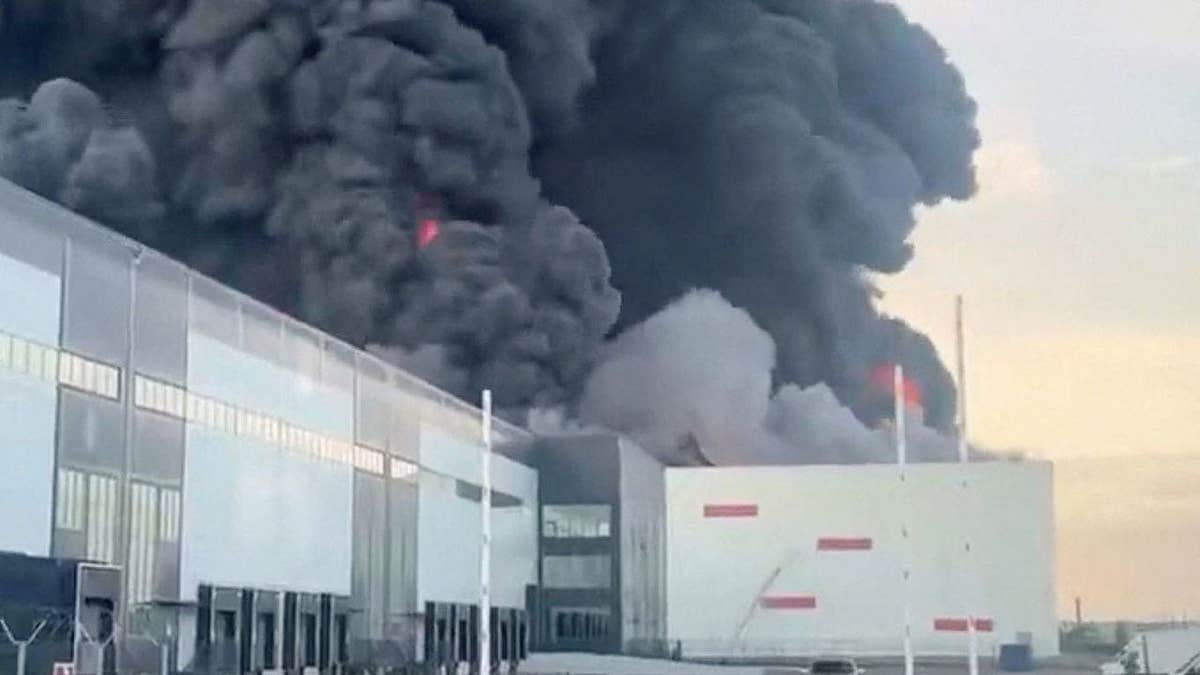
In a screenshot taken from social media video, smoke rises from a Wildberries site from what the Ukrainian authorities say was a drone attack in Shushary, Pushkinsky District, St. Petersburg, Russia July 24, 2026. (Social Media/via Reuters)
Kim is Russia’s richest woman, with Forbes estimating her fortune at roughly $7 billion in July.
“Kim matters to the Kremlin less as an individual than as an asset already absorbed into its clan system,” Bondar said. “The current strikes expose the limits of her political protection. The Kremlin has remained largely silent, while Kim is negotiating tax deferrals rather than receiving compensation or air-defense protection from them.
“It sends the message to Russia’s business elite that proximity to power does not guarantee protection, and private businesses are expected to absorb the costs of war.”
The attacks have also drawn scrutiny regarding Wildberries’ warehouse security procedures and a controversial new policy restricting workers’ cellphone use.
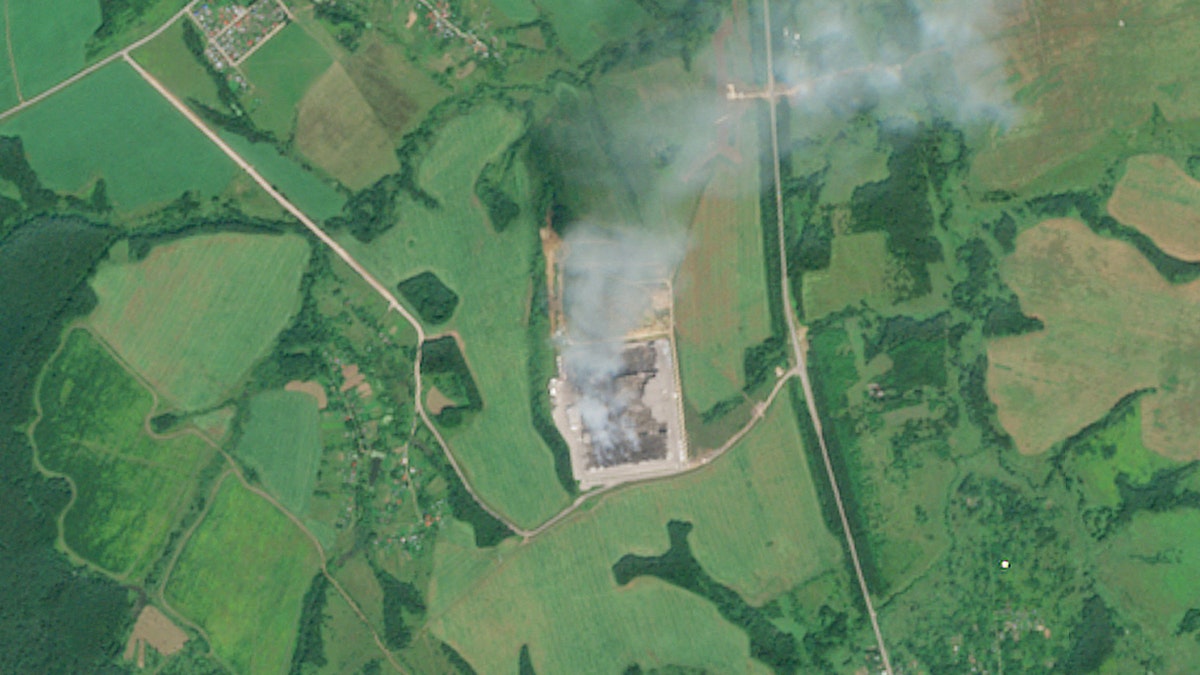
A satellite image shows a damaged Wildberries site after a Ukrainian drone attack, in Aleksin (European Union/Copernicus Sentinel-2/Handout via Reuters)
“The smartphone ban is officially justified as an air-defense security measure, but the real concern appears to be information control,” Bondar said.
“Employees were filming strikes and sharing footage in real time, making the damage and the war’s impact on ordinary Russians impossible to hide,” she added. “The policy also exposes a serious vulnerability. Workers reportedly had their phones locked away during attacks, limiting their ability to call for help.
“Wildberries cannot harden its sprawling warehouses or provide air defense, so it is controlling the one thing it can — what gets recorded and seen.”