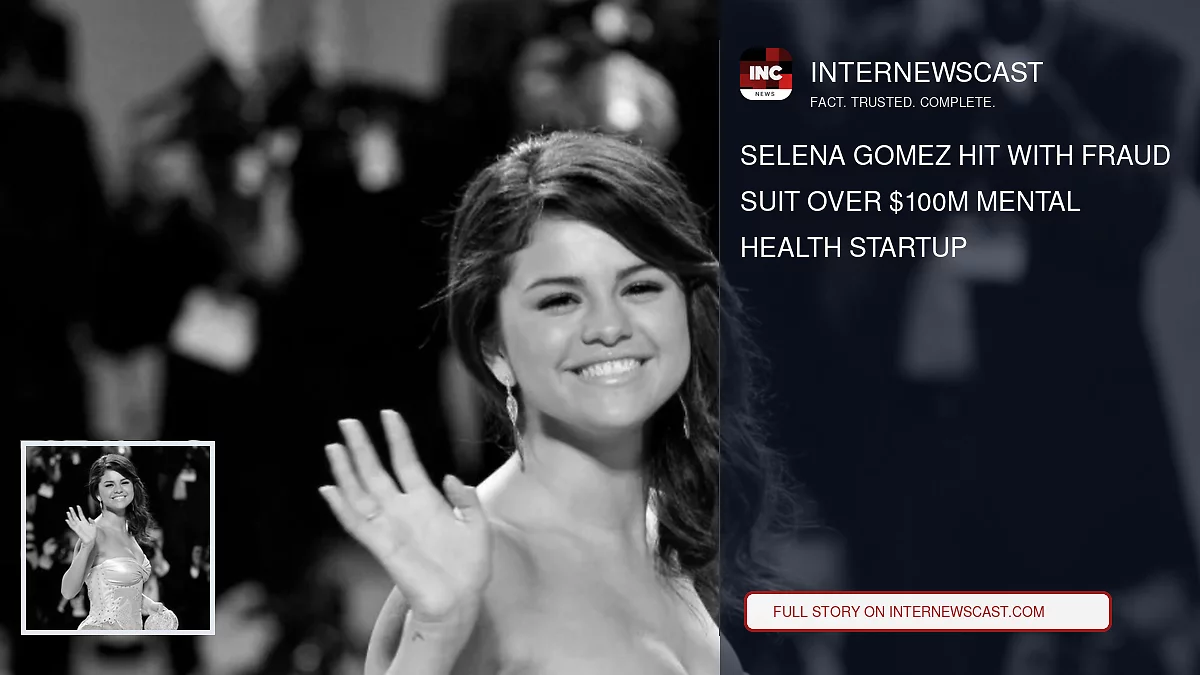

Selena Gomez is widely known as a multi-hyphenate: a singer, actor, producer, and the force behind the blockbuster beauty brand Rare Beauty. In 2021, however, she stepped into a different corner of the business world, teaming with her mother, Mandy Teefey, and entrepreneur Daniella Pierson on a mental health-focused startup.
That venture, Wondermind, was pitched as a “mental fitness” platform designed to deliver editorial features, podcasts, digital tools, and, eventually, a mobile app. From the beginning, the company had a powerful advantage in its corner: Selena Gomez, a globally recognized celebrity with a massive fan base and hundreds of millions of followers across social media.
By 2022, the concept had attracted serious investor interest. Wondermind raised $5 million at a $95 million pre-money valuation, putting the company’s post-investment valuation at approximately $100 million.
Now, two investment entities whose members put a combined $1.175 million into that funding round allege the opportunity they were presented did not match reality.
On August 12, 2026, the two entities filed a 48-page federal lawsuit in Delaware naming Wondermind, Selena Gomez, Mandy Teefey, and Daniella Pierson as defendants. The plaintiffs are seeking to recoup their investments and have brought claims that include securities fraud, common-law fraud, breach of contract, and additional allegations. The claims are accusations made in a newly filed complaint, and none of the defendants has been found liable for fraud.

Gareth Cattermole/Getty Images
The $100 Million Pitch
The lawsuit claims Wondermind’s founders presented the startup as a fast-scaling mental health and wellness brand with the potential to expand across media, consumer products, and entertainment.
Gomez’s involvement, according to the complaint, was central to that pitch. The plaintiffs allege they were told she would be far more than a celebrity name attached to the brand, and that she would play an active role in growing and promoting Wondermind while tapping into her vast built-in audience.
The lawsuit says Wondermind’s 2022 materials envisioned businesses that could ultimately be worth more than $4 billion combined.
The investors now allege that many of the promises supporting those projections never came true.
- Selena’s involvement: Investors allegedly were told Gomez would play a significant operating and marketing role, but the plaintiffs claim she ultimately distanced herself from the company.
- Corporate partnerships: The plaintiffs say they were told Wondermind had secured partnerships with major employers including JPMorgan and Fidelity. They allege those partnerships did not exist.
- The Wondermind app: A mobile app was supposed to become a centerpiece of the business. The plaintiffs say it was never launched.
- Advertising and revenue: Investors allegedly were told Wondermind expected millions of dollars in advertising revenue and had multiple revenue-producing initiatives underway.
- Financial disclosures: The plaintiffs accuse Wondermind’s leadership of concealing the company’s deteriorating financial and operational condition while continuing to give investors optimistic updates.
- Selena’s services agreement: The complaint alleges that a consulting or services agreement governing Gomez’s work for Wondermind was supposed to be part of the financing, but the plaintiffs say they never received a copy and question whether it was ever executed.
One particularly striking update allegedly came in December 2022. Pierson, with Gomez copied on the email, told an investor that Wondermind had experienced “massive growth,” exceeded its one-year goals within six months, and generated $1.7 million in revenue from the newsletter in just five months. The email also claimed several multibillion-dollar funds and banks had approached the company about leading a Series B financing. That Series B never materialized.
Wondermind Falls Apart
By 2025, Wondermind was experiencing serious financial problems. The company missed payroll, struggled to pay vendors, and eventually laid off most of its staff. Teefey reportedly told employees that she had taken out a loan against her home to help keep the company operating.
The lawsuit says investors learned the extent of Wondermind’s problems through media reports rather than directly from the company. According to the complaint, they demanded their money back in November 2025.
The complaint also contains a particularly unusual allegation involving Pierson. It says Teefey told investors in 2025 that Pierson had misappropriated company money, including funds allegedly used toward a New York City apartment costing roughly $60,000 per month and other personal expenses. That claim comes from Teefey as described by the plaintiffs and has not been proven.
How Much Did Selena Own?
One detail revealed in the lawsuit is that Selena apparently owned much less of Wondermind than many people may have assumed.
The complaint puts her stake at approximately 16%. Teefey allegedly owned around 32%, while Pierson owned approximately 33%.
At Wondermind’s $100 million financing valuation, Selena’s stake would therefore have been worth around $16 million on paper.
That figure is important when considering whether Selena Gomez is still a billionaire. Wondermind may have become a major legal and reputational headache, but financially it is tiny compared with Rare Beauty, the cosmetics company responsible for the overwhelming majority of Selena’s estimated $1 billion fortune.
For the Wondermind investors, however, the stakes are much more immediate. They put nearly $1.2 million into a company once valued at $100 million, and now they want their money back.
(function() {
var _fbq = window._fbq || (window._fbq = []);
if (!_fbq.loaded) {
var fbds = document.createElement(‘script’);
fbds.async = true;
fbds.src = ”
var s = document.getElementsByTagName(‘script’)[0];
s.parentNode.insertBefore(fbds, s);
_fbq.loaded = true;
}
_fbq.push([‘addPixelId’, ‘1471602713096627’]);
})();
window._fbq = window._fbq || [];
window._fbq.push([‘track’, ‘PixelInitialized’, {}]);