
Topline
President Donald Trump on Saturday celebrated the progress of his White House ballroom project, calling it ahead of schedule, under budget and entirely financed by private donors. His remarks came a day after the Supreme Court temporarily cleared the way for construction to continue, even as an estimate from the project’s contractor reportedly put the cost at $600 million and indicated taxpayers would cover more than half of it.
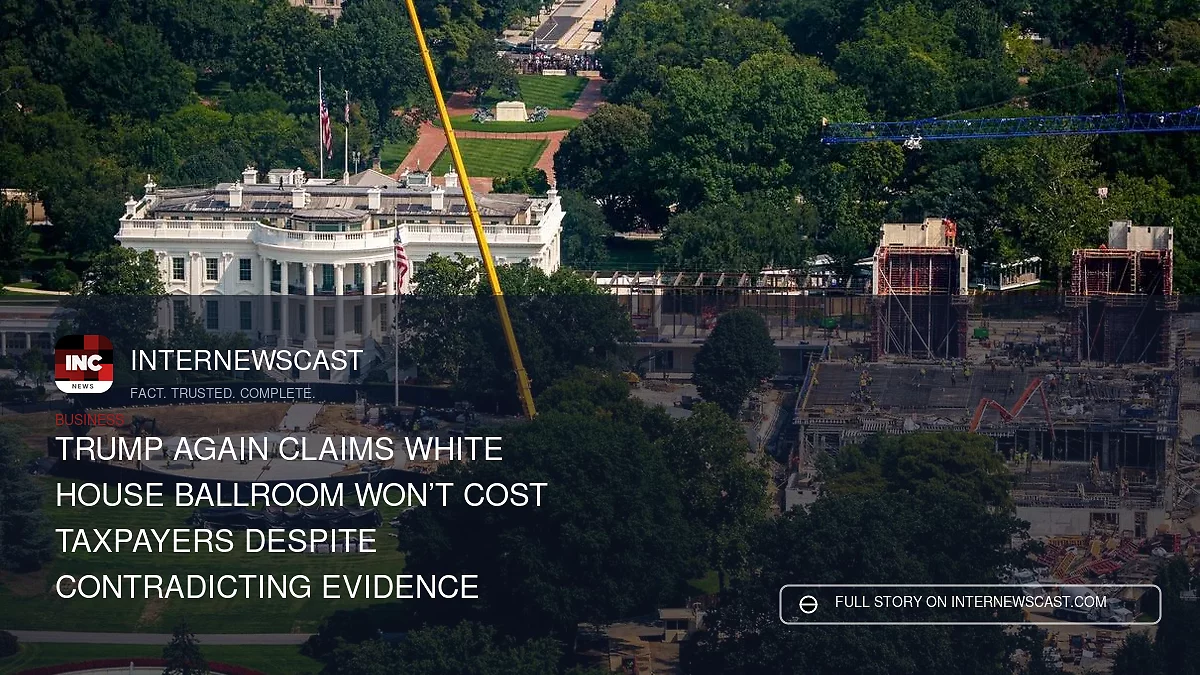
Construction continues at the White House on Aug. 10, 2026.
Getty Images
Key Facts
Trump said Friday he was “grateful” for the Supreme Court’s decision, which temporarily paused a lower-court order halting construction. By Saturday morning, he was touting the pace of work on the planned 90,000-square-foot addition to the White House.
He said “tremendous work has been done” and again insisted the project—whose price tag he has repeatedly placed at $400 million—“will be paid for with ZERO Dollars of Taxpayer Money,” adding that “Great American Patriots and Companies are footing the entire bill.”
But the contractor managing the White House construction told officials earlier this year that the ballroom would cost $600 million, with taxpayers expected to fund more than half of the total, the Washington Post reported.
According to the Post, the White House understood “the work was projected to rely heavily on taxpayer dollars from the moment it was announced,” including more than a dozen approved payments to Clark Construction that together amounted to tens of millions of dollars in public funding.
Key background
Trump announced the White House ballroom plan in July 2025, describing a large event space capable of seating 650 people. The project is reportedly set to include bomb shelters and major medical facilities. At 90,000 square feet, the addition is far larger than the existing White House was at the time of the announcement, when the building measured 55,000 square feet, before Trump ordered the East Wing demolished to make room for the new structure. The ballroom has faced sharp criticism, including a lawsuit from the National Trust for Historic Preservation, which argues the Trump administration lacks the authority to proceed without congressional approval. Courts have issued multiple orders seeking to stop construction while the case moves forward, though appeals and lower-court decisions have repeatedly allowed work to resume. The Trust has warned that continued construction could let the administration “outrun judicial review” by advancing the ballroom to a point where it can no longer realistically be stopped. The Trump administration, meanwhile, has argued that halting the project could create national security concerns and leave the unfinished structure vulnerable to collapse.
BIG NUMBER
65%. That’s how much of the project has already been completed, the White House has said in recent court filings.
WHAT TO WATCH FOR
The Supreme Court’s Friday decision allows construction on the ballroom to continue “pending further order” from the court. Chief Justice John Roberts did not give any indication as to when a more permanent decision could be announced.
WHAT WE DON’T KNOW
Who is actually paying for the ballroom. When it was first announced, Trump said it would cost $200 million but that estimate has since—at least—doubled. Trump has said private donations from contributors like Amazon, Apple, Meta, Coinbase and Lockheed Martin will be routed through a nonprofit to cover the addition’s entire cost. At other times, he’s said the Secret Service and the military will contribute security enhancements, without elaborating on the price of those upgrades, per the Post. Other communications have suggested over $100 million will come from taxpayers through the Secret Service and the White House Military Office.
further reading