
After the surprise of Steve Clarke leaving in the wake of the World Cup, it was inevitable the SFA would pause before deciding who should lead Scotland into the next era.
With almost three months to go before Scotland’s next competitive match, there was breathing space. This was not a moment that demanded a rushed decision or a quick-fix appointment.
At the same time, supporters were never likely to tolerate a prolonged spell of uncertainty. Clarke’s exit may have caught the governing body off guard, but the SFA could not afford to give the impression that the search was drifting.
So, credit is due. By embracing data, analytics and a wider recruitment process, the SFA have taken a more forward-thinking route and landed on a bold, modern choice in Sebastien Pocognoli.

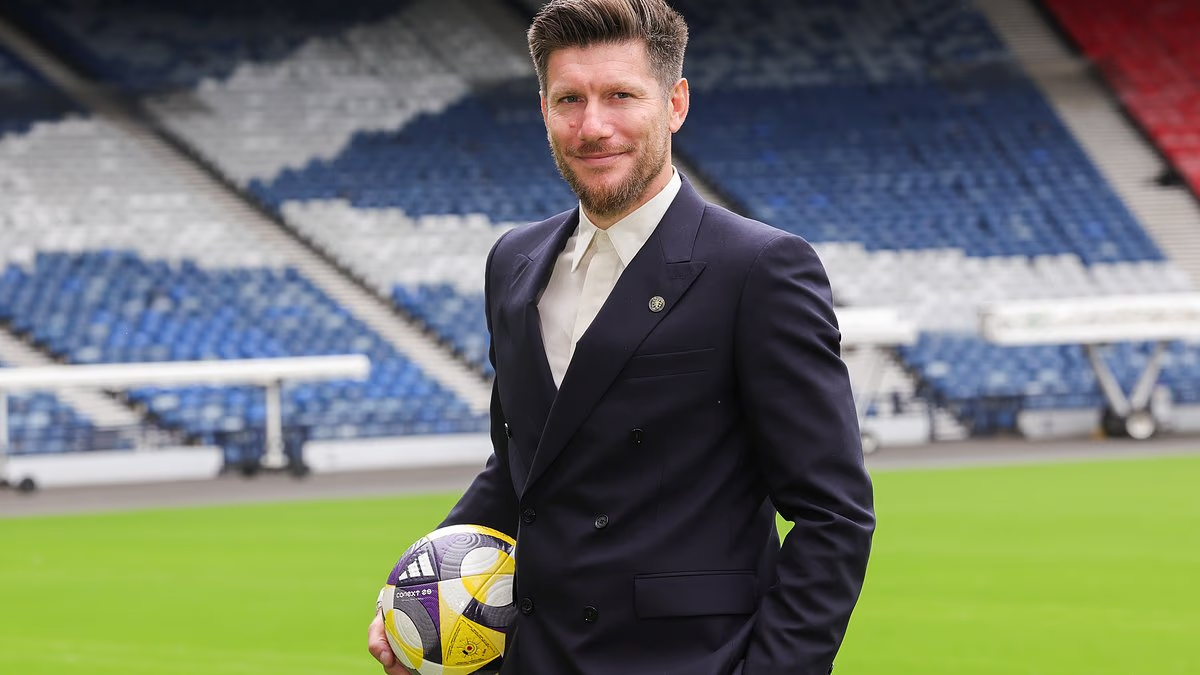
Belgian coach Sebastien Pocognoli has been confirmed as Scotland’s new head coach
The timing also works in his favour. Pocognoli now has a valuable window over the next couple of weeks to speak with Scotland’s senior players, establish early relationships and begin shaping plans before next month’s opening fixtures.
The SFA are no strangers to criticism, and often with good reason. Yet in this case, they have shown imagination with the Pocognoli appointment and delivered the kind of fresh direction many Scotland fans had been demanding.
Still, the road to Scotland appointing their first overseas head coach in more than two decades deserves a closer look.
Not solely because Pocognoli is Belgian. Not simply because he isn’t Scottish. If he delivers results and an exciting brand of football, the Tartan Army won’t care whether he’s from Belgium, Bearsden or Botswana.
The wider issue that shouldn’t be overlooked is the fact that there were so few credible homegrown Scottish managers in the frame for the job.
Listen, the SFA may well have gone down the foreign route in any case. Listening to some of the noises over recent days and weeks, there was an appetite to move in a different direction. To try something new.
But the paucity of options available in terms of Scottish candidates almost made the outcome feel pre-ordained to an extent.
Make no mistake, the lack of top-class Scottish managers and coaches being produced at present is every bit as serious as the structural failings that continue to plague us in terms of how we develop young players.
At 39 years of age, Pocognoli arrives as the youngest manager in Scotland’s history. He is also only the second foreigner to take charge of the national team after the ill-fated reign of Berti Vogts.

SFA chief football officer Craig Mulholland, Pocognoli and SFA chief executive Ian Maxwell
Across his spells with Monaco and Union Saint-Gilloise, with whom he won a league title in Belgium, he has carved a strong reputation for youth development and attacking football.
He is young, passionate, energetic and ticks a lot of the boxes in terms of what you could want from a modern-day coach.
At his unveiling on Monday at Hampden, he also came across as humble, engaging and media-friendly. Seb, Sebba, or just plain old Sebastien; all terms of address with which he is comfortable.
Whether or not he can actually move Scotland forward, time will tell. He will certainly have the backing of the majority of supporters right from the off.
However, what we shouldn’t lose sight of is the fact that Pocognoli’s appointment reflects a deeper emptiness at home and a malaise in the once-great plethora of Scottish managers operating at the top level.
The scarcity of options is plain for all to see. Derek McInnes and David Moyes had been tipped as possible successors to Clarke, but timing meant that both were unavailable.
The pair of them are also cut from the same cloth as Clarke. Fine managers though they are, they are hardly known for playing expansive football.
John McGlynn has done tremendously well at Falkirk in recent years, but was never really a credible candidate. Neither was Steven Naismith.
Led by Craig Mulholland and Ian Maxwell, the SFA embarked on a thorough recruitment process which utilised AI, data and analytics.
There is surely a case for a separate data study to be carried out on why there was such a dearth of homegrown options available to them.
Maxwell has admitted that the SFA now need to treat this as a matter of urgency. The next time the job becomes available, he wants two or three – at the very least – Scottish candidates.

Scotland is no longer producing top class managers like Sir Alex Ferguson
This is not a sudden crisis. It is the cumulative result of years in which Scottish football has failed to produce coaches at anything like the rate it once did.
The days of the great Scottish managers – Bill Shankly, Jock Stein, Matt Busby, Alex Ferguson, Jim McLean, Walter Smith, Graeme Souness, Kenny Dalglish and the rest – feel like ancient history now.
Those men were formed in a different culture: battle-hardened, competitive environments where their achievements and standing in the game could match-up with the very best.
The pathway now is more difficult to navigate. Too many promising coaches remain trapped in youth systems or lower-league jobs with little prospect of a meaningful senior opportunity.
Too many clubs in Scotland prefer the safer, more marketable foreign appointment. The result is a national coaching pool that looks increasingly shallow when the biggest job becomes available.
The parallels with player development are plain for all to see. Whether it’s kids no longer playing football in the streets or local park, the failure of academies to produce enough first-team regulars, the talent drain to England, the low minutes given to Under-21s in the Premiership – it all contributes.
This, too, is a matter of urgency, one which will be addressed when the SFA meets with clubs next month to discuss the issue of youth development.
Yet the coaching side of the equation has received less attention and less scrutiny, even though the two problems are intimately linked.
You cannot develop better players without better coaches. You cannot sustain a national team culture without a pipeline of coaches who understand that culture from the inside and have the technical skills to implement it.
When both pipelines are clogged, the governing body is left with limited options. Pocognoli is the symptom of that as much as the solution.
There is no shame in looking abroad. Scotland is not unique in doing so. Smaller football nations routinely import expertise when their own systems fail them.
The question is whether the SFA treats this appointment as a one-off necessity or as a prompt for deeper reform.
The SFA have begun to talk more seriously about coach education. There are elite development programmes, transitions reports, attempts to modernise the old Largs model that once attracted Europe’s finest minds.

Pocognoli is determined to bring through the next generation of Scotland players
These are necessary steps. They are also late. For too long the assumption seemed to be that good Scottish coaches would simply emerge, the way they always had. That assumption has collapsed.
Pocognoli will be judged, correctly, on results and on the style of football he produces. The Nations League fixtures against Slovenia and Switzerland will offer an early examination.
Yet even if Pocognoli succeeds, the deeper problem will remain. A healthy football nation should be able to choose between a few strong domestic candidates and an outstanding foreign one.
Right now, Scotland does not have that luxury. The absence of a deep pool of Scottish coaches is not a temporary inconvenience.
It is evidence of a system that has under-invested in the people who shape the game and build cultures and identities.
Youth development gets the headlines and the strategies. Coach development is too often an afterthought. Until the appropriate steps are taken to address that, the cupboard will remain bare.


