
Zillow has agreed to dismantle a contentious partnership with rival Redfin after US antitrust regulators accused the real estate platform of paying $100 million to sideline competition in the rental listings market.
The Federal Trade Commission said Monday it had secured a settlement with Zillow and Redfin, reaching the agreement just as the companies were set to face trial over the deal.
According to the FTC, the companies’ 2025 agreement effectively stripped Redfin of its role as an independent competitor in the online advertising market for multifamily rental properties.
The dispute carries potentially broad consequences for renters across the country, as millions of Americans turn to online real estate platforms when searching for apartments and homes to lease.
More than 30 percent of US households rent their homes, the FTC noted, underscoring why competition among rental listing websites is a key issue in the wider housing market.
The original agreement, announced in February 2025, called for Zillow to pay Redfin $100 million as Redfin wound down its rental advertising business, shifted customers to Zillow and agreed to remain out of the market for up to nine years.
Redfin also committed to exclusively reposting apartment listings provided by Zillow, a move that would have left its sites no longer functioning as an independent source of competing rental inventory.
The FTC argued that the arrangement amounted to Zillow buying off a significant competitor instead of battling it in the marketplace.

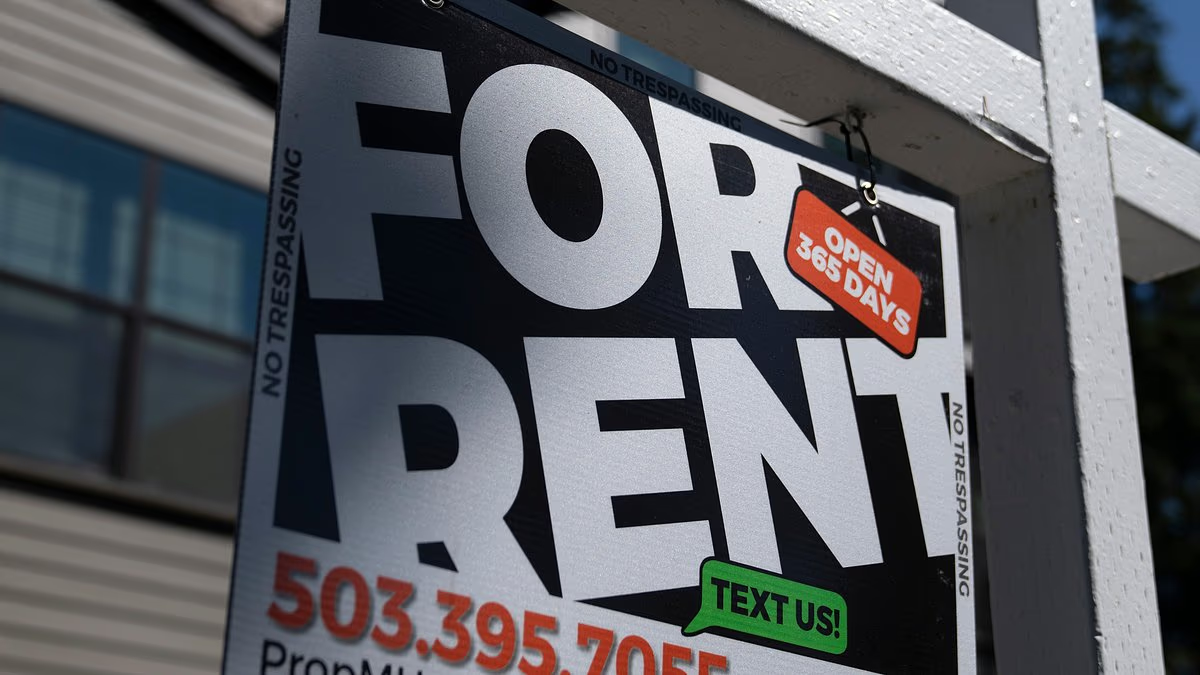
Zillow has been forced to unwind a controversial deal with rival Redfin after US regulators accused the property giant of paying $100 million to eliminate competition in the rental market

Daniel Guarnera, director of the FTC’s Bureau of Competition
‘Today’s settlement unwinds an agreement under which Zillow paid Redfin $100 million to stop competing and hand off all its customers to Zillow,’ Daniel Guarnera, director of the FTC’s Bureau of Competition, said.
‘This kind of payment to a competitor to exit a market and stop competing violates the antitrust laws.’
The FTC’s original complaint, filed in September 2025, claimed the agreement was likely to result in higher prices and worse terms for property managers advertising rental homes, while reducing incentives for Zillow and Redfin to compete for renters and improve their services.
And according to an expert for the FTC and five states involved in the case, advertising prices increased by an average of 14.5 percent after Redfin stopped competing.
Some property managers also stopped buying online listings altogether.
The five states that joined the federal lawsuit were New York, Virginia, Arizona, Connecticut and Washington. Their cases were ultimately consolidated with the FTC’s action. The new settlement is designed to put some of that competition back.
Redfin will be required to restart its rental advertising business within six months of the order being finalized and invest millions of dollars into rebuilding the operation.
The company will be allowed to continue displaying Zillow listings on its platforms, but it will once again be free to compete for its own rental advertising customers and secure additional listings.

More than 30 percent of US households rent their homes, according to the FTC, making competition between rental listing platforms an important part of the housing market

Founded in 2006 by Rich Barton and Lloyd Frink, Zillow has grown into one of America’s biggest online real-estate platforms, with its headquarters still based in Seattle, Washington
The FTC said Redfin has committed to making substantial investments in the business for years to come, with the aim of creating a significantly stronger competitor than it was before the 2025 agreement.
The settlement also prevents Zillow from restricting Redfin’s ability to compete independently or forcing it to hand over nonpublic or competitively sensitive information.
Zillow will also have to provide information that allows Redfin to interview Zillow employees and waive certain noncompete and anti-poaching restrictions that could prevent those workers from joining Redfin.
Once Redfin’s rental advertising operation is back up and running, Zillow must also give certain customers the opportunity to cancel or renegotiate contracts without fees or penalties.
That could give property managers a fresh chance to shop around for advertising services rather than being locked into Zillow.
The order is expected to remain in place for 10 years and Redfin could face monetary penalties if it fails to meet its commitments.
For renters, the immediate impact is less straightforward. The settlement does not mean apartment rents will suddenly fall, nor does it provide direct refunds to people who rented a property during the period covered by the FTC’s allegations.
Instead, regulators argue that restoring competition between listing platforms should give landlords and property managers more choices when deciding where to advertise – and, ultimately, give renters access to a wider range of listings.

For renters, the immediate impact is less straightforward. The settlement does not mean apartment rents will suddenly fall, nor does it provide direct refunds to people who rented a property during the period covered by the FTC’s allegations
The proposed order was filed in federal court in Virginia and still requires approval by US District Judge Anthony Trenga before becoming final. Once approved, the stipulated order will have the force of law.
The dispute comes as Zillow itself is facing another major battle over access to property listings.
Thousands of homes in the Chicago area and surrounding Midwest markets have recently disappeared from Zillow after Midwest Real Estate Data, or MRED, suspended the company’s access to its listings feed.
The clash is tied to a wider industry fight over so-called private listings, with Zillow arguing that homes should be made widely available to buyers while some brokerages argue homeowners should have greater control over how and where their properties are marketed.
Zillow has accused MRED and brokerage Compass of undermining consumer transparency, while MRED has defended its decision and said it is enforcing its rules.
For consumers, the two disputes highlight an increasingly complicated reality: the property websites that appear to offer a simple window into the housing market do not necessarily show every home available.
And in the rental market, the FTC’s settlement with Zillow and Redfin is a reminder that competition between those platforms can have consequences far beyond Silicon Valley and Wall Street.


