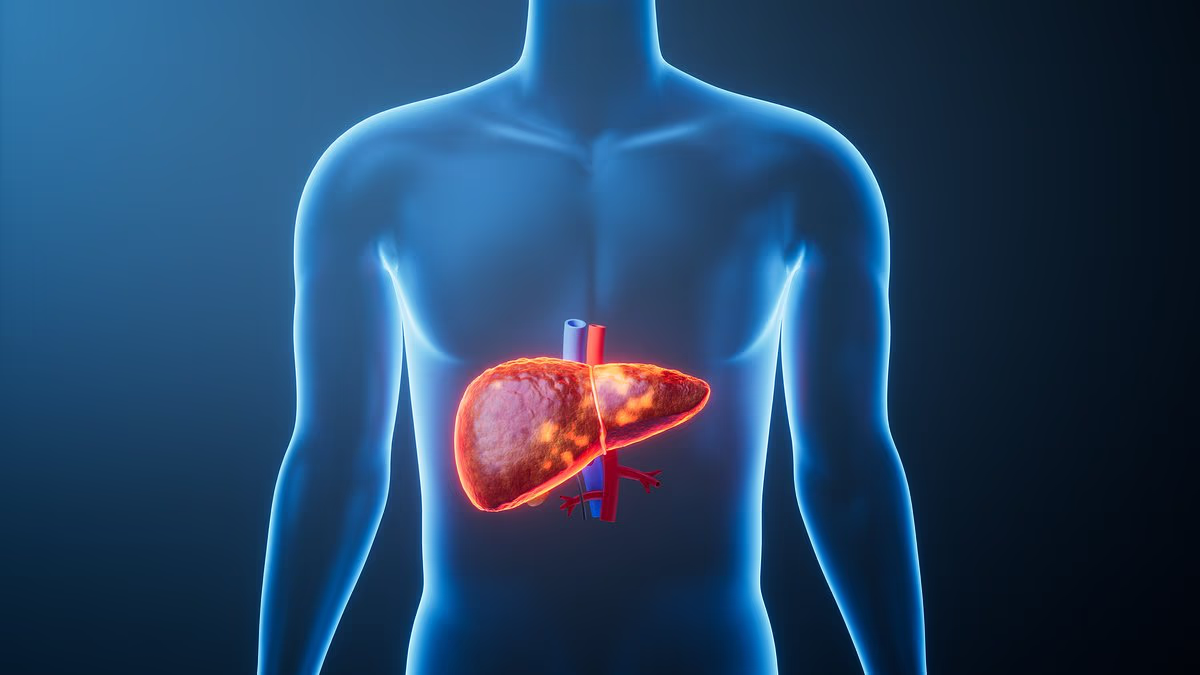

Britain may be facing a largely unseen surge in potentially fatal fatty liver disease, according to a major study that suggests millions of people could be living with the condition without knowing it.
Researchers behind the new findings warn that cases are rising at an alarming pace, with diagnoses increasing five-fold over the past decade. The disease can lead to liver cancer and life-threatening liver failure.
Because fatty liver disease often causes no obvious symptoms in its early stages, experts say it is missed in as many as nine in ten cases. Many patients are only diagnosed once the damage is advanced and treatment options are far more limited.
The team from Barts Liver Centre in London is urging GPs to introduce routine blood tests for people at higher risk, in the hope that more cases can be detected before serious liver damage occurs.
When caught early, fatty liver disease can often be slowed, stopped or even reversed through weight loss and healthier lifestyle changes, reducing the risk of severe complications.
Professor William Alazawi, a co-author of the study, told the Daily Mail that the scale of the problem “is only going to get bigger”.
“We are seeing younger and younger people with type 2 diabetes and obesity, and these are the leading risk factors for fatty liver disease.
“We should be flagging these patients early, when we can intervene to prevent complications like liver failure, cancer and associated conditions like heart disease.”

Known medically as metabolic dysfunction-associated steatotic liver disease (MASLD), the condition is not linked to heavy drinking—the more commonly known cause of liver problems
Fatty liver disease, also known as metabolic dysfunction-associated steatotic liver disease, is one of the world’s most rapidly growing health conditions, affecting 1.3 billion people worldwide.
Previous studies suggest around one in four adults in Europe have the condition.
Yet, in the UK, just 284,00 adults – the equivalent of 2.4 per cent – had a recorded diagnosis in 2022, suggesting many cases remain undiagnosed.
The figure is up from just 0.5 per cent in 2012, reflecting a growing awareness of the condition among doctors and patients, as well as an increase in the number of Britons living with obesity – the biggest risk factor for the condition.
For the latest study, researchers analysed GP records from nearly 12 million people in the UK between 2003 and 2022, from the Clinical Practice Research Datalink.
They identified 365,797 adults diagnosed with fatty liver disease between 2003 and 2022.
Annual cases rose from just 1,300 in 2003 to more than 283,000 by 2022 – a 200-fold jump.
Those with the condition were also found to be nearly three times more likely to have type 2 diabetes.
The team also looked at whether patients had received the blood tests needed to calculate a Fib-4 score, a tool used to diagnose fatty liver disease.
The measurement indicates the level of scarring in the liver, which can be a sign that the disease is progressing towards more serious irreversible damage, liver failure or cancer.
Fatty liver disease usually starts with fat building up in the liver – most likely because of obesity, excess fat around the waist, type 2 diabetes, high cholesterol or other metabolic issues.
In some people, this triggers inflammation and damage to liver cells. The organ then responds by laying down scar tissue, known as fibrosis.
The researchers found that the number of patients receiving the recommended checks for liver scarring increased from around one in 25 before 2015 to almost one in four in the years following.
Diagnosis rates peaked in 2019 before falling off during the pandemic, which researchers said was likely due to disruption to routine GP appointments.
Despite progress, the researchers said key blood tests used to check for liver scarring are still not being carried out often enough. Only one in six of the patients studied underwent the test.
This could mean that 2.6million cases have gone undetected.
One possible reason for this, they said, could be because one of the blood tests needed to compute the score, are not routinely ordered by GPs, despite guidelines recommending tests to be carried out every two years for those considered at risk of the disease.
People of South Asian ethnicity were more often diagnosed with the condition, but were the least likely to have had the crucial test.
Professor Alazawi, a professor of hepatology at Queen Mary University London, said this raises concerns about a potentially inequitable gap in care, particularly because South Asians are already known to be at an increased risk of both fatty liver disease and type 2 diabetes.
‘We know what the risk factors are’ he said. ‘Now we need the public to ask healthcare professionals, if they are overweight or have diabetes, about fatty liver.’
The findings come as weight-loss medications such as Mounjaro (tirzepatide) are showing promising results in the treatment of fatty liver disease.
Studies suggest these drugs can significantly reduce liver fat and improve inflammation and in some cases may be associated with improvement in liver scarring in early disease.