

A sweeping two-month FBI crackdown on cybercrime has led to multiple arrests and the disruption of sprawling international criminal networks accused of targeting Americans and moving millions of dollars in illicit proceeds, News Outlet has learned.
The effort, known as Operation Riptide, began in June as federal authorities intensified their response to online fraud and cybercriminal activity that cost Americans more than $20 billion last year, according to the FBI.
Working alongside law enforcement partners overseas, the bureau confiscated millions of dollars in unlawful cryptocurrency and other assets while taking apart digital infrastructure used by cybercriminal groups around the world.

An illustration depicting cybercrime and hacking activity shows a laptop with a pirate symbol as a hooded figure uses a digital tablet in a dark setting in Paris, France, on April 28, 2026. (Hans Lucas/AFP via Getty Images)
“Operation Riptide was the FBI’s historic 60-day campaign targeting cybercriminals preying on Americans here at home and around the world,” FBI Director Kash Patel told News Outlet. “We went after this criminal enterprise more aggressively than we ever have.”
Patel said the operation gained momentum through a combination of the FBI’s artificial intelligence tools, stronger intelligence sharing and close coordination with foreign authorities pursuing the same cybercrime networks.
“FBI Cyber is now built to crush these criminal networks no matter where they operate,” Patel said.
Cases tied to Operation Riptide included the arrest of a member of the pro-Russian hacktivist organization Cyber Army of Russia Reborn and the seizure of a cloud computing account allegedly used by subsidiaries of Huione Group, a Cambodia-based corporate conglomerate.
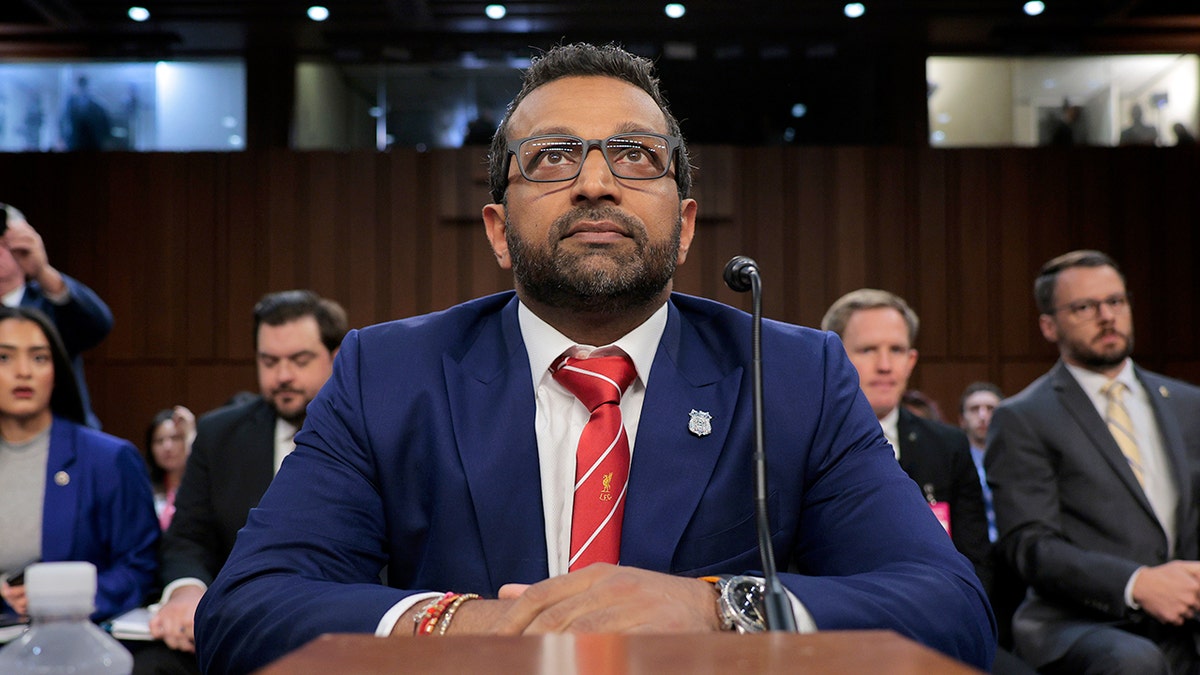
FBI Director Kash Patel arrives to testify before the Senate Judiciary Committee in the Hart Senate Office Building on Capitol Hill on September 16, 2025, in Washington, D.C. (Chip Somodevilla/Getty Images)
DOJ CHARGES 3 RUSSIANS IN ALLEGED $63M CYBERCRIME SCHEME TARGETING AMERICANS
The subsidiaries allegedly assisted individuals and organizations in transferring illicit proceeds from cryptocurrency investment frauds, cyber scams and other crimes across blockchains, facilitating undetected conversions into the legitimate banking sector.
In another major operation, law enforcement coordinated with Google and Black Lotus Labs to execute a technical takedown of Outsider, a Chinese phishing-as-a-service platform. Outsider provided cybercriminals with hosting infrastructure and “phishing kits” used to target U.S. citizens, businesses and victims in at least 54 other countries, the FBI said.
[EMBARGO] META LEADS LARGEST-EVER ANTI-SCAM OPERATION WITH FBI AND DOJ, RESULTING IN 63 ARRESTS
FBI Director Kash Patel said the bureau will hold accountable anyone who is involved in cybercrime networks. (Getty Images)
In addition to the new arrests, several other cybercrime cases reached major legal milestones. Eight people were convicted for participating in an international cargo theft conspiracy impacting U.S. supply chain security, while five Ghanaian citizens were indicted for allegedly operating romance fraud schemes targeting Americans online.
Furthermore, two individuals were recently sentenced to 6.5 years in prison for their involvement in a nationwide ATM jackpotting scheme that used Ploutus malware to steal millions from cash machines across the U.S.
In another case, Barry Augustinsky was convicted for running a multiyear VoIP-based fraud scheme targeting mostly elderly Americans, laundering the proceeds and providing false credit-report access to facilitate the scheme.
“We executed coordinated law enforcement actions across the country and leveraged our reach around the world to disrupt these criminal networks, impose consequences and protect the American people from predatory cyber actors,” said Heith Janke, assistant director of the FBI’s Criminal Investigative Division.
Scott Augenbaum, a retired FBI agent who specialized in cybercrime, noted that modern tools have lowered the bar for bad actors.
“Artificial intelligence is enhancing the cybercriminals’ ability to trick people,” Augenbaum told News Outlet. “Today, you’re going to see an email that does not contain grammatical errors. We used to tell people if the email has really bad grammar, it’s a scam. That red flag doesn’t work anymore. Cybercriminals can build fake websites, use voice cloning and leverage so many new tools.”
Brett Leatherman, assistant director of the FBI’s Cyber Division, emphasized that the bureau will maintain its momentum against international networks.
“Cybercriminals depend on borders, anonymity and rented infrastructure to stay beyond reach, and over 60 days, the FBI and our partners took those advantages away,” Leatherman said. “Arrests, extraditions, infrastructure takedowns and seizures each imposed cost at a different point in the criminal ecosystem. Our partners made that possible, and the pressure we built does not stop here.”