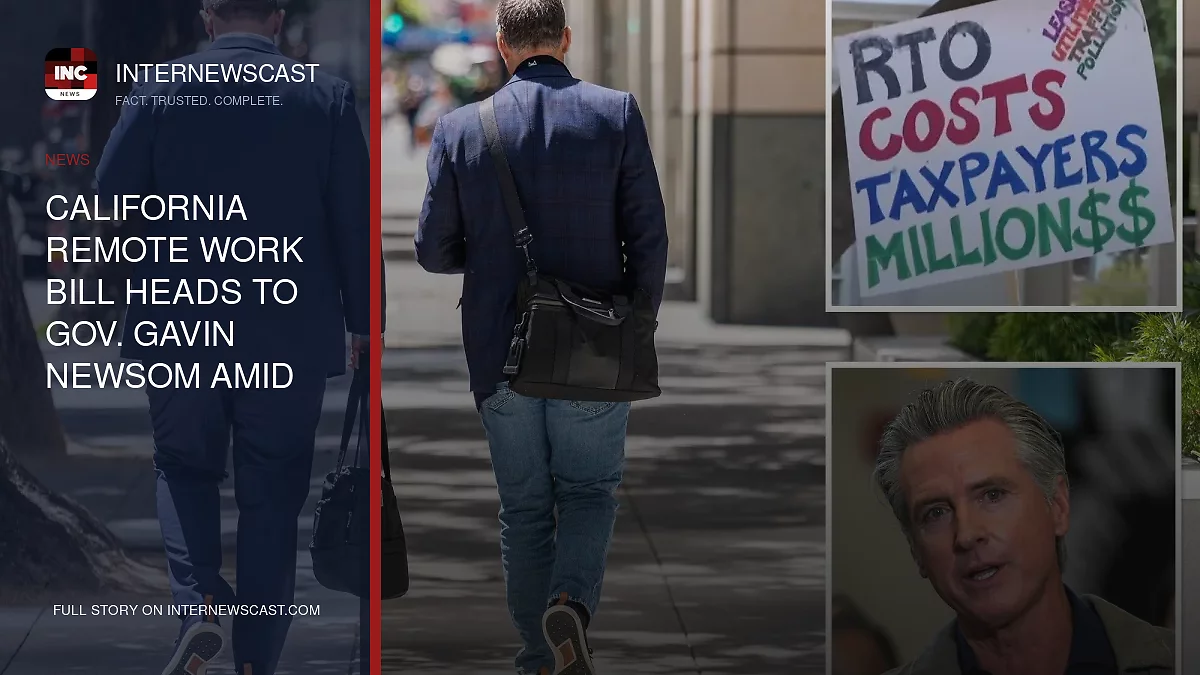

A California bill that would expand work-from-home options for state employees is headed to Gov. Gavin Newsom’s desk, where it is expected to encounter its toughest test yet.
Assembly Bill 1729 cleared the Legislature with bipartisan support. The measure would require California to create a telework plan for positions where remote work is appropriate and compel state agencies to explain why employees must report to a physical workplace when telework could be an option.
The proposal passed the state Senate in a 31-6 vote after previously winning approval in the Assembly, 67-7.
The legislation comes amid pushback from state employee unions and labor organizations angered by Newsom’s directive requiring most remote state workers to return to the office four days a week beginning last month.
“These are the people we need to (take) care of because (they) are executing our ambitions, and to see them have their morale just plummet because the governor’s forcing … an outdated model was really heartbreaking to me,” Assemblymember Alex Lee (D), the bill’s author, told the Sacramento Bee.
Although several Republican lawmakers opposed the measure, others crossed party lines to support it, arguing that remote work can benefit both employees and taxpayers.
“It has the potential to save the state hundreds of millions of dollars on office space, reduce traffic congestion on Sacramento roads and help California remain competitive with the private sector,” Assemblymember Josh Hoover (R) told the Folsom Telegraph.
Still, Lee’s bill faces uncertain prospects. Newsom has consistently defended his return-to-office policy, saying more in-person work is necessary to strengthen collaboration and improve public service across state government.
“One of them is a crisis of loneliness. People not feeling connected,” the governor said at a press conference. “I want people to come back to work. Re-engage,” he added, suggesting the in-person work has societal benefits for workers themselves.
State workers have complained that the in-person requirement has lowered morale as employees deal with commute times, parking and finding child care.
In the past few months, California’s largest state employee union, SEIU Local 1000, remained locked in a tense contract standoff with the Newsom administration, with the return to the office mandate being a main thorn.
Critics of the bill agree with Newsom that returning to the office is long overdue.
“Government workers functioned just fine when required to come to work before the pandemic,” Tim Anaya, a former state government employee for two decades who now works at free market think tank Pacific Research Institute, said.
“Millions who have to commute into the office every day have little sympathy for the noisy union protests demanding another benefit for government workers few in the private sector enjoy.”
Download The California Post App, follow us on social, and subscribe to our newsletters