
A decades-old mystery that started with a disturbing discovery deep in the California wilderness has finally been solved.
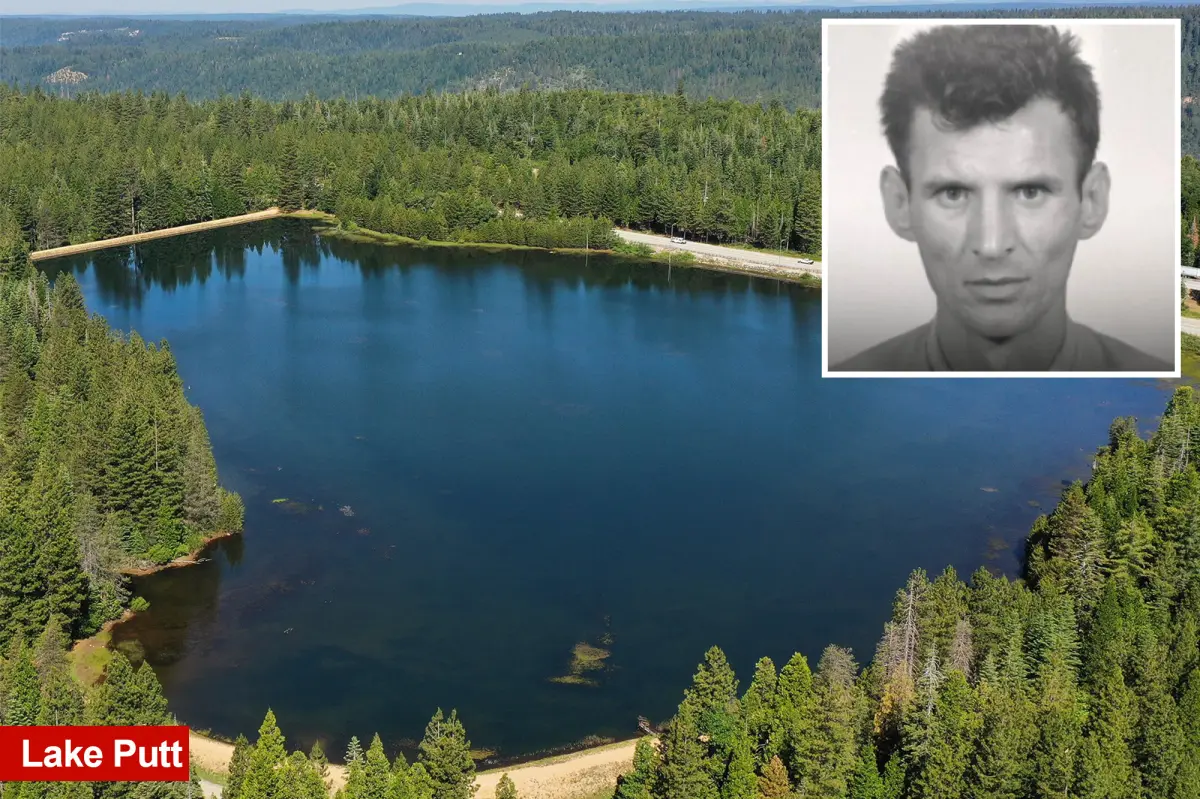
Authorities say the remains belong to George Krusely, whose identity eluded investigators for years until advanced DNA testing and genetic genealogy linked him to a partial skull found by loggers near Putt Lake in Nyack in 1994.
Krusely was born on April 30, 1929, and was last known to have been in California in 1963, the Placer County Sheriff’s Office said.
More than 30 years later, on July 7, 1994, a skull was found at a remote campsite tucked into the Sierra Nevada mountains.
At the time, detectives believed the remains had been at the site for an extended period, possibly “quite some time, upwards of a year.”
Deputies recovered the skull along with other evidence, but the investigation soon stalled. Officials did not have enough information to determine how the man had died.
With few leads, investigators entered the unidentified man into the National Missing and Unidentified Persons System, estimating his age to be between 50 and 60.
RELATED: Millionaires’ Paradise Turns Nightmare as Four Horsemen Unleash Carnage
The breakthrough came in December 2024, when Placer County investigators partnered with the California Department of Justice and Othram Inc., a company specializing in advanced forensic DNA analysis.
Othram scientists were able to build a “comprehensive DNA profile for the man.”
That genetic profile was sent the following month to Ramapo College’s Investigative Genetic Genealogy Center.
Instead of simply looking for a name, the team used genetic information to work backward through family connections.
It was a particularly difficult hunt because of the unidentified man’s Croatian and Yugoslavian ancestry.
“The case was very challenging due to the Croatian and Yugoslavian ancestry of the unidentified,” Cairenn Binder, director of Ramapo’s IGG Center, said in a statement.
“Low representation in accessible DNA databases and limited availability of genealogy records in some populations can make our research more complex.”
In December 2025, the Ramapo team identified Krusely as a potential match. Investigators then located a living descendant and, with help from the Lordstown Police Department in Ohio, obtained a DNA sample.
It matched. The decades-old remains were finally confirmed as Krusely’s.
Authorities still don’t know how long Krusely had been dead when the loggers stumbled across his remains in 1994.