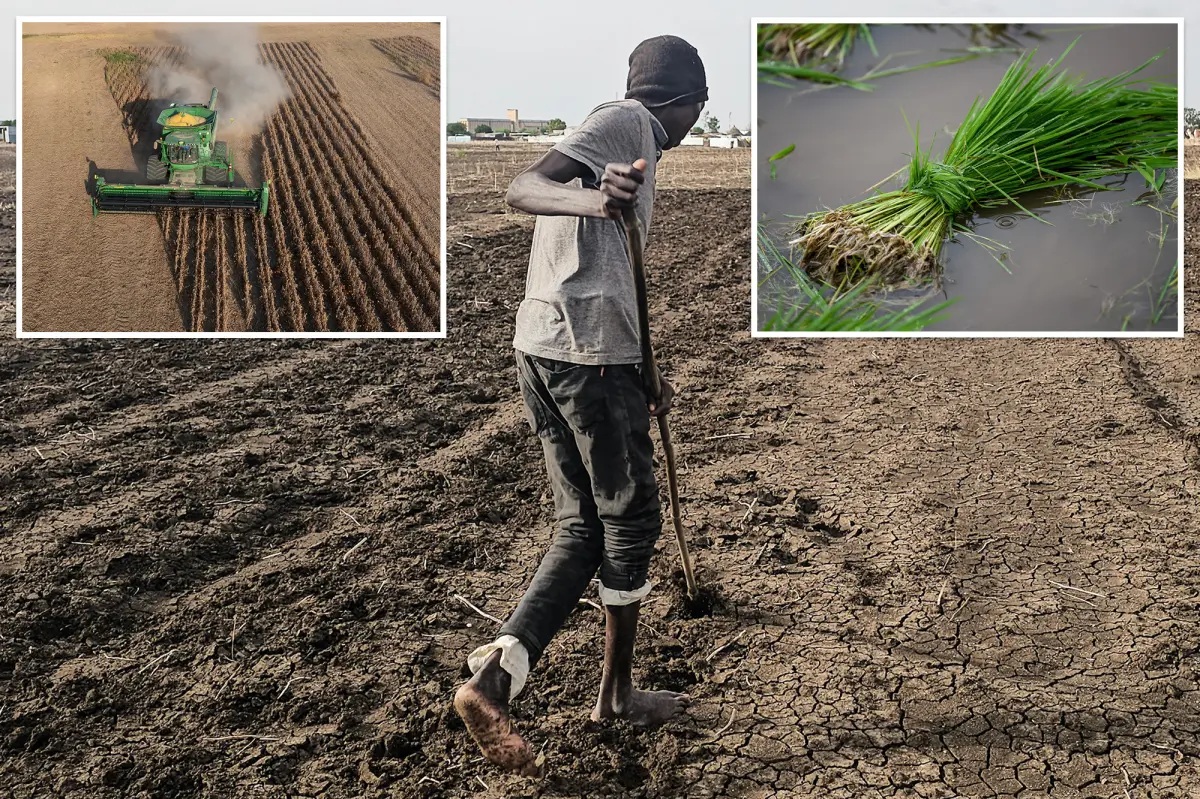

A strengthening “Super El Niño” could upend weather patterns around the world this fall and winter, potentially driving global food prices up by 16% — with the fallout lasting as long as 2028, according to a stark new report.
Key food staples such as rice, sugar, palm oil, coffee and cocoa face the greatest risk, with prices potentially surging between 50% and 100%, according to a Goldman Sachs report published in June.
Those sharp increases could send shockwaves through the global economy, pushing food costs steadily higher for years before supplies recover and markets begin to stabilize, Goldman Sachs analysts found.
This year’s El Niño — a climate pattern that emerges every few years when unusually warm Pacific Ocean waters disrupt global weather systems, triggering drought in some regions and abnormal heat or rainfall in others — is forecast to be especially powerful, heightening concerns over food supply disruptions.
South and Southeast Asia, along with parts of Africa, Mexico and South America, are expected to see far drier-than-usual conditions, raising the risk of severe drought that could damage crop production.
There is also roughly a 70% chance that this El Niño could become the strongest ever recorded — with some experts dubbing it “Godzilla” — increasing the odds that its most damaging impacts will materialize.
In practical terms, drought could weaken vital harvests, while areas unaccustomed to persistent humidity and heavy rainfall may face crop diseases that could linger for years.
In some parts of the world, those pressures are already emerging, setting off the kind of chain reaction that could soon show up in higher prices on grocery store shelves.

“El Niño has already begun to affect crops, driving a drier monsoon season in India, with some regions only experiencing 25% of their usual rainfall, and parts of central India only receiving 50%, which could affect supply for wheat, rice, and sugar cane,” Goldman Sachs wrote.
Even fishing industries have been to feel effects, with Peru’s $1.8 billion anchovy industry crippled this year by El Nino-driven warming waters, Bloomberg reported.
In the US and Europe, crucial corn harvests are already reeling from a summer of heat waves and drought which set back supply, Bloomberg reported.
El Ninos have a long history of disrupting food systems worldwide — in the 1870s, one left swaths of every continent reeling from a famine which killed millions.
And while global food systems are surely more advanced than they were 150 years ago, this years’ El Nino troubles are expected to be amplified by the ongoing war in Iran.
The conflict and its closures of the vital Strait of Hormuz shipping lane have stunted global logistics, while rising oil prices driven by the war have left consumers across the world footing the bill.