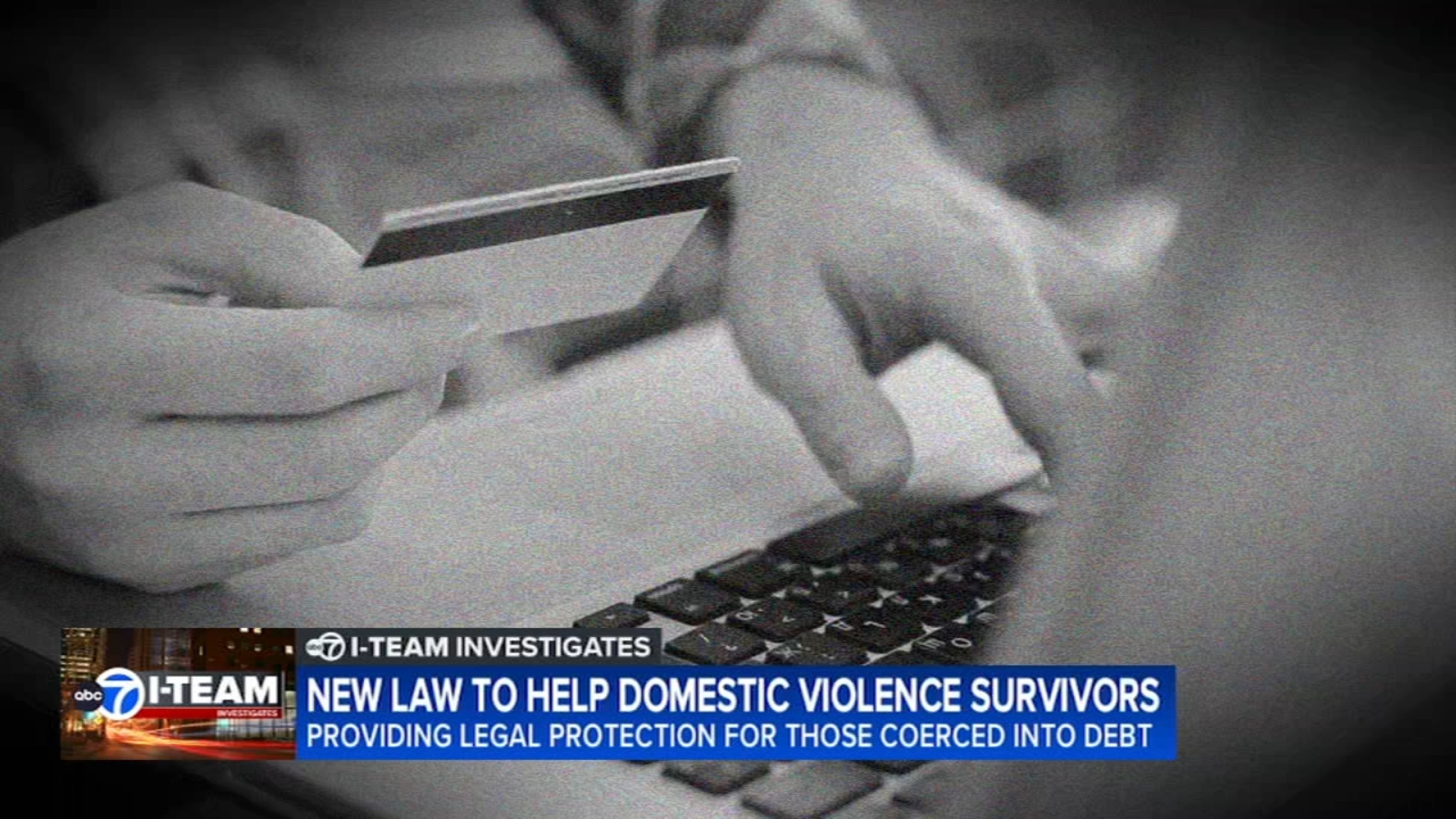

CHICAGO () — For many domestic violence survivors, the harm does not stop once they escape an abusive partner. Some are pressured or forced into opening credit cards, taking out loans or assuming other debt, leaving them with lasting financial damage. A newly signed Illinois law aims to strengthen legal protections for survivors by ensuring they are not held responsible for debts they were coerced into taking on.
“Financial abuse is very real,” Republican Illinois State Representative Nicole La Ha told the ABC7 I-Team.
La Ha said domestic abuse survivors should not be left carrying debts created through another person’s control, threats or manipulation. She sponsored the bipartisan measure in February, and Governor J.B. Pritzker recently signed it into law.
“It creates a pathway or a defense when it comes to debt that was incurred due to domestic violence,” said La Ha.
The new law creates an affirmative defense for survivors of domestic violence. That means if a survivor is sued over coerced debt, or contacted by debt collectors seeking repayment, they may be able to avoid legal liability by showing the debt was tied to abuse.
“We need to make sure we have resources for them, and we need to make sure that the law helps them, that we are protecting victims, and that we’re giving them tools in the courtrooms to be able to put their abusers away,” La Ha told the I-Team.
“It’s going to keep survivors from getting mired in debt when they’re trying to leave,” said Amanda Pyron, President and CEO of The Network.
Research from the Center for Survivor Agency and Justice found that more than half of survivors experienced coerced debt during an abusive relationship.
“It’s so difficult for a survivor of coercive control to even self-identify because you know in our society the pictures of domestic violence are often physical abuse. Survivors of coercive control often feel like they’re not victims enough to go to law enforcement,” said Pyron.
ALSO READ: Burning Man Is Skewing Older and More Male, New Data Shows
Advocacy groups, such as The Network, offer financial support, help locate legal representation and guide survivors on how to accurately submit the necessary paperwork to prove coerced debt to the Illinois Department of Financial and Professional Regulation.
“They can help you financially, because financially at home I wasn’t doing well. He basically used money against me,” said “Jane,” a survivor of domestic violence who asked not to be identified out of concern for her safety. “Jane” did not directly experience coerced debt but benefitted from financial services provided by The Network
“It was hard because I had three kids, so I had to do what I could to provide for my children… I’m thankful that The Network was able to help me financially, and with that money I was able to save money. So then when I left, I had some financial stability for my children and for me to continue life,” “Jane” told the I-Team.
“It allows for financial relief for survivors who have experienced coercive control or financial abuse that has led to a credit agency contacting them,” said Pyron.
She says 94% of survivors of domestic violence experience some form of financial abuse.
“This creates a very clear legal pathway for survivors to improve their credit, and the prosecutors work to make sure that the credit bureaus are notified when a judgment is issued that a survivor should not be responsible for this debt,” said Pyron.
“We’d love any new tools that we can get to be able to further enable us to protect people from being abused. A lot of this is done in partnership with our state’s attorney’s office, within our law enforcement agencies,” said Jim Kaitschuk, Illinois Sheriffs’ Association Executive Director.
“I hope that I can show my children that no matter what you go through in life, there’s always a path, and there’s so much to life. There’s so much that you can do,” said “Jane.”
The new law takes effect on January 1. The Network says it plans to launch a public awareness campaign. Representative La Ha tells the I-Team law enforcement, judges, attorneys, and advocates will be trained to make sure the legislation is implemented effectively.
You can contact the Illinois domestic violence hotline at 1-877-863-6338 click here for more information.