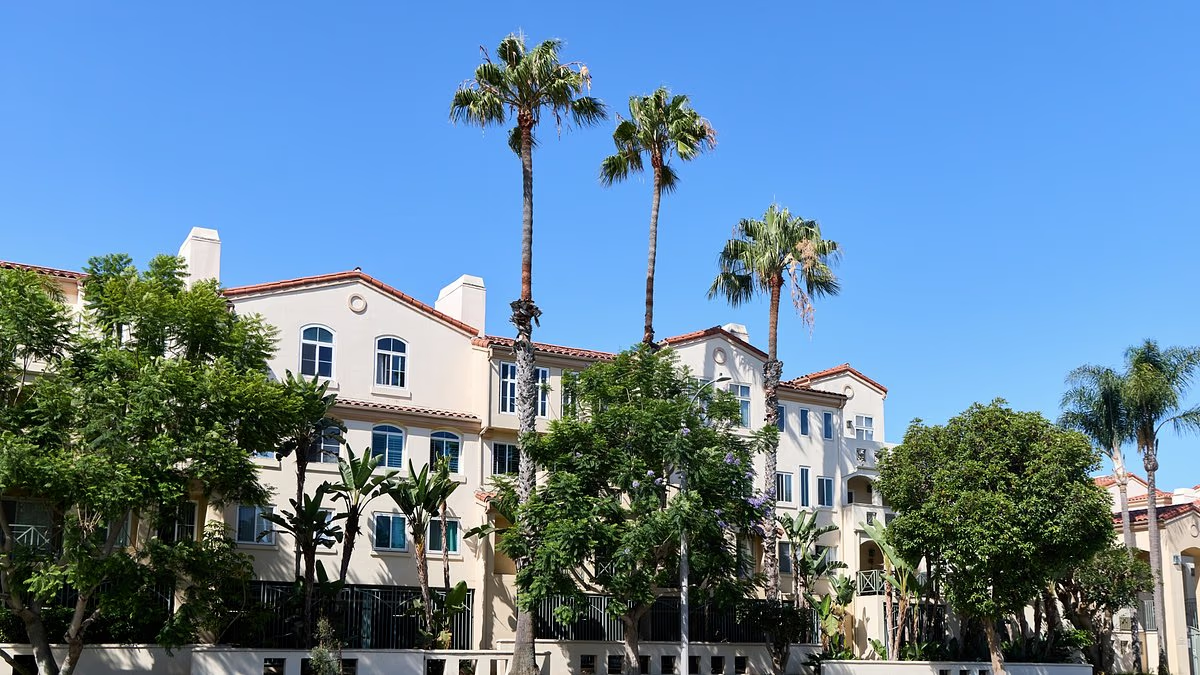

Residents of a typically low-key condominium community in Torrance, California, say they have been blindsided by a staggering $49,000 special assessment, a surprise charge that has left many homeowners asking how their costs climbed so dramatically.
Stephen Wang, an owner at the 499-unit condo complex, said the notice came as a shock to him and his neighbors, who are now being asked to help fund several large-scale repair and improvement projects on the property.
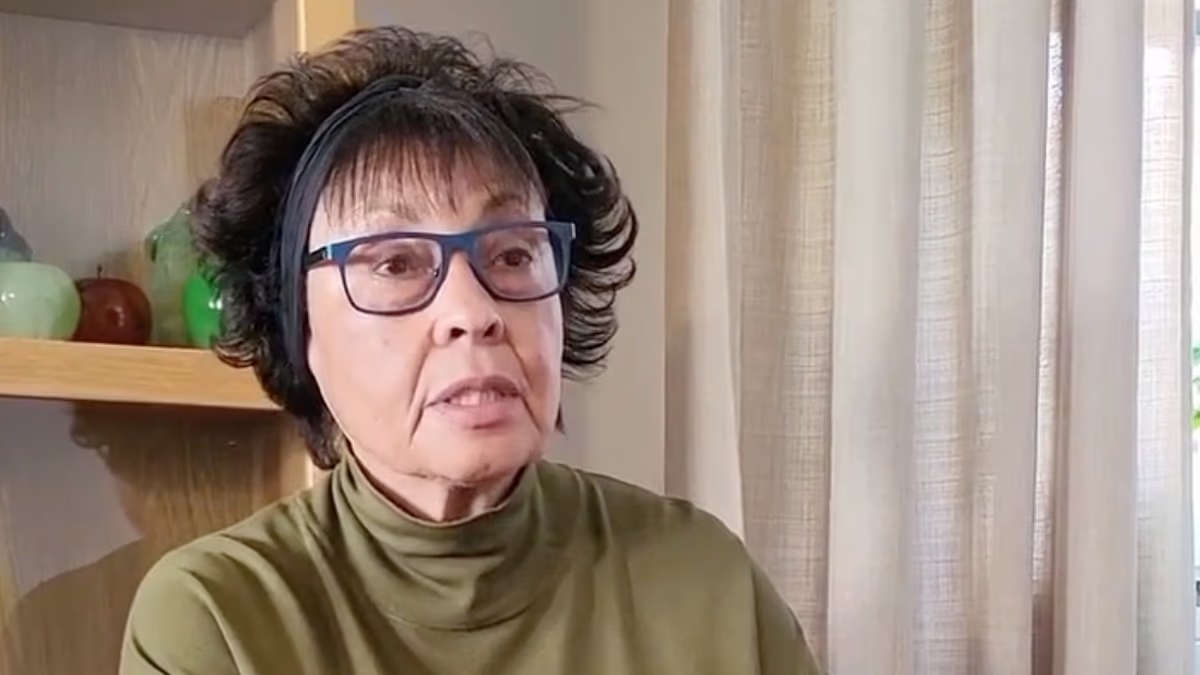
‘I was shocked, as most of the residents here are,’ Wang told ABC7.
According to residents, the planned work includes a full podium reconstruction, extensive re-piping throughout the complex and needed elevator repairs.
‘The HOA decided to redo the whole podium, the entire podium, and that became a $13 million project, and plus the re-piping and the elevators, so it came up to $19 million,’ Wang said.
To pay for those multimillion-dollar upgrades, the homeowners’ association is charging owners the special assessment in addition to the regular monthly HOA fees they already pay.
The dispute has put a spotlight on a broader issue affecting California condo owners, as aging residential buildings, rising insurance costs and tougher safety standards increasingly push HOAs toward expensive repairs and sudden assessments.
In response, Torrance condo owners have taken legal action against the association and are also attempting to remove the current HOA board through a recall effort.

California is far from the only state where homeowners are feeling the squeeze. New York currently has the highest median HOA and condo fees in the country, at $739 a month, followed by Hawaii at $470 and Massachusetts at $411, according to US Census Bureau data

Stephen Wang, who owns a condominium in the 499-unit Torrance complex, said he was stunned when he learned about the HOA charge, which is being levied on owners to help cover a series of major repairs and upgrades
California is far from the only state where homeowners are feeling the squeeze. New York currently has the highest median HOA and condo fees in the country, at $739 a month, followed by Hawaii at $470 and Massachusetts at $411, according to US Census Bureau data.
But some homeowners are paying far more than those typical figures.
Recent 2026 data shows reported HOA fees ranging as high as $5,000 a month, while special assessments for major structural work can reach six figures.
One database tracking homeowner reports puts the largest special assessment it has recorded at more than $140,000 for a single unit.
The situation in Torrance follows another high-profile dispute in nearby San Clemente, California, where condominium owners were stunned by a special assessment of more than $26,000 per unit for emergency roof work.
The case prompted an overwhelming response from other homeowners who said they too had faced unexpected demands for thousands – and sometimes tens of thousands – of dollars from their associations.
Michael Kushner, managing partner at MBK Chapman and an attorney who specializes in HOA issues, told ABC7 that he has seen a significant increase in special assessments.
He said rising insurance costs and California’s balcony inspection requirements are among the factors putting additional pressure on homeowners’ associations.

The sheer size of the bill has highlighted the growing financial pressures facing condominium owners across California, where aging buildings, expensive insurance and increasingly stringent safety requirements can leave associations facing multimillion-dollar repair bills

Jenn Davis of Christie’s International Real Estate Sereno
Inspections can uncover structural or waterproofing problems that require expensive repairs, particularly in older buildings.
But Kushner said homeowners can also find themselves in contentious disputes over whether an association has followed the correct procedures when imposing an assessment.
‘It is a very lopsided relationship, just by virtue of the fact that the HOA has got everybody’s money to play with, and the HOA has authority to issue discipline,’ he said.
California’s Davis-Stirling Act sets out rules governing homeowners’ associations and provides protections for residents, but Kushner pointed out that there is no dedicated state regulatory agency overseeing HOAs.
‘There’s no such thing as a perfect statute,’ he said, arguing that associations can sometimes take advantage of areas where the law is unclear.
Special assessments can be particularly controversial when homeowners believe they should have been given a greater say over major spending decisions.
Ultimately, Kushner said, owners who believe their HOA is not complying with the law may have to go to court to challenge it.
‘When it’s a homeowner trying to protect their rights, yeah, the only way they’re gonna be able to force an HOA to follow the law is to sue them,’ he said.
For prospective buyers, however, the problems can sometimes be identified before they ever purchase a property.
Jenn Davis of Christie’s International Real Estate Sereno told Our News Outlet that buyers should not assume a low HOA fee automatically means they have found a bargain.
‘Special assessments can feel sudden, but the underlying repair rarely is,’ Davis said.
‘Buildings keep aging even when HOA budgets do not keep up. Low dues can create a false sense of security, especially when an association has postponed maintenance or failed to build adequate reserves.’
Davis said she examines a property’s reserve study, current reserve balance, insurance coverage, inspection reports and board meeting minutes before recommending that clients buy a condo.
‘Repeated references to leaks, engineering studies or delayed repairs can be early warnings,’ she said.
‘A million-dollar condo can still sit inside an underfunded building. The price of the unit tells you very little about the financial health of its HOA.’
She added that San Francisco owners in particular need to be mindful of older housing stock, balcony inspections and other safety requirements that can result in significant expenses.
‘Some older high-rises are also required to update their fire sprinkler systems by 2035,’ Davis said. ‘Depending on how the HOA has planned and funded the work, either requirement could lead to an assessment.’
Nadia Evangelou, principal economist and director of real estate research, said condos can still be a useful way for buyers to enter expensive housing markets, but people need to understand the complete cost of ownership.
‘Condos can offer a good opportunity for first-time buyers to enter the housing market,’ Evangelou said.

The lesson from Torrance is that the monthly fee is only one part of the financial picture. A building can look like an affordable way into California’s notoriously expensive housing market – until a $49,000 bill lands on the doorstep
‘But it’s important to understand the full cost of owning a condo. Buyers should look at what the HOA fees cover, how much the association has in reserves, and whether there are any major repairs or special assessments planned.’
The Torrance case has also sparked debate online about whether buying a condo with an HOA is worth the risk in the first place.
One Reddit commenter argued that buyers should consider the size of their down payment when comparing condos and single-family homes in the area.
The user pointed to a four-bedroom, two-bathroom craftsman listed for around $1 million and argued that, depending on the buyer’s down payment and income, a single-family home could offer better value than a townhome carrying hundreds of dollars in monthly HOA fees.
They noted that there were only a small number of three-bedroom-plus townhomes under $1 million on the Torrance market, with many carrying HOA fees of more than $500 a month.
Another Reddit user questioned why anyone would want to buy in California given the combined cost of mortgages, insurance and HOA fees.
‘Mortgage, House Insurance, HOA… what person can afford these without being a millionaire,’ they wrote, arguing that monthly housing costs could easily reach thousands of dollars before utilities and other living expenses.
Another commenter offered an even simpler verdict: ‘Best tip is never live in a HOA.’
For homeowners already facing a special assessment, Davis recommends getting hold of the paperwork behind the bill before simply accepting it.
‘When homeowners receive a large assessment, they should request the inspection reports, contractor bids, meeting minutes and the calculation of their share,’ she said.
They can also ask whether the HOA followed the required process and whether financing or a payment plan is available.
‘But they cannot vote a failing roof, an unsafe balcony or a city safety requirement out of existence,’ Davis said.